The QNAP TS-133 is a 1-bay backup NAS (ARM 1.8GHz, 2GB RAM, Gigabit). The QNAP TS-233 adds a second bay for RAID 1 mirroring on the same ARM platform at 2.0GHz with 2GB. The QNAP TS-216G doubles the memory to 4GB and adds a 2.5GbE port. The QNAP TS-264-8G moves to an Intel Celeron N5095 with 8GB (up to 16GB), two 2.5GbE ports, two M.2 NVMe slots, a PCIe slot for 10GbE, HDMI 2.1 and a 3-year warranty.
Quick pick: one-drive PC and phone backup → TS-133; family photos and files on two mirrored drives → TS-233; faster transfers and more apps → TS-216G; home office, Plex-style media, virtual machines or a future 10GbE upgrade → TS-264-8G. ARC IP Networks is an authorised QNAP reseller and supplies genuine QNAP from Australian stock with a GST tax invoice.
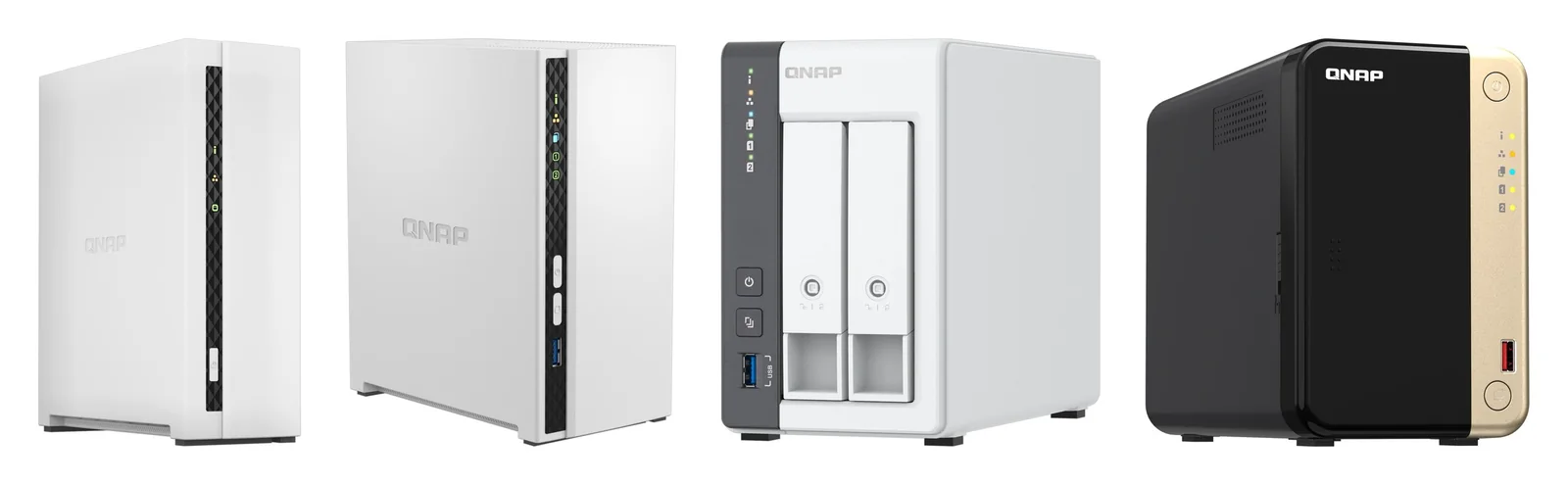
QNAP 1 and 2-bay NAS at a glance
QNAP sorts its own 2-bay range into three steps: the TS-233 is the basic model for beginners, homes and workgroups, the TS-216G is the upgraded model with 4GB RAM and 2.5GbE for faster transfers and multitasking, and the TS-264 is the pro model with M.2 SSD slots and PCIe expansion for high-speed transfers, file sharing and virtualisation. The single-bay TS-133 sits below them all.
| Model | In one line | Best for |
|---|---|---|
| TS-133 | 1 bay, ARM 1.8GHz, 2GB, 1 x Gigabit, NPU | A personal backup hub for one PC, a Mac and phones |
| TS-233 | 2 bays, ARM 2.0GHz, 2GB, 1 x Gigabit, NPU | Family photos and files on two mirrored drives |
| TS-216G | 2 bays, ARM 2.0GHz, 4GB, 2.5GbE + Gigabit, NPU | Faster file sharing, more apps, home surveillance |
| TS-264-8G | 2 bays, Intel Celeron N5095, 8GB, 2 x 2.5GbE, M.2, PCIe, HDMI | Home office, media, virtual machines, 10GbE later |
Summarised from QNAP's specifications for each model.
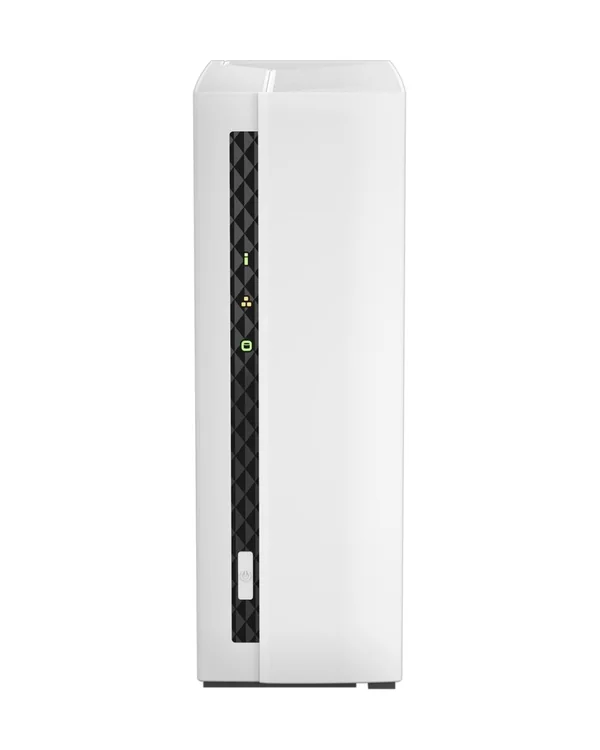
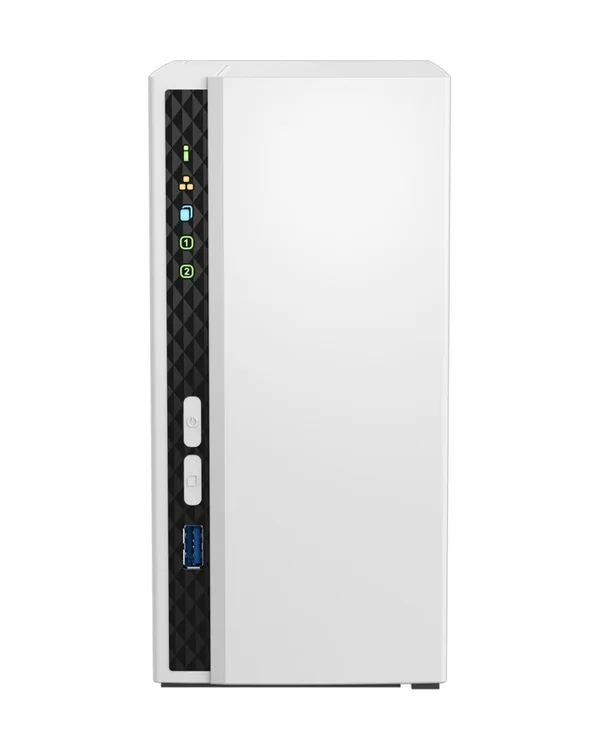
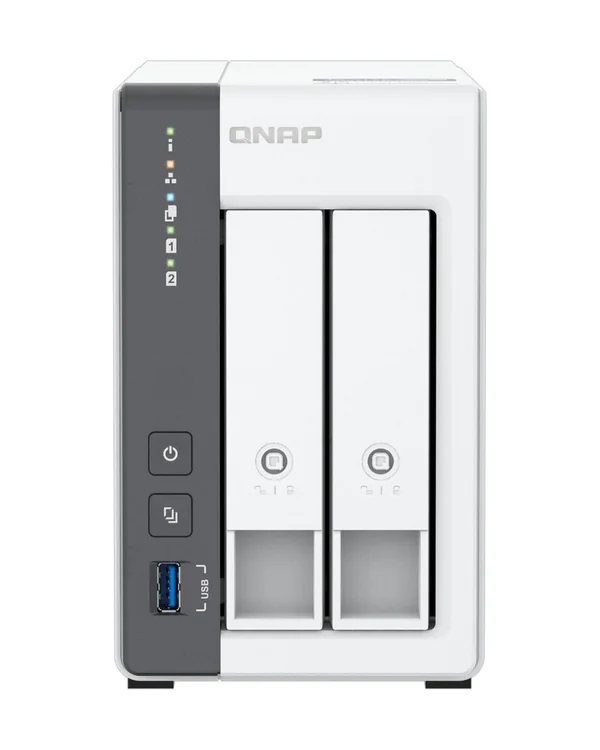
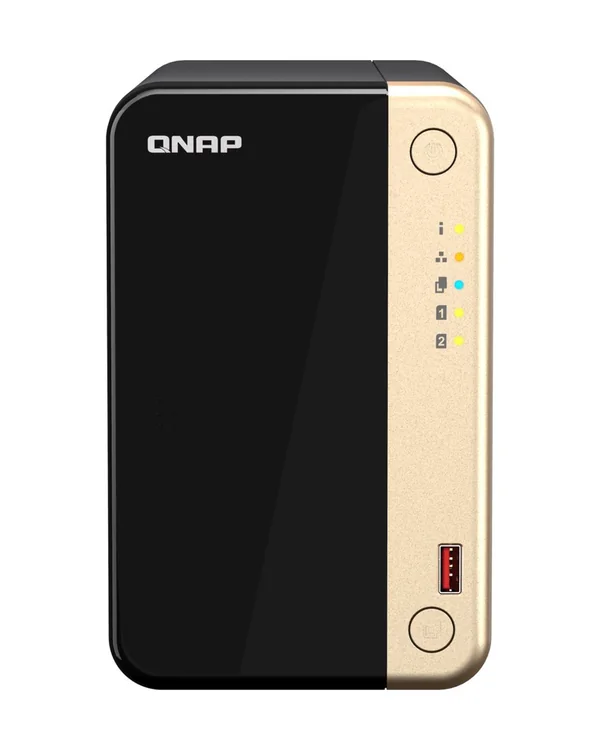
QNAP TS-133 vs TS-233 vs TS-216G vs TS-264 specifications
Every figure below comes from QNAP's hardware specification table for the exact model we sell (the TS-264 is the 8GB TS-264-8G).
Swipe the table sideways to compare all models →
| Spec | TS-133 | TS-233 | TS-216G | TS-264-8G |
|---|---|---|---|---|
| Drive bays | 1 x 3.5-inch SATA 6Gb/s | 2 x 3.5-inch SATA 6Gb/s | 2 x 3.5-inch SATA 6Gb/s | 2 x 3.5-inch SATA 6Gb/s |
| Drive types | 3.5-inch HDD, 2.5-inch SATA SSD | 3.5-inch HDD, 2.5-inch SATA SSD | 3.5-inch HDD, 2.5-inch SATA SSD | 3.5-inch HDD, 2.5-inch SATA SSD |
| Processor | ARM Cortex-A55 4-core 1.8GHz | ARM Cortex-A55 4-core 2.0GHz | ARM Cortex-A55 4-core 2.0GHz | Intel Celeron N5095 4-core/4-thread, burst up to 2.9GHz |
| Architecture | 64-bit ARM | 64-bit ARM | 64-bit ARM | 64-bit x86 |
| Graphics | Not listed | Mali-G52 | Mali-G52 | Intel UHD Graphics |
| NPU (AI accelerator) | Yes | Yes | Yes | Not listed (Edge TPU optional) |
| Memory | 2GB on board, not expandable | 2GB on board, not expandable | 4GB on board, not expandable | 8GB SODIMM DDR4, max 16GB (2 x 8GB) |
| M.2 NVMe slots | None | None | None | 2 x M.2 2280 PCIe Gen 3 x1 |
| Network | 1 x Gigabit | 1 x Gigabit | 1 x 2.5GbE + 1 x Gigabit | 2 x 2.5GbE |
| PCIe slot (10GbE upgrade) | None | None | None | 1 x PCIe Gen 3 x2 |
| USB | 1 x USB 3.2 Gen 1, 1 x USB 2.0 | 1 x USB 3.2 Gen 1, 2 x USB 2.0 | 1 x USB 3.2 Gen 1, 2 x USB 2.0 | 2 x USB 3.2 Gen 2 (10Gbps), 2 x USB 2.0 |
| HDMI output | None | None | None | HDMI 2.1, up to 4096 x 2160 at 60Hz |
| Adding drives | Single bay | Cover comes off to add drives | Front access without removing the cover | Slide-off front panel |
| Fan | 1 x 50mm | 1 x 80mm | 1 x 70mm | 1 x 70mm |
| Power, typical (drives fitted) | 7.32 W | 10.81 W | 13.907 W | 29.086 W |
| Power, disk standby | 2.74 W | 3.43 W | 4.973 W | 18.288 W |
| Power adapter | 36W | 48W | 48W | 60W |
| Size (H x W x D) | 186 x 66.1 x 157.6 mm | 186 x 91.7 x 157.6 mm | 165 x 102 x 220.6 mm | 165 x 105 x 226.5 mm |
| Max. concurrent SMB connections | 200 | 200 | 200 | 1500 |
| Operating system | QTS 5 | QTS 5 | QTS | QTS 5; also supports QuTS hero (ZFS) |
| Standard warranty | 2 years | 2 years | 2 years | 3 years |
Source: QNAP hardware specifications for TS-133, TS-233, TS-216G and TS-264-8G. Power figures are QNAP's, tested with all bays populated. "Adding drives" is from QNAP's own 2-bay comparison. "Not listed" means QNAP's table does not include the item.
One bay or two: the RAID question
The TS-133 holds one drive. That is fine as a backup target: your PCs, Macs and phones copy to it, so every file lives in two places. It is not fine as the only home for your files, because a single drive has no redundancy. All three 2-bay models can mirror two drives in RAID 1, so one drive can fail without losing data. For most Australian homes and small offices, two bays are the sensible minimum. Our 2-bay vs 4-bay vs 6-bay guide explains when to step up, and the 3-2-1 backup rule explains why RAID on its own is still not a backup. All four ship without drives: pair them with NAS-rated CMR drives from our best NAS hard drives guide.
Processor and memory: ARM or Intel?
The TS-133, TS-233 and TS-216G use 64-bit ARM Cortex-A55 quad-core processors (1.8GHz in the TS-133, 2.0GHz in the other two) with memory soldered to the board. The TS-133 and TS-233 have 2GB; the TS-216G has 4GB, which QNAP positions for users who need more multitasking. None of the three can be upgraded later, so buy the memory you need on day one.
The TS-264-8G is a different class: an Intel Celeron N5095 4-core processor (burst up to 2.9GHz) with Intel UHD Graphics, AES-NI encryption and 8GB of DDR4 in SODIMM slots, upgradable to 16GB (2 x 8GB). That headroom is what lets it run QNAP's Virtualization Station for virtual machines, many Container Station apps at once, or QuTS hero, which QNAP says needs at least 8GB of RAM.
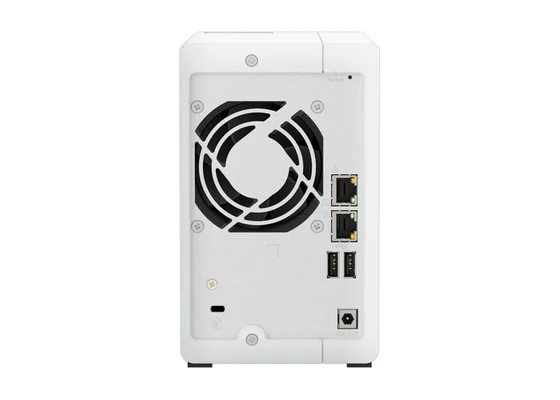
Network speed: Gigabit, 2.5GbE or 10GbE
The network port sets the ceiling for local file copies. In QNAP's testing:
- TS-133 (1 x Gigabit): 113 MB/s download and 102 MB/s upload in a Windows file transfer.
- TS-233 (1 x Gigabit): 114 MB/s download and 103 MB/s upload.
- TS-216G (1 x 2.5GbE): 291 MB/s download and 288 MB/s upload in SMB sequential throughput.
- TS-264: 295 MB/s on one 2.5GbE port, up to 589 MB/s with both 2.5GbE ports trunked, and 1644 MB/s read with a dual-port 10GbE card in the PCIe slot.
QNAP tested each model on SSD volumes with its own test setup, so treat these as a guide to the network ceiling, not a head-to-head race. Your NBN connection does not change these figures: they are local network speeds. Remote access through myQNAPcloud is limited by your NBN upload speed instead. To use 2.5GbE you also need a 2.5GbE port on your PC or switch; see our 2.5GbE NAS guide and QNAP 2.5GbE and 10GbE switch guide.
M.2 SSD, PCIe and HDMI: only on the TS-264
The TS-264-8G is the only model here with room to grow:
- Two M.2 2280 PCIe Gen 3 x1 slots for NVMe SSD caching or Qtier tiering, or a Coral Edge TPU that QNAP says lets QuMagie and QVR Face run high-speed face and object recognition. See SSD cache and M.2 on a NAS.
- One PCIe Gen 3 x2 slot for a dual-port 10GbE card, a QM2 card or a Wi-Fi 6 adapter. Our 10GbE network card guide covers the QNAP QXG cards.
- HDMI 2.1 output up to 4096 x 2160 at 60Hz, so the NAS can drive a TV or a monitor directly.
- Storage expansion with a QNAP TL-D1600S JBOD enclosure when two bays are no longer enough.
The TS-133, TS-233 and TS-216G have no M.2 or PCIe slots and no HDMI. They can still add capacity with a QNAP expansion enclosure; our TR-004 vs TL series guide explains the options.
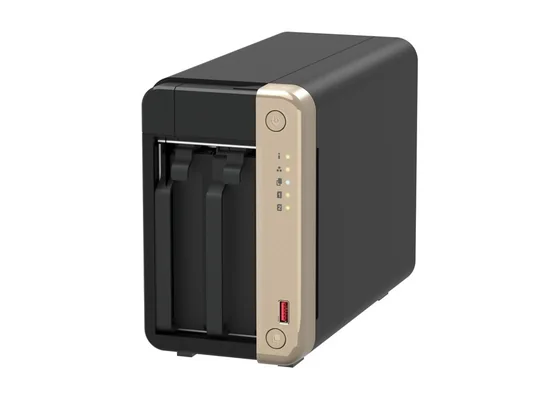
Photos, AI and apps
The three ARM models have a built-in NPU (neural processing unit). QNAP headlines "6x faster face recognition" from it, and it speeds up face recognition and photo classification in QuMagie, QNAP's photo app, while reducing load on the processor. Phones can auto-upload photos through the QuMagie or Qfile mobile apps, Windows PCs back up with NetBak Replicator, and Macs back up with Time Machine.
QTS adds snapshots against ransomware, Hybrid Backup Sync to cloud storage, myQNAPcloud remote access and QVPN with WireGuard. The TS-216G page also highlights QVR Elite surveillance, which works with over 8,000 compatible cameras.
Power use, size and noise
A NAS runs around the clock, so power draw adds up on your electricity bill. QNAP measures the TS-133 at 7.32 W typical and the TS-233 at 10.81 W with drives fitted, against 13.907 W for the TS-216G and 29.086 W for the TS-264. The ARM models are also the smallest: the TS-133 is only 66.1 mm wide and the TS-233 91.7 mm, small enough for a bookshelf or beside the NBN modem. QNAP says the TS-233 stays cool and quiet with its 80mm fan.
Warranty
The TS-133, TS-233 and TS-216G carry a 2-year QNAP warranty and the TS-264-8G a 3-year warranty. QNAP sells warranty extensions, and its TS-133 and TS-233 pages describe extending hardware warranty up to 5 years. Our where to buy QNAP in Australia guide covers warranty and support.
Which QNAP 1 or 2-bay NAS for which Australian buyer?
ARC IP Networks suggestions, based on QNAP's specifications above.
| You are | Choose | Why |
|---|---|---|
| A student or single user backing up a laptop and phone | TS-133 | One bay, small and low power; a backup copy, not the only copy |
| A family storing photos and videos from several phones | TS-233 | Two drives in RAID 1, NPU for QuMagie face recognition |
| A home with 2.5GbE PCs or a Wi-Fi 6 mesh and lots of large files | TS-216G | 2.5GbE port, 4GB RAM for more apps |
| A sole trader or small office (accountant, real estate, tradie office) | TS-216G or TS-264-8G | Snapshots, Hybrid Backup Sync, QVPN; TS-264 adds 3-year warranty |
| A home lab, Plex-style media library or virtual machines | TS-264-8G | Intel N5095, 8GB to 16GB, HDMI 2.1, M.2 cache |
| A photographer or video editor planning 10GbE | TS-264-8G | PCIe slot for a 10GbE card, two 2.5GbE ports trunked |
| Home or small shop surveillance | TS-216G | QNAP promotes it with QVR Elite |
Why buy QNAP from ARC IP Networks
- Authorised QNAP reseller: genuine QNAP sourced through authorised Australian distribution, never grey import.
- Australian stock shipped Australia-wide.
- Manufacturer's warranty and local pre-sales help choosing bays, drives, networking and expansion.
- Every product page backed by QNAP's own specifications, with the exact warranty for each model.
- GST tax invoice on every order, with trade and project pricing for installers and integrators.
See the full range on our QNAP Australia hub, or read where to buy QNAP in Australia. Questions? Call 1300 100 440 or email info@arcip.com.au.
Shop QNAP 1 and 2-bay NAS
Live Australian pricing (inc. GST) and availability are on each product page.
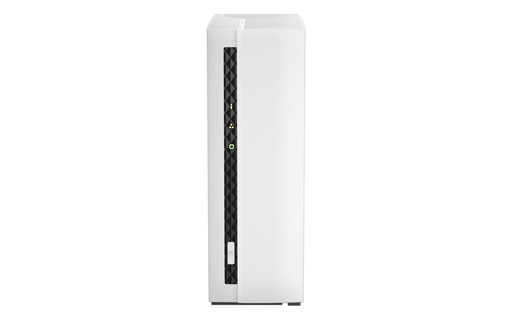
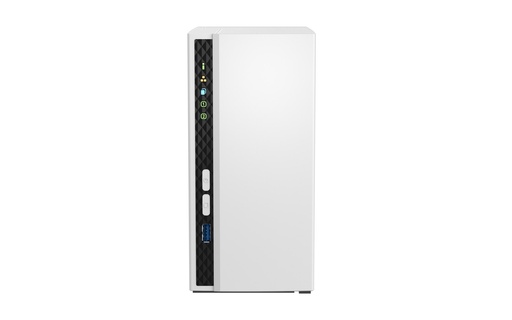
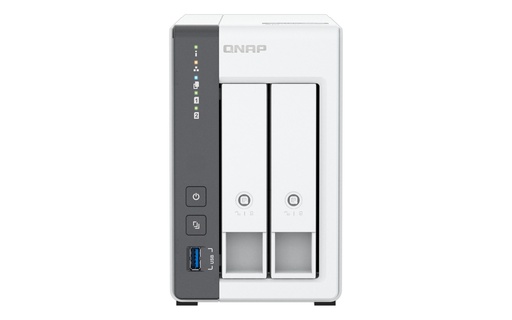
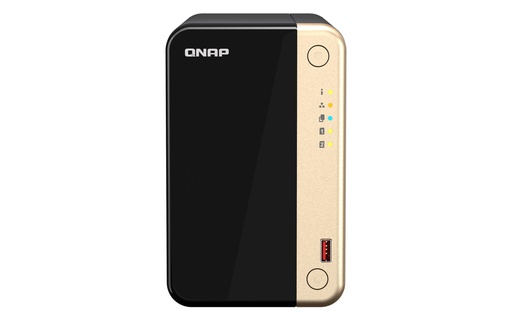
2-bay NAS: Celeron N5095, 8GB, 2 x 2.5GbE, 2 x M.2, PCIe, HDMI, 3-year warranty
Common questions
Straight answers from the ARC IP Networks team. Last reviewed October 2026.
Both are 2-bay NAS with an ARM Cortex-A55 quad-core 2.0GHz processor and an NPU. The TS-216G has 4GB RAM instead of 2GB, adds a 2.5GbE port beside its Gigabit port, and lets you add drives without removing the cover. The TS-233 has one Gigabit port and its cover comes off to add drives. Both carry a 2-year warranty.
If you want virtual machines, many apps, M.2 SSD caching, HDMI output or a future 10GbE upgrade, yes. The TS-264-8G has an Intel Celeron N5095, 8GB RAM (up to 16GB), two 2.5GbE ports, two M.2 slots, a PCIe slot and a 3-year warranty. For simple backup and photo storage, the TS-216G or TS-233 is enough.
No. QNAP lists the memory in the TS-133, TS-233 and TS-216G as on board and non-expandable. The TS-264-8G has two SODIMM slots and supports up to 16GB.
It is a good backup target, because your PCs and phones keep their own copy. As the only copy of your files it has no protection against a drive failure. For that, choose a 2-bay model and mirror two drives in RAID 1, and still keep a backup elsewhere.
Yes. The TS-264 ships with QTS 5 and QNAP says it also supports QuTS hero, its ZFS-based operating system. QNAP recommends at least 8GB RAM for QuTS hero, and switching operating systems means backing up and removing all drives first.
The TS-264. In QNAP's testing it reached 589 MB/s with both 2.5GbE ports trunked and 1644 MB/s read with a dual-port 10GbE card. The TS-216G reached 291 MB/s on its 2.5GbE port, and the Gigabit TS-233 and TS-133 about 113 to 114 MB/s.
No, they are sold diskless. Add 3.5-inch NAS hard drives or 2.5-inch SATA SSDs. Check QNAP's compatibility list or ask us for a matched set.
ARC IP Networks is an authorised QNAP reseller and supplies genuine QNAP from Australian stock with a GST tax invoice. Order at arcip.com.au, call 1300 100 440 or email info@arcip.com.au for a quote.
Not sure which QNAP NAS to buy?
Tell us how many people, devices and terabytes you need to protect. ARC IP Networks will recommend a QNAP NAS and drives and quote them, with trade pricing for installers and IT providers. Call 1300 100 440 or email info@arcip.com.au.
Related guides
- Best QNAP NAS in Australia: 2026 buying guide
- QNAP TS-433 vs TS-464 vs TS-473A: which 4-bay QNAP NAS?
- QTS vs QuTS hero: which QNAP operating system?
- 2-Bay vs 4-Bay vs 6-Bay NAS: How Many Bays Do You Need? (Australia)
- 2.5GbE NAS: Is 2.5 Gigabit Ethernet Worth It? (Australia)
- What Is a NAS? Network Attached Storage Explained (Australia)
- QNAP in Australia: the ARC IP Networks QNAP hub
- Shop all QNAP NAS