A passive optical LAN (POL) is a building or campus network built on passive optical network (PON) technology. One OLT (optical line terminal) in the main comms room sends traffic over single-mode fibre through unpowered splitters to an ONU (optical network unit) at each floor, room, desk or cabinet, and the ONU hands off ordinary Ethernet and, on PoE models, power. Switched Ethernet instead puts an active switch in every telecom room and runs copper, limited to 100 m, from there to each outlet.
How they compare: a POL typically needs fewer powered devices in floor closets, reaches up to 20 km on the fibre, is unaffected by electrical interference along the fibre, and is managed centrally from the OLT over OMCI. The trade-offs are bandwidth shared per PON port, design skills that many LAN teams do not yet have, and PoE that comes from each ONU rather than from the core.
Weighing up POL for a hotel, hospital or school? Call ARC IP Networks on 1300 100 440 or send us your floor plans for a matched OLT, fibre plant and ONU bill of materials with project pricing.
What is a passive optical LAN?
A passive optical LAN takes the PON architecture that ISPs use for fibre to the home (FTTH) and applies it inside a building or across a campus. It has three layers:
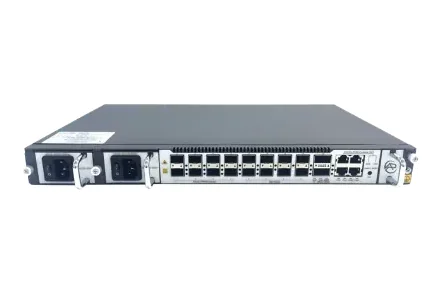
- OLT in the comms room. The ARC-OLT-8X is a 1U, 19-inch OLT with eight XG(S)-PON and GPON combo PON ports. It connects to your core router or firewall over 1 x GE RJ45, 4 x 25GE SFP28 and 2 x QSFP28 (40/50/100GE) uplinks, and has a Layer 2 / Layer 3 switch built in.
- Passive splitters and fibre. Each PON port drives one single-mode fibre, which a PLC splitter shares between many ONUs. Splitters need no power, so the riser or floor closet holds fibre, an ODF or a distribution terminal, and nothing that has to be powered or cooled for the network itself.
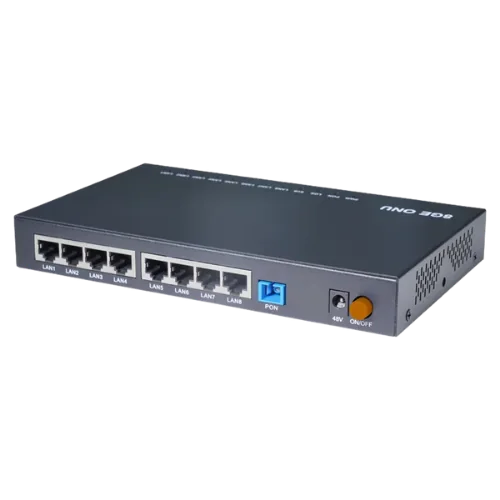
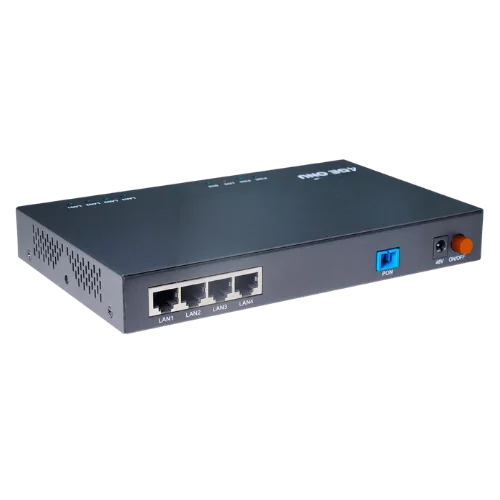
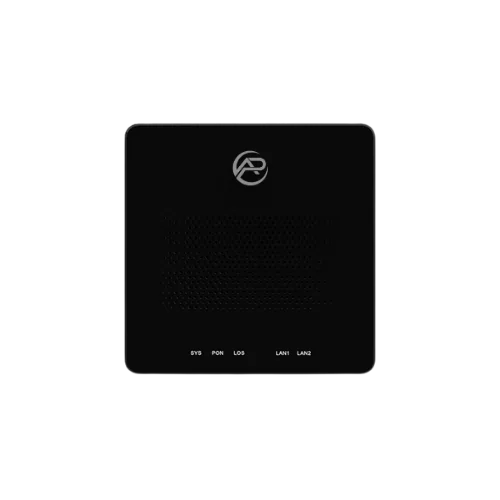
- ONUs at the edge. An ONU sits wherever the service is needed: on a desk, in a room, in a ceiling space or in a cabinet. It turns the light back into Ethernet. The ARC-ONU-8P and ARC-ONU-4P also supply PoE+ to Wi-Fi access points, IP cameras and IP phones.
Every ONU on a port hears the downstream signal; the OLT schedules the upstream so ONUs take turns. The physics, GPON vs XGS-PON and split ratios are covered in our guide to passive optical networks, so this post focuses on how a POL compares with a switched LAN.
nbn Co supplies its own NTD at each premises. A POL is your own private network: the internet service, from nbn or another carrier, connects to your router upstream of the OLT.
POL vs switched Ethernet: the comparison
Both designs deliver Ethernet to the same devices. What changes is where the active equipment sits and what runs up the risers. The comparison below is qualitative; how much each point matters depends on the building.
Swipe the table sideways to compare both designs →
| Passive optical LAN (POL) | Switched Ethernet | |
|---|---|---|
| Floor and telecom rooms | Typically passive: splitters, ODF or terminals; no switch to power or cool | Access switches in each telecom room, with power, cooling and often UPS |
| Cable from the core | Single-mode fibre, split passively towards the ONUs | Fibre or copper uplinks to each telecom room, then copper to outlets |
| Reach | Up to 20 km from OLT to ONU, within the optical budget | Twisted pair limited to 100 m per run from the telecom room |
| Electrical interference | The fibre carries light, so it is not affected by electrical noise along the run | Copper runs typically need separation from power cabling and noisy equipment |
| Bandwidth model | Shared per PON port: GPON 2.488 / 1.244 Gbps, XGS-PON 9.953 Gbps symmetric | Dedicated per switch port, shared on each uplink |
| Management | Centralised: ONUs provisioned from the OLT over OMCI | Each switch configured and patched, often through a controller |
| PoE | From each PoE ONU (30 W per port on the ARC-ONU-4P / 8P), powered locally | From the access switch, within its PoE budget |
| Upgrade path | XGS-PON runs alongside GPON on the same fibre, on different wavelengths | Typically switch replacement, and sometimes re-cabling |
| Skills | Fibre design, splicing, optical budgets and PON provisioning | Familiar to most LAN teams and cablers |
| Often suits | Large, spread-out or multi-building sites; many similar endpoints | Dense, high-throughput spaces close to a telecom room |
ARC IP Networks summary of the general trade-offs. Every building is different; we will work through the design with you.
Fewer active devices in floor closets
In a switched LAN, every telecom room is a small equipment room. In a POL, the closet typically holds only passive fibre: the splitters and an ARC-ODF-WM-24 or ARC-FDT-12-SCA. The active electronics are the OLT at the core and the ONUs at the edge. The ONUs still need power where they sit, so the power moves out to the edge rather than disappearing.
Reach of up to 20 km
The ARC-OLT-8X and the ARC DATA ONUs are rated for up to 20 km over single-mode fibre. On a large hospital campus, a school spread over several blocks or a resort with outlying buildings, one comms room can typically serve every building, without a telecom room per 100 m of copper. The practical distance depends on the optical budget: every splitter, connector and splice adds loss.
Immunity to electrical interference
Fibre carries light rather than electrical signals, so the fibre itself is not affected by electrical interference from lifts, plant rooms, kitchens or medical and workshop equipment. The copper patch leads from the ONU to each device are still copper.
Centralised management from the OLT
The ONUs are provisioned from the OLT rather than configured one by one. The ARC-ONU-8P, ARC-ONU-4P and ARC-ONU-1G are managed over ITU-T G.984.x OMCI, and the ARC-OLT-8X provides ONT auto-discovery, online ONT configuration and management, and remote software upgrade. Hardware Dying Gasp on the ONUs reports a power loss to the OLT, which helps tell a power fault from a fibre fault.
The trade-offs: what to plan for with a POL
Bandwidth is shared per PON port
Every ONU behind one OLT port shares that port's line rate: 2.488 Gbps down and 1.244 Gbps up on GPON (ITU-T G.984), or 9.953 Gbps symmetric on XGS-PON (ITU-T G.9807.1). The OLT allocates upstream time with dynamic bandwidth allocation (T-CONT DBA). Plan the split ratio from expected traffic, not only from port counts: the ARC-OLT-8X supports up to 1:256 per port, with 1:128 recommended, and a lighter split leaves more for each ONU. Sites that need more than a gigabit at a desk or rack can use the ARC-ONU-X (XGS-PON or XG-PON, chosen at order) on the same fibre plant.
Different design skills
A POL is designed like an outside-plant fibre network: split ratios, optical loss budgets, splicing, connector polish (APC and UPC must not be mixed) and the receive window of each ONU. Your LAN team or integrator will also need to learn PON provisioning on the OLT. In Australia, fixed cabling on customer premises must be installed by an ACMA-registered cabler with the right endorsement. Our guides to ODFs and fibre splicing cover the fibre side.
PoE comes from the ONU, not the core
There is no PoE over fibre. Access points, cameras and phones are powered by a PoE ONU near them: the ARC-ONU-4P has four PoE+ ports and a 60 W total budget, the ARC-ONU-8P eight PoE+ ports and 130 W, both at up to 30 W per port under IEEE 802.3at / 802.3af. Each needs local mains power through its 54 V adapter, so plan a power outlet, and UPS where devices must stay up in an outage, at every ONU location. Plan the combined device load rather than 30 W on every port. Copper from the ONU to each device is still limited to 100 m.
One fibre serves many ONUs
Every ONU on a splitter depends on the same feeder fibre and OLT port. Where downtime matters, plan route diversity, spare fibres and spare ports in the design. Also check that the ONUs and OLT you choose are tested together: we supply the OLT and ONUs as a matched set.
Contact us for project pricing
Send us your floor plans, endpoint counts and where your comms room sits. We will put together a matched POL bill of materials, from the OLT and optics to ODFs, terminals, splitters and PoE ONUs, with project pricing. Call 1300 100 440.
Passive optical LAN for hotels
Hotels are a typical fit: many similar rooms, long corridors and back-of-house areas spread across floors and buildings. A typical design looks like this:
- Guest rooms. An ONU in or near each room, or a PoE ONU serving a group of rooms, hands off Ethernet to the room's TV, phone and Wi-Fi access point. The ARC-ONU-1G gives one Gigabit port; the ARC-ONU-4P and ARC-ONU-8P add PoE+ for an in-room or corridor access point and IP phone.
- IPTV. Hotel TV systems often use multicast. The ONUs support IGMP: the ARC-ONU-4P and ARC-ONU-8P have IGMP v1/v2 and IGMP snooping with up to 8 multicast VLANs and 64 groups, the ARC-ONU-X has IGMP v1/v2/v3 and MLD snooping, and the ARC-OLT-8X has IGMP snooping, IGMP proxy and 2048 IP multicast groups. Check the channel count and the IPTV platform's requirements with its vendor at design stage.
- Back of house. Reception, offices, kitchens, laundries and plant rooms share the same fibre plant, kept apart from guest traffic with VLANs. Car parks and building entries can take PoE ONUs for CCTV; see our CCTV over fibre guide.
Passive optical LAN for hospitals
Hospitals and health campuses typically carry many separate networks over one site: clinical systems, nurse call, building management, security and access control, staff and guest Wi-Fi. On a POL, they are separated with VLANs:
- The ARC-OLT-8X supports 4096 VLANs, QinQ and VLAN translation, port isolation, ACLs, and VLAN division with user separation. It also adds RADIUS and TACACS+ for administrator access.
- The ARC-ONU-4P and ARC-ONU-8P support VLAN tag, transparent and trunk modes, up to 8 VLANs per ONU, with four QoS queues and 802.1p priority, so a PoE ONU in a ward can carry access points, phones and cameras on separate VLANs.
- Rogue-ONU detection and authentication by MAC, LOID or serial number help stop an unknown device joining the PON.
VLAN separation is logical, not physical. Confirm the design against the hospital's own ICT security policy, and keep systems that must be physically separate on their own fibres or OLT ports. The fibre's reach and immunity to electrical interference suit buildings with long internal runs and electrically noisy plant.
Passive optical LAN for schools
School campuses typically have classrooms in several blocks, a library, a hall and outdoor areas, often added over the years. A POL can link them all from one comms room:
- Classrooms. A PoE ONU per classroom or per block, such as the ARC-ONU-8P, can feed the teacher's desk, a display and the room's Wi-Fi access point from one fibre.
- Wi-Fi access points. Powered by the PoE ONUs at up to 30 W per port (802.3at). Check each access point's PoE class and the ONU's total budget before you allocate ports.
- CCTV. Cameras at gates, car parks and playgrounds are often beyond 100 m of copper from any comms room. A ARC-ONU-4P at a pole or gate powers a small group of cameras; our CCTV over fibre guide covers this in detail.
- Admin and staff desks. The ARC-ONU-1G gives a single Gigabit port; the ARC-ONU-X gives 10GE and GE where a staff room switch or a server needs more.
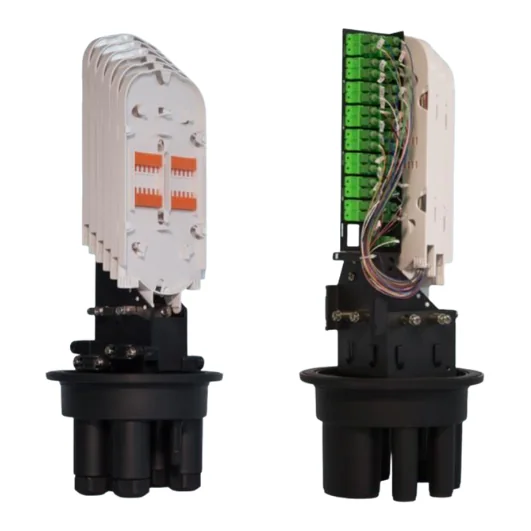
- Between blocks. Fibre between buildings needs outdoor-rated joints and terminals, such as the IP68 ARC-DJC-16-S16 closure with its integral 1 x 16 PLC splitter.
Typical POL uses at a glance
| Site | Typical ONUs | Features that help |
|---|---|---|
| Hotel guest floors | ONU-1G per room, or ONU-4P / ONU-8P per room group | IGMP snooping for IPTV; PoE+ for APs and phones; VLANs for guest vs back of house |
| Hospital wards and clinics | ONU-8P or ONU-4P per ward or zone | VLANs, QoS and port isolation; fibre immune to electrical noise; long internal runs |
| School classrooms and blocks | ONU-8P per block, ONU-4P per small group | PoE+ for Wi-Fi APs; one comms room for a spread-out campus |
| Car parks, gates, grounds | ONU-4P or ONU-8P | Powers cameras far past the 100 m copper limit |
| Desks and admin rooms | ONU-1G, or ONU-X for 10GE | Gigabit or 10G hand-off to a desk, switch or server |
Typical uses, written as ARC IP Networks suggestions from the published specifications. They are not case studies.
ARC DATA parts for a passive optical LAN
Here is how the ARC DATA range maps onto a POL, from the core to the edge. Full specifications are on each product page; fibre plant parts are covered in more depth in our PON guide.
Swipe the table sideways to see every part →
| Layer | ARC DATA part | Role in the POL |
|---|---|---|
| Core | ARC-OLT-8X | 8 XG(S)-PON / GPON combo ports, 1:256 max split (1:128 recommended), 20 km, 25GE and 100GE uplinks, 4096 VLANs. PON and uplink optics ordered separately |
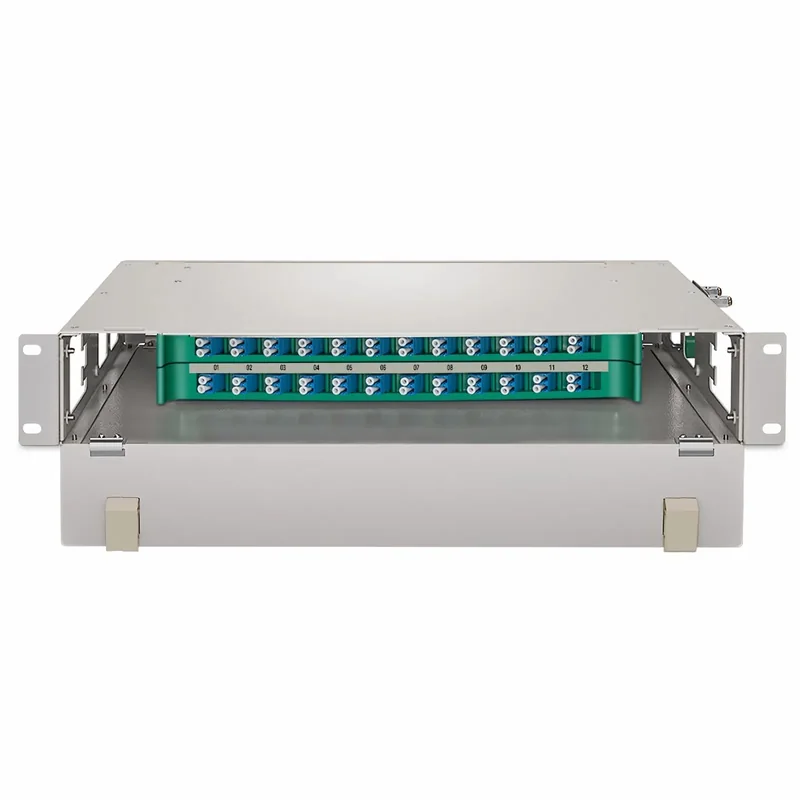
| Comms room fibre | ARC-ODF-RM-2U | 2U rack ODF for 24 cores beside the OLT |
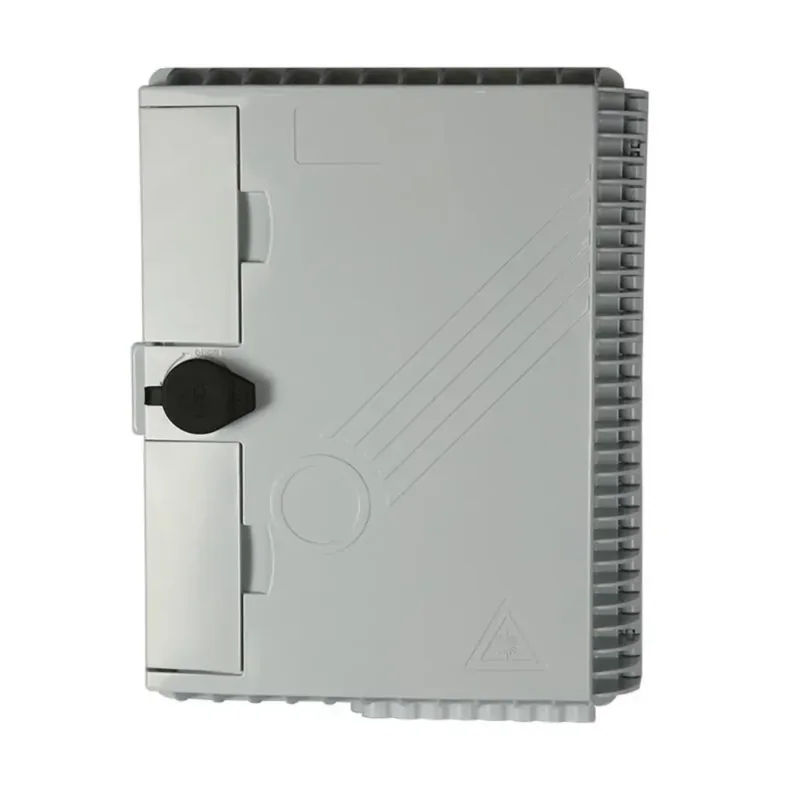
| Riser, floor or building entry | ARC-ODF-WM-24, ARC-FDT-12-SCA | Lockable wall ODF; IP-68 terminal for up to 12 drops with one optional 1 x 8 PLC splitter |
| Between buildings | ARC-DJC-16-S16, ARC-FDT-24-SCA, ARC-PCD-4A | IP68 dome closure with integral 1 x 16 PLC; IP-68 terminals for 24 or 4 drops |
| APs, cameras, phones | ARC-ONU-8P, ARC-ONU-4P | 8 or 4 x Gigabit PoE+, 30 W per port, 130 W or 60 W total, GPON / EPON |
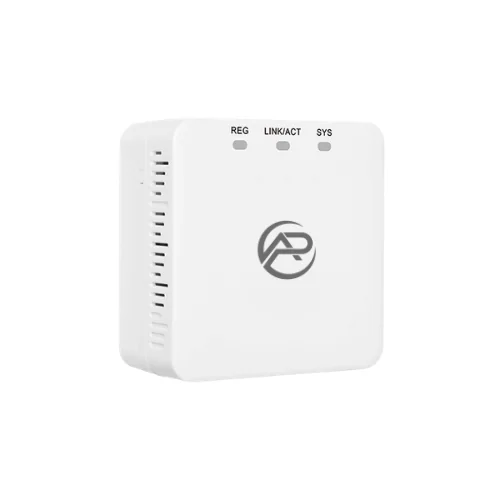
| Desks and rooms | ARC-ONU-1G, ARC-ONU-X | 1 x GE on GPON / EPON; or 1 x 10GE + 1 x GE on XGS-PON or XG-PON |
| Router or firewall with SFP | ARC-ONU-STICK-G | GPON / EPON ONU in an SFP module |
Splitters for the FDT and PCD terminals are ordered separately.
Matching ONUs to OLT ports
- The ARC-ONU-4P, ARC-ONU-8P and ARC-ONU-1G are GPON / EPON dual-mode and register to a GPON port.
- The ARC-ONU-X is a 10G PON ONU, XGS-PON or XG-PON chosen at order.
- The ARC-OLT-8X's ports run XG(S)-PON and GPON combo mode by default with the N2_C+ combo module fitted, and each port can be hot-switched to single GPON mode on its own. That lets a site start on GPON and move individual ports to 10G later.
- Most ONUs here use SC/UPC connectors. Match the polish across the plant.
ARC DATA passive optical LAN parts
Full specifications are on each product page. For a matched POL bill of materials, call 1300 100 440.
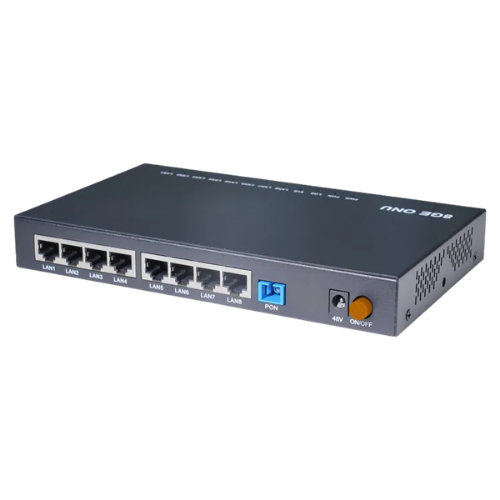
8 x Gigabit PoE+, 30 W per port, 130 W total, GPON / EPON, 20 km. In stock.
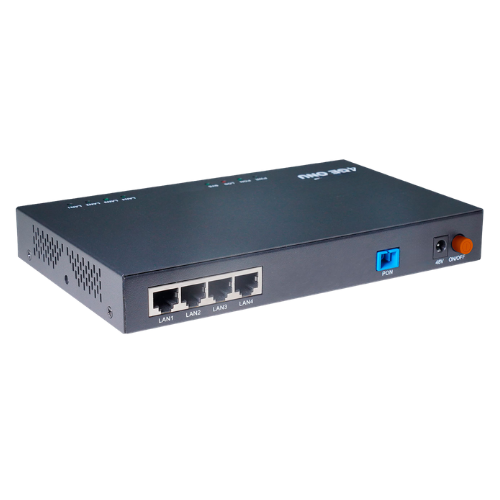
4 x Gigabit PoE+, 30 W per port, 60 W total, GPON / EPON, 20 km. In stock.
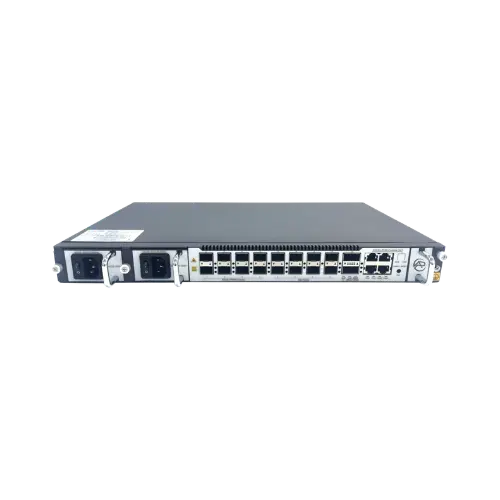
1U OLT, 8 XG(S)-PON / GPON combo ports, 25GE and 100GE uplinks. Contact us for availability and project pricing.
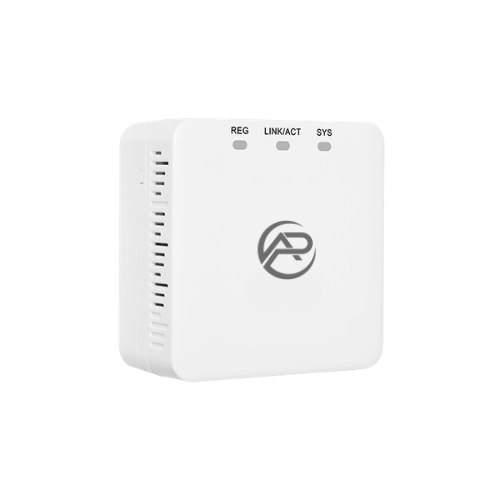
GPON / EPON ONU with one Gigabit Ethernet port, 4 W or less. Contact us for availability and project pricing.
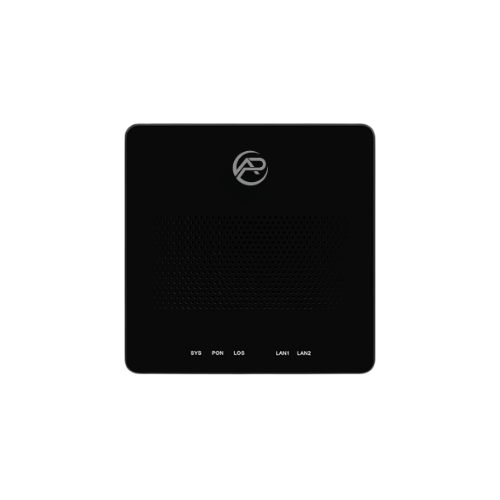
XGS-PON or XG-PON ONU with 1 x 10GE and 1 x GE, 12 W. Contact us for availability and project pricing.
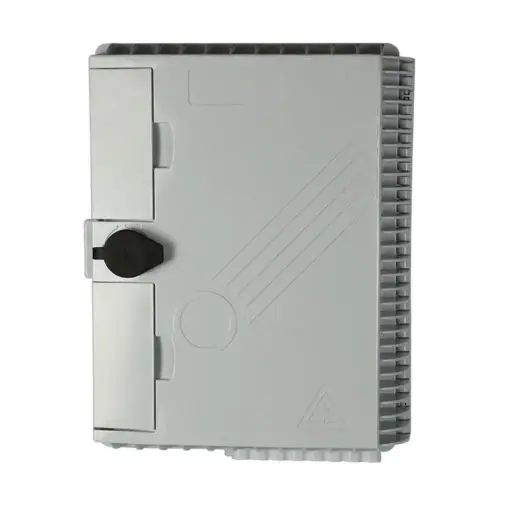
Up to 12 drops, optional 1 x 8 PLC splitter, IP-68. Contact us for availability and project pricing.
Common questions
Straight answers from the ARC IP Networks team. Last reviewed November 2026.
A passive optical LAN is a building or campus network built on PON technology. An OLT in the main comms room sends traffic over single-mode fibre through unpowered splitters to an ONU at each floor, room, desk or cabinet, and the ONU hands off Ethernet and, on PoE models, power.
A passive optical network (PON) is the technology: OLT, passive splitters and ONUs on shared fibre. A POL is a PON used as the local network of a building or campus, such as a hotel, hospital or school, rather than for fibre to the home.
It depends on the site. A POL typically needs fewer powered devices in floor closets, reaches up to 20 km and is managed centrally from the OLT. Switched Ethernet gives dedicated bandwidth per port and is familiar to most LAN teams. Large, spread-out sites often favour POL; dense spaces near a telecom room often favour switches.
The ARC DATA ARC-OLT-8X and ONUs are rated for up to 20 km over single-mode fibre. The practical distance depends on the optical budget, because every splitter, connector and splice adds loss. Copper from the ONU to each device is still limited to 100 m.
Yes. Every ONU on one OLT port shares its line rate: 2.488 Gbps down and 1.244 Gbps up on GPON, or 9.953 Gbps symmetric on XGS-PON. The OLT allocates upstream time dynamically, and a lighter split ratio leaves more bandwidth for each ONU.
Yes, from a PoE ONU near the devices. The ARC-ONU-8P has eight PoE+ ports and a 130 W budget, and the ARC-ONU-4P has four and 60 W, both at up to 30 W per port. Each ONU needs local mains power through its adapter.
Typically, yes, if the IPTV system uses multicast. The ARC-ONU-4P and ARC-ONU-8P support IGMP v1/v2 and IGMP snooping, and the ARC-OLT-8X supports IGMP snooping, IGMP proxy and 2048 multicast groups. Confirm the IPTV platform requirements with its vendor.
With VLANs. The ARC-OLT-8X supports 4096 VLANs, QinQ, port isolation and ACLs, and each PoE ONU supports up to 8 VLANs. VLAN separation is logical, so systems that must be physically separate can use their own fibres or OLT ports.
OMCI (ONU Management and Control Interface) is the ITU-T protocol the OLT uses to provision and manage ONUs. On a POL it means ONUs are configured centrally from the OLT, not one by one on site.
ARC IP Networks supplies the ARC DATA OLT, ONUs, ODFs, closures and terminals for private fibre networks, delivered Australia-wide. nbn Co supplies its own NTD, so this equipment is for your own network. Call 1300 100 440 for project pricing.
Related fibre and networking guides
- What Is a Passive Optical Network (PON)? A Guide for Australian Fibre Projects
- CCTV Over Fibre: Power IP Cameras Beyond 100 m with a PoE GPON ONU
- What Is an ODF? Rack-Mount vs Wall-Mount Fibre Patch Panels in Australia
- Fibre Splicing in the Field: Splice Closures, Trays and Distribution Terminals
- How to Run PoE Beyond 100 m in Australia: UniFi Long-Range Options