Twisted-pair Ethernet, and the PoE that rides on it, stops at 100 m per run. To put IP cameras further out than that, run fibre instead. A passive optical network (GPON) carries the signal up to 20 km over one single-mode fibre, through passive splitters that need no power. At the far end, a PoE GPON ONU turns that fibre back into powered Ethernet ports for the cameras. The ARC DATA ARC-ONU-8P has eight Gigabit PoE+ ports (up to 30 W each, 130 W total). The ARC-ONU-4P has four PoE+ ports and a 60 W total. Either one replaces the media converter, PoE switch and injectors in the far-end cabinet.
Quick pick: a single pole, gate or small group of cameras suits the ARC-ONU-4P. A car-park level, building or cabinet with up to eight cameras or access points suits the ARC-ONU-8P. At the head-end, the ARC-OLT-8X OLT and the fibre plant (ODF, dome closure or distribution terminal) complete the system.
Planning a site? Call ARC IP Networks on 1300 100 440 or contact us for project pricing and a matched OLT, splitter and ONU bill of materials.
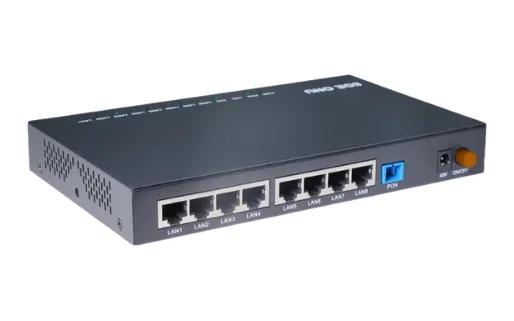
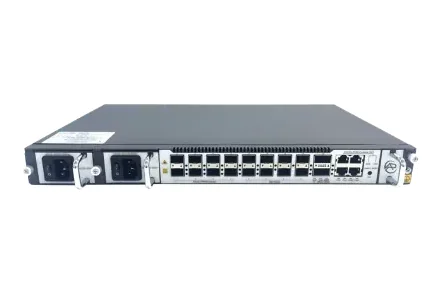
The parts of a CCTV-over-fibre system
A fibre CCTV network has an active device at each end and passive fibre plant in between. Nothing between the comms room and the camera cabinet needs power.
| Part | What it does | Where it goes |
|---|---|---|
| ARC-OLT-8X OLT | Head-end of the PON: eight PON ports, uplinks to your core switch and NVR network | Comms room or rack |
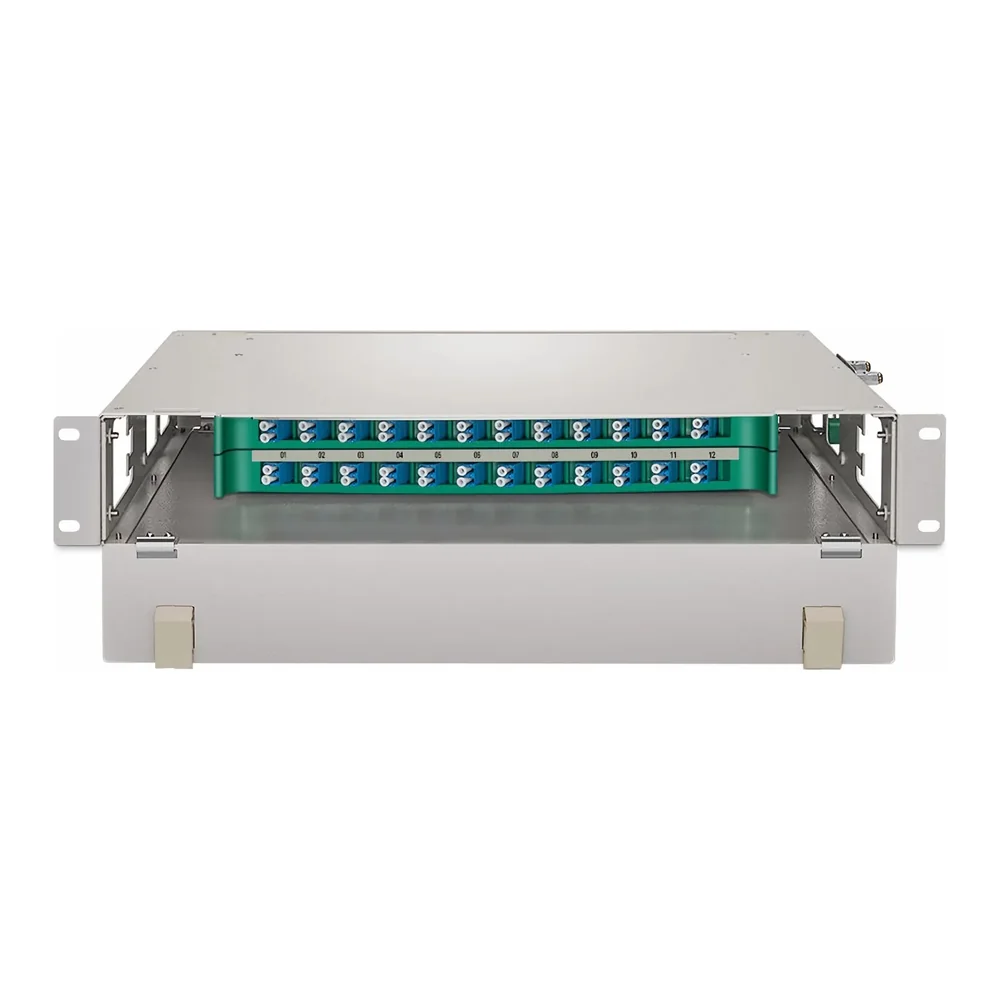
| ARC-ODF-RM-2U ODF | Terminates, splices and patches 24 fibre cores in 2U | Rack, next to the OLT |
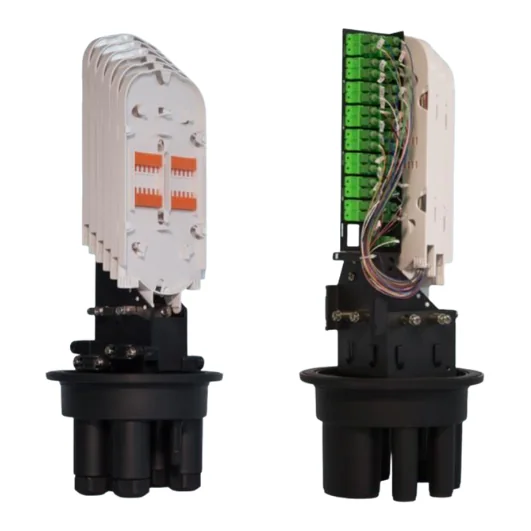
| ARC-DJC-16-S16 dome closure | Sealed splice joint with a built-in 1 x 16 PLC splitter | Pit, duct, pole, wall or aerial |
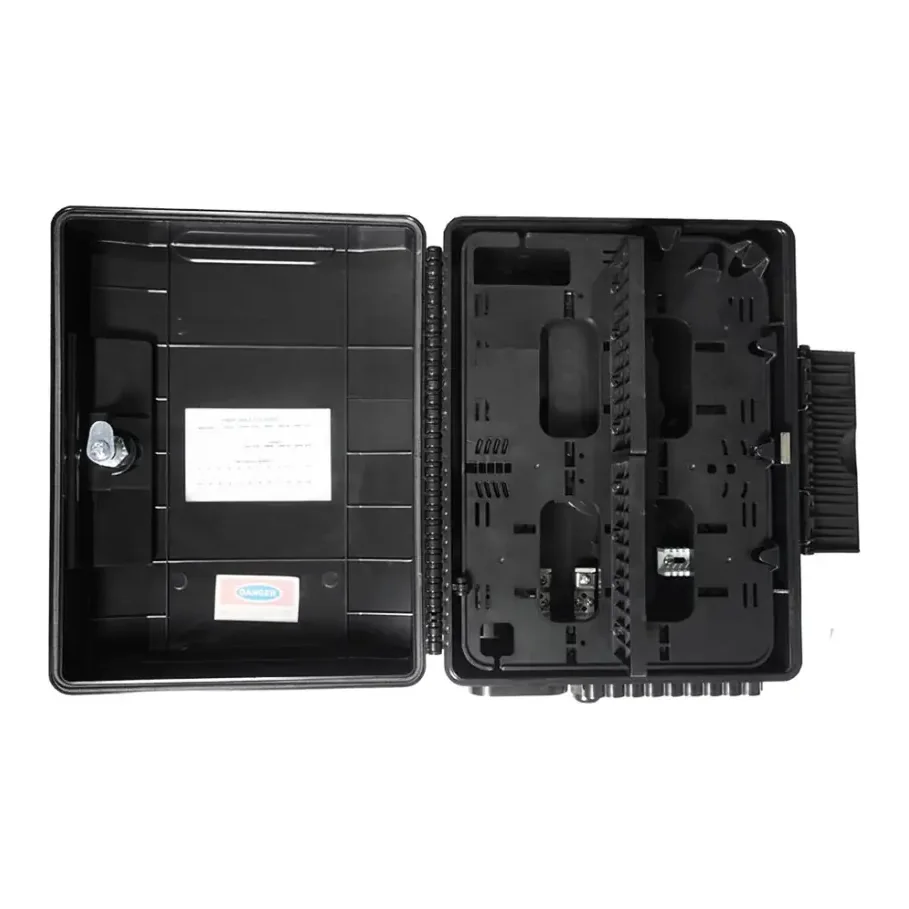
| ARC-FDT-24-SCA terminal | Distribution terminal with 24 pre-installed SC drop ports | Wall, pole or aerial strand |
| ARC-ONU-8P | Fibre in, 8 x Gigabit PoE+ out, 130 W total | Camera cabinet, car-park level, building riser |
| ARC-ONU-4P | Fibre in, 4 x Gigabit PoE+ out, 60 W total | Camera pole, gate or small remote cabinet |
Roles summarised from the ARC DATA product pages on arcdata.com.au.
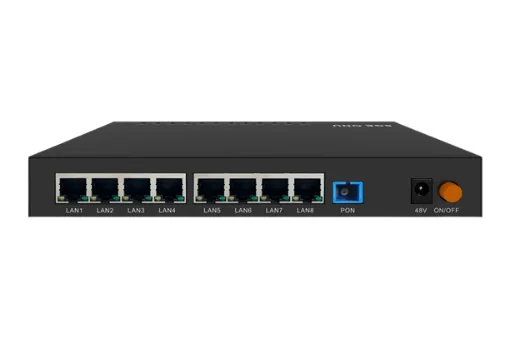
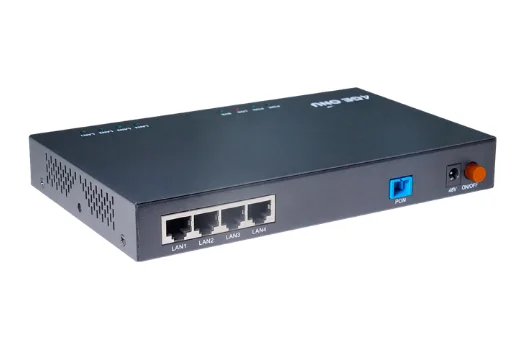
ARC-ONU-8P vs ARC-ONU-4P specifications
The two ONUs share the same chassis, optics and software. The difference is port count and total power.
| Specification | ARC-ONU-8P | ARC-ONU-4P |
|---|---|---|
| Ethernet ports | 8 x Gigabit RJ45, all PoE+ | 4 x Gigabit RJ45, all PoE+ |
| PoE standard | IEEE 802.3at / 802.3af | IEEE 802.3at / 802.3af |
| Power per port | Up to 30 W | Up to 30 W |
| Total power (including PoE) | 130 W or less | 60 W or less |
| PON interface | 1 x XPON: GPON Class B+ and EPON PX20+, auto-detecting | 1 x XPON: GPON Class B+ and EPON PX20+, auto-detecting |
| Fibre connector | SC/UPC, single-mode | SC/UPC, single-mode |
| Distance to the OLT | Up to 20 km | Up to 20 km |
| Wavelength | TX 1310 nm, RX 1490 nm | TX 1310 nm, RX 1490 nm |
| Receive sensitivity | -27 dBm | -27 dBm |
| VLAN | Tag, transparent and trunk (up to 8 VLANs) | Tag, transparent and trunk (up to 8 VLANs) |
| QoS and multicast | 4 queues (SP, WRR, 802.1p); IGMP v1/v2 snooping, 64 groups | 4 queues (SP, WRR, 802.1p); IGMP v1/v2 snooping, 64 groups |
| Management | OMCI (ITU-T G.984.x) from the OLT; web, Telnet, CLI | OMCI (ITU-T G.984.x) from the OLT; web, Telnet, CLI |
| Power adapter | External AC-DC, DC 54 V / 2.4 A | External AC-DC, DC 54 V / 1.11 A |
| Dimensions (L x W x H) | 205 x 125 x 28 mm | 205 x 125 x 28 mm |
| Operating temperature | -10 °C to +55 °C, 10 to 90% RH non-condensing | -10 °C to +55 °C, 10 to 90% RH non-condensing |
Figures from the ARC DATA ARC-ONU-8P and ARC-ONU-4P product pages and datasheets.
Why copper Ethernet and PoE stop at 100 m
The Ethernet standards for twisted-pair cable (100BASE-TX and 1000BASE-T over Cat5e or Cat6) are specified for a channel of up to 100 m, including patch leads. PoE uses the same pairs, so the same limit applies. Beyond that length the link is outside the standard and can't be relied on.
Inside a single building that is rarely a problem. On a council reserve, a multi-level car park, a school or hospital campus, or an industrial yard, the nearest comms room is often hundreds of metres from the camera. The usual workarounds each have a catch:
- PoE extenders start another 100 m segment, but every extender is one more active device in the cable run, powered from the same PoE feed.
- A fibre media converter plus a PoE switch works, but the far-end cabinet then holds a converter, a switch and often a separate PoE power supply, each with its own power and a point of failure.
- Point-to-point fibre to every cabinet uses a switch port and a fibre pair per site at the head-end.
Fibre also does not conduct electricity. Between buildings or out to poles, it carries no earth-potential differences or electrical interference along the run, which copper can. For PoE power-class basics, see our guide to PoE for CCTV: 802.3af, 802.3at and 802.3bt.
How a passive optical network carries CCTV
A passive optical network (PON) is a point-to-multipoint fibre network. GPON is the ITU-T G.984 version of it. Every GPON system has the same three layers:
- The OLT (optical line terminal) sits in the comms room and connects to your core switch, NVR or VMS network. Each PON port on the OLT serves many ONUs.
- The optical distribution network (ODN) is the fibre, the splice joints and the passive splitters that fan one feeder fibre out to many drops. Nothing in the ODN needs power.
- The ONU (optical network unit) sits at the far end and hands off Ethernet. A PoE ONU such as the ARC-ONU-8P also powers the cameras.
The ARC-ONU-8P and ARC-ONU-4P reach up to 20 km from the OLT over single-mode fibre. They transmit at 1310 nm and receive at 1490 nm, the GPON wavelengths. They are dual-mode, so each one detects whether it is on a GPON or EPON OLT and registers to it.
Bandwidth is shared per PON port. On the ARC-OLT-8X, a GPON port runs at 2.488 Gbps downstream and 1.244 Gbps upstream, shared by every ONU on that port. CCTV traffic flows mostly upstream, from the cameras to the NVR. Add up the camera bitrates on each PON port and check the total against that upstream figure. Spread busy sites across more PON ports if needed.
ARC-ONU-8P or ARC-ONU-4P: choosing by ports and PoE budget
Each port on both ONUs delivers up to 30 W under IEEE 802.3at (PoE+) and also powers 802.3af devices. Under the PoE+ standard, 30 W is the figure at the switch port. After cable loss, up to 25.5 W is available at the device. The figure that limits a design is the total budget including PoE:
- ARC-ONU-8P: 130 W total. Eight devices drawing a full 30 W each would need 240 W, so plan the combined load, not 30 W on every port.
- ARC-ONU-4P: 60 W total. Four devices at a full 30 W each would need 120 W, so the same rule applies.
Take the maximum PoE draw for each camera, access point or intercom from its own datasheet. Include IR at night and any heater, and check the sum is inside the budget. If a camera's datasheet calls for IEEE 802.3bt (PoE++), it needs more than these PoE+ ports supply, so power it another way. Our guide to PoE budgets and port types covers the maths in more detail.
Installing the ONU at the camera end
The fibre carries data, not power. The ONU runs from its external AC-DC power adapter (DC 54 V), so the far-end cabinet needs a mains supply. In Australia, new mains outlets must be installed by a licensed electrician. Beyond that, the cabinet needs only the ONU and its adapter: no media converter, no PoE switch and no injectors.
- Environment: the ONUs are rated for -10 °C to +55 °C and 10 to 90% humidity, non-condensing. The product pages list no IP rating, so mount the ONU inside a ventilated, weatherproof cabinet or a plant room. Don't leave it exposed on a pole.
- Size: 205 x 125 x 28 mm. Check the internal dimensions of the cabinet, leaving room for the adapter and the fibre slack.
- Fibre connection: a single-mode fibre terminated SC/UPC.
- Power-loss alerts: hardware Dying Gasp tells the OLT when the ONU loses power, so a tripped circuit at a remote cabinet shows up at the head-end.
The fibre plant: from the comms room to the pole
The passive part of the network is where most of the design work goes. The ARC DATA range covers each point:
- Head-end termination: the ARC-ODF-RM-2U is a 2U, 19-inch optical distribution frame. It holds 24 cores on two sliding trays of 12 SC positions, takes SC, LC or FC adapters, and is rated at 0.3 dB insertion loss or less.
- Splice and split in the field: the ARC-DJC-16-S16 is an IP68 dome closure with a built-in 1 x 16 PLC splitter, so one feeder fibre leaves as sixteen drops. It holds up to 144 splices on six trays. It mounts aerial, in duct, buried, on a pole or on a wall, and a gas-test valve lets you check the seal on site.
- Distribution terminal: the ARC-FDT-24-SCA has 24 pre-installed waterproof SC adapters and splices up to 120 fibres. It takes up to three 1 x 8 PLC splitters, which are ordered separately. The IP-68 enclosure is rated -40 °C to +75 °C and mounts on a wall, a pole or an aerial strand.
Plan the loss budget. Every connector, splice and splitter loses some light. The total must stay within the optics' budget: the ONU receive sensitivity is -27 dBm. Test each link end to end at commissioning and keep the results with the as-built records. For what IP68 and IK ratings mean outdoors, see IP and IK ratings explained.
The OLT, ODF, dome closure and distribution terminal are supplied per project. Contact us for availability and project pricing.
The head-end: ARC-OLT-8X
The ARC-OLT-8X is a 1U, 19-inch optical line terminal with eight PON ports. Every port runs XG(S)-PON and GPON combo mode by default, and each can be hot-switched to single GPON mode on its own. Each port supports an optical split of up to 1:256 (1:128 recommended) and up to 20 km reach. The PON optics are ordered separately: an N2_C+ combo module, or a Class C++++ module for single GPON mode.
Uplinks are 1 x GE RJ45, 4 x 25GE SFP28 and 2 x QSFP28 at 40/50/100GE. These hand camera traffic to the core switch and recording servers. The node draws 150 W, takes single or dual AC or DC power, and is managed by CLI, web or SNMP, with ONT auto-discovery and remote software upgrade.
Choosing the PON optics and matching them to the ONUs and the loss budget is part of our project quote. Contact us for availability and project pricing.
VLANs, multicast and management
- Separate the cameras: both ONUs support VLAN tag, transparent and trunk modes (up to 8 VLANs). Put CCTV on its own VLAN, away from corporate and guest traffic.
- QoS: 4 queues with SP and WRR scheduling and 802.1p priority.
- Multicast video: IGMP v1/v2 and IGMP snooping, up to 8 multicast VLANs and 64 groups.
- Port protection: port rate limiting, loop detection, flow control and storm control.
- PON protection: rogue-ONU detection, triple churning, and MAC, LOID or SN/password authentication.
- Central management: the OLT provisions each ONU over ITU-T G.984.x OMCI, with automatic firmware upgrade. Web, Telnet and CLI are there for local work.
PoE ONU vs PoE extender vs fibre media converter
| Approach | How it gets past 100 m | What sits at the far end | Watch out for |
|---|---|---|---|
| PoE GPON ONU (ARC-ONU-8P / 4P) | Single-mode fibre from the OLT, up to 20 km, through passive splitters | One ONU and its power adapter, with 4 or 8 PoE+ ports | Needs an OLT and fibre plant; PoE+ only (no 802.3bt) |
| PoE extender | Starts another copper segment per extender | One extender per hop, powered from the PoE feed | Every hop is another active device in the run; check the extender datasheet |
| Fibre media converter + PoE switch | Point-to-point fibre per site | Converter, PoE switch and their power supplies | More boxes, power points and failure points per cabinet; a fibre pair or port per site at the head-end |
ARC IP Networks comparison. ONU figures from the ARC DATA product pages; check third-party products against their own datasheets.
Which setup for which Australian site?
| Site | Our pick | Why |
|---|---|---|
| Multi-level or open-air car park | ARC-ONU-8P per level or cabinet | Up to eight PoE+ cameras per cabinet from one fibre |
| Council streets, parks and reserves | ARC-ONU-4P per pole cabinet | A small group of cameras at each pole; splitters fan one feeder out to many poles |
| School campus | ARC-ONU-8P per building | Cameras and Wi-Fi access points per building, central management from one OLT |
| Hospital or aged-care campus | ARC-ONU-8P per wing or riser | Fibre between buildings carries no electrical interference; CCTV on its own VLAN |
| Industrial yard, depot or factory | ARC-ONU-4P at gates, ARC-ONU-8P at buildings | Long runs across the site; Dying Gasp flags a lost circuit at the head-end |
| University or business campus | ARC-OLT-8X with a mix of ONUs | Eight PON ports split many ways, one head-end for every building |
ARC IP Networks suggestions based on the ARC DATA specifications. Confirm PoE loads and bandwidth for each design.
The ARC DATA fibre CCTV range at ARC IP Networks
Full specifications and live Australian pricing (inc. GST) are on each product page.
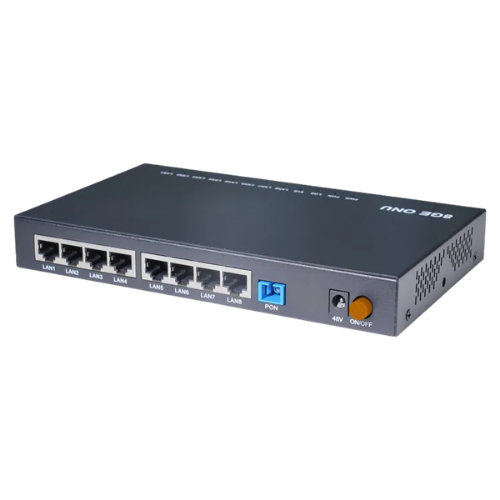
8 x Gigabit PoE+ ports (30 W each, 130 W total) from one GPON or EPON fibre, up to 20 km.
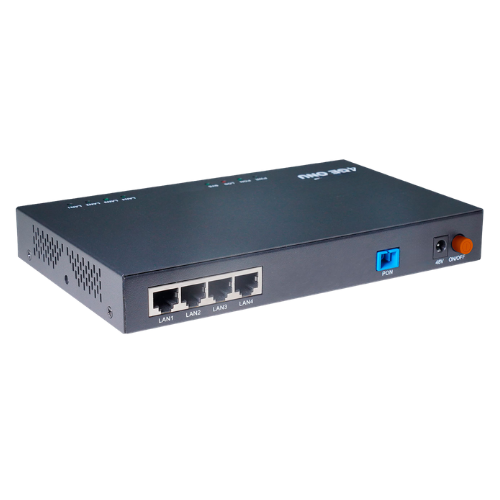
4 x Gigabit PoE+ ports (30 W each, 60 W total) for a pole, gate or small cabinet.
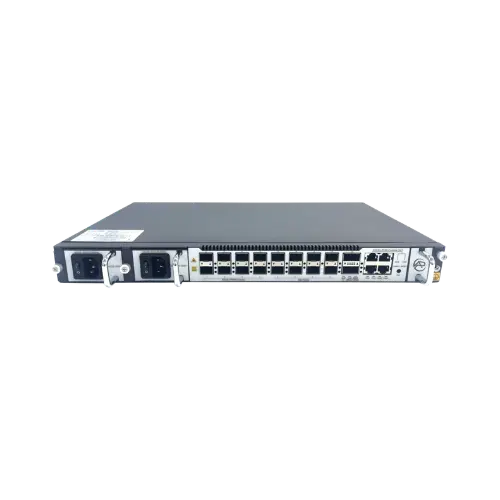
1U OLT, 8 XG(S)-PON / GPON combo ports, 25GE and 100GE uplinks. Contact us for availability and project pricing.
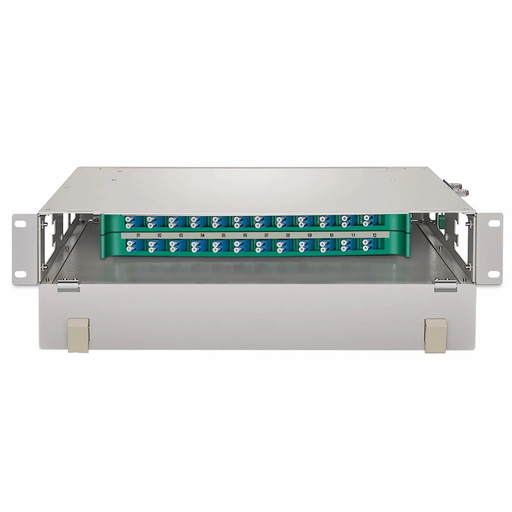
2U rack-mount ODF, 24 cores on two sliding trays, SC/LC/FC. Contact us for availability and project pricing.
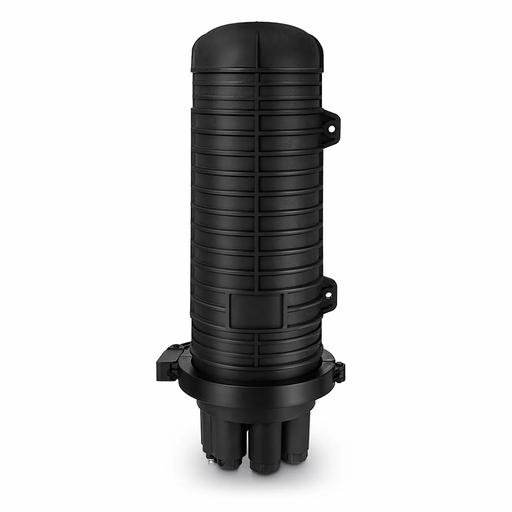
IP68 dome closure with a built-in 1 x 16 PLC splitter, 144 splices. Contact us for availability and project pricing.
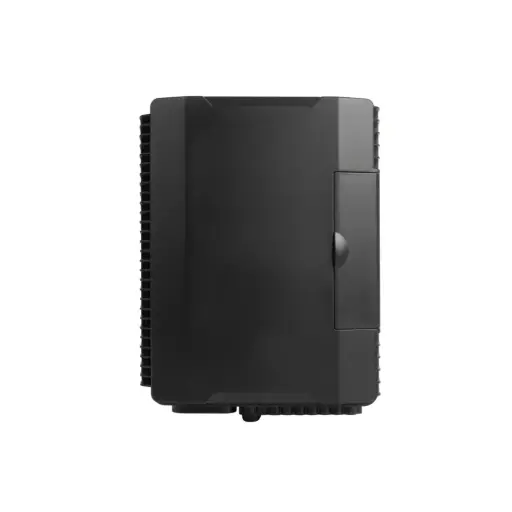
IP-68 distribution terminal, 24 SC drop ports, 120 splices. Contact us for availability and project pricing.
Common questions
Straight answers from the ARC IP Networks team. Last reviewed November 2026.
CCTV over fibre means running the camera network on optical fibre instead of copper Ethernet cable. Copper Ethernet and PoE are limited to 100 m per run, while a GPON passive optical network reaches up to 20 km over single-mode fibre. A PoE ONU at the far end, such as the ARC DATA ARC-ONU-8P or ARC-ONU-4P, then powers the cameras locally.
Run single-mode fibre to the camera location and install a PoE ONU in a cabinet there. The ONU runs from a local mains-powered adapter and supplies PoE+ to the cameras. The ARC-ONU-8P has eight PoE+ ports with a 130 W total budget, and the ARC-ONU-4P has four PoE+ ports with a 60 W total.
Twisted-pair Ethernet (100BASE-TX and 1000BASE-T on Cat5e or Cat6) is specified for a channel of up to 100 m, including patch leads. PoE uses the same cable, so the same 100 m limit applies.
A GPON ONU (optical network unit) is the device at the user end of a passive optical network. It terminates the fibre from the OLT and hands off Ethernet ports. A PoE ONU also powers the connected devices, so it works as a fibre-fed PoE switch.
A typical media converter turns one fibre into one Ethernet port and needs a PoE switch or injectors beside it to power cameras. A PoE GPON ONU like the ARC-ONU-8P provides eight PoE+ ports from one fibre, sits on a shared passive optical network, and is managed centrally from the OLT.
It has eight Gigabit PoE+ ports at up to 30 W each, on a total budget of 130 W including PoE. Add up the maximum PoE draw of each camera from its datasheet and keep the total inside 130 W. Eight devices at a full 30 W each would exceed it.
The ports deliver PoE+ (IEEE 802.3at) at up to 30 W, and support 802.3af. A camera whose datasheet calls for IEEE 802.3bt needs more power than these ports supply and must be powered another way.
Yes. The fibre carries data only. The ONU runs from its external AC-DC power adapter, so the cabinet needs a mains supply, installed by a licensed electrician where a new outlet is required.
A GPON or EPON OLT at the head-end, single-mode fibre, a splitter and the rest of the optical distribution network, such as an ODF, a dome closure or a distribution terminal. ARC IP Networks quotes the ARC-OLT-8X, ARC-ODF-RM-2U, ARC-DJC-16-S16 and ARC-FDT-24-SCA per project. Call 1300 100 440 for availability, project pricing and a matched bill of materials.
ARC IP Networks sells the ARC DATA ARC-ONU-8P and ARC-ONU-4P online at arcip.com.au with delivery Australia-wide. For a full site, call 1300 100 440 for project pricing on a matched OLT, splitter and ONU bill of materials.
Contact us for project pricing
Send us your site plan, camera count and the distances involved. We will put together a matched OLT, splitter and ONU bill of materials with project pricing. Call 1300 100 440 or request a quote.
Related guides
- How to Run PoE Beyond 100 m in Australia: UniFi Long-Range Options
- PoE for CCTV: 802.3af, 802.3at and 802.3bt Explained
- What PoE Switch Do I Need in Australia? PoE Budgets, 2.5G and Port Types Explained
- Ruijie Reyee CCTV PoE Switches: How to Choose for Your Cameras and NVR
- Best Hikvision CCTV for Warehouses and Large Sites
- IP and IK Ratings Explained: Weatherproof and Vandal-Resistant CCTV