IP67 means a camera is completely dust-tight and can survive brief immersion in water to 1 metre; IK10 means its housing resists heavy impacts and vandalism. For outdoor Australian sites, ARC IP Networks matches each camera's IP and IK rating to exactly where it's mounted.
What an IP rating means
An IP (Ingress Protection) rating, defined by the international standard IEC 60529, tells you how well a camera's housing keeps out solids and water. It's written as two digits, such as IP67. The first digit covers solids and dust; the second digit covers water. A higher number means more protection.
| 1st digit | Protection against solids & dust |
|---|---|
| 4 | Objects larger than 1 mm (wires, small screws) |
| 5 | Dust-protected — limited dust may enter but not enough to affect operation |
| 6 | Dust-tight — no dust ingress at all |
| 2nd digit | Protection against water |
|---|---|
| 4 | Splashing water from any direction |
| 5 | Low-pressure water jets |
| 6 | Powerful water jets, e.g. heavy driving rain or a hose-down |
| 7 | Temporary immersion in water up to 1 m deep for about 30 minutes |
So an IP67 camera is dust-tight (first digit 6) and can handle brief immersion in water (second digit 7) — ideal for genuine outdoor use. If a digit is shown as an X (for example IPX6), that feature simply wasn't rated, not that it fails.
What an IK rating means
An IK rating, from the standard IEC 62262, measures how much physical impact a housing can take before it's damaged — in other words, how vandal-resistant it is. The scale runs from IK00 (no rating) to IK10 (the toughest), and each step represents more impact energy in joules.
| IK code | Impact energy | Roughly equivalent to |
|---|---|---|
| IK06 | 1 J | A light knock |
| IK07 | 2 J | A firm knock |
| IK08 | 5 J | A 1.7 kg mass dropped from 30 cm — strong impacts |
| IK09 | 10 J | A heavier blow |
| IK10 | 20 J | A 5 kg mass dropped from 40 cm — deliberate vandalism |
The two ratings you'll see most on quality cameras are IK08 (protected against strong impacts) and IK10 (built to shrug off deliberate vandalism). Importantly, a weather rating and an impact rating are separate things: a camera can be fully weatherproof yet carry no IK rating at all, so always check both when a camera might be within reach.
IP66 vs IP67 — what's the difference
Both IP66 and IP67 are dust-tight (first digit 6), so the difference is entirely in the second digit — how they handle water.
| Rating | Dust | Water | Best suited to |
|---|---|---|---|
| IP66 | Dust-tight | Withstands powerful water jets from any direction (heavy rain, hose-down) | Most sheltered and semi-exposed outdoor mounts |
| IP67 | Dust-tight | Withstands temporary immersion in water up to 1 m for ~30 minutes | Fully exposed spots and anywhere pooling water is possible |
A common myth is that IP67 is simply “better” than IP66. They protect against different things: IP66 is tested against high-pressure jets, while IP67 is tested against immersion. For most outdoor CCTV, IP66 is more than adequate, but IP67 gives extra peace of mind on fully exposed walls, low mounts and areas that can flood. Many current Hikvision outdoor cameras are rated IP67, which comfortably covers Australian weather.
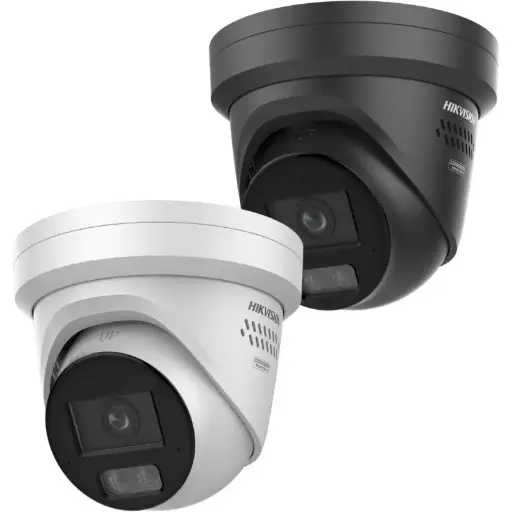
Shopping for Hikvision?
Authorised Hikvision reseller: genuine Australian stock, full warranty, competitive prices and price match available.
Which rating for which spot
The right rating depends on two questions: how exposed is the location, and can someone reach the camera? Use this as a quick guide.
Under eaves & soffits
Sheltered from direct rain. A weather rating of IP66 is plenty here, and impact resistance matters less when the camera is out of arm's reach. Turrets and bullets suit these spots well.
Fully exposed walls & poles
Facing open sky, driving rain and the occasional wash-down. Choose IP67 so the housing shrugs off heavy weather, and seal the cable entry properly.
Reachable, public & vandal-prone
Entrances, car parks, walkways, schools and anywhere mounted below about 3 m. Pair IP67 weatherproofing with an IK10 vandal-resistant dome so a knock or a kick won't take the camera offline.
Dusty or wash-down areas
Workshops, farm sheds and commercial kitchens. Look for a dust-tight first digit (6) and a high water digit so grit and cleaning don't shorten the camera's life.
Weatherproofing tips for Australian conditions
Australian sites throw sun, dust, driving rain and coastal salt at a camera, sometimes all in the same week. A good rating is the starting point; a careful install is what makes it last.
- Mount under eaves where you can. Even an IP67 camera lasts longer out of constant sun and rain — less UV, less heat and fewer water spots on the lens.
- Seal the cable entry. Use the supplied gasket or a weatherproof junction box, and leave a drip loop so water runs away from the connector rather than into it.
- Mind the Australian sun. Dark housings in full afternoon sun run hot; where possible, face cameras away from direct western glare to protect the sensor and image quality.
- Coastal & salt air. Near the coast, use stainless fixings and give housings an occasional fresh-water rinse to keep salt from building up.
- Don't drill or open the housing. An IP rating only holds if the camera is installed as designed — keep gaskets seated and covers fully closed.
- Match the rating to the risk. Weatherproof is not the same as vandal-proof; reachable public cameras should be IK10-rated as well as IP67.
Weatherproof & vandal-resistant Hikvision cameras
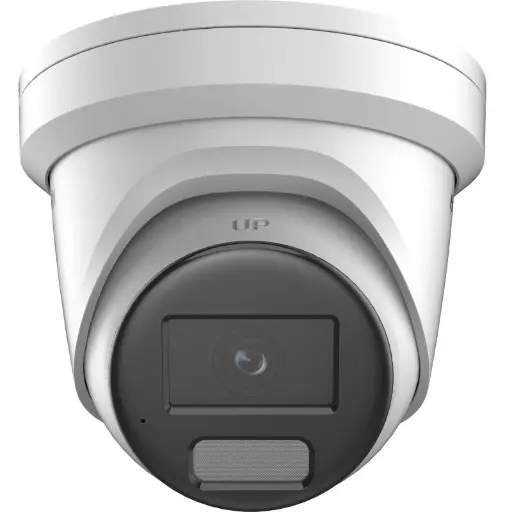
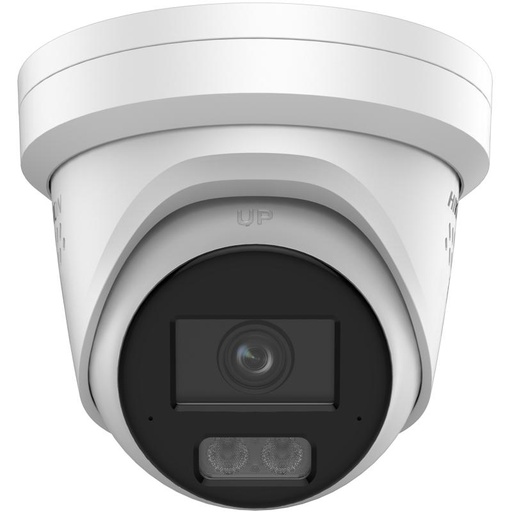
Hikvision DS-2CD2386G2H 8MP 2.8mm Powered by Darkfighter Fixed Turret Network Camera
IP67 weatherproof 8MP turret with DarkFighter low-light and a built-in mic — a tidy choice for eaves, entries and other sheltered outdoor spots.
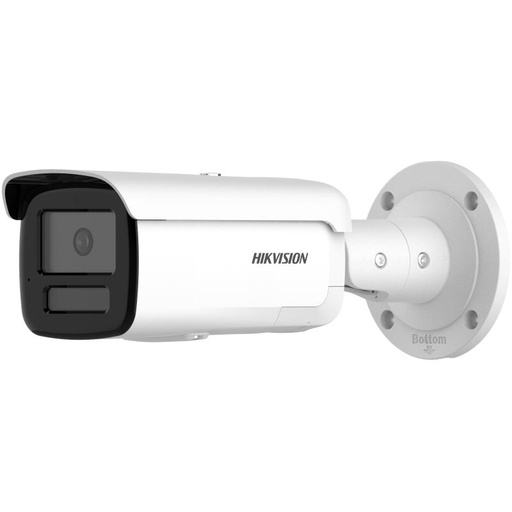
Hikvision DS-2CD2T86G2H-4I(2.8mm)(eF) 8MP 2.8mm 4K Powered by Darkfighter Fixed Bullet Network Camera IP67
IP67 weatherproof 4K bullet with long-range infrared — rugged and ready for exposed walls, driveways and property perimeters.
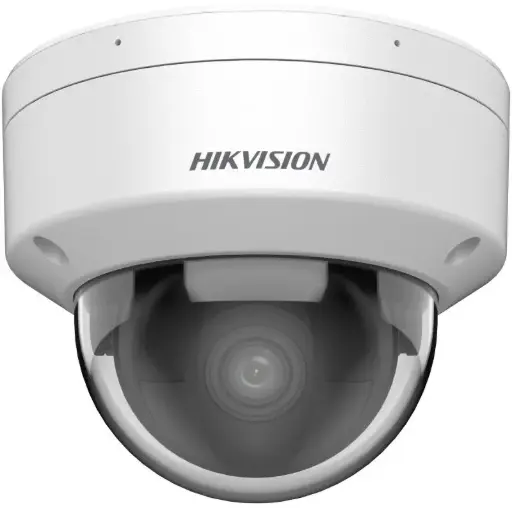
Hikvision DS-2CD2186G2H-ISU(2.8mm)(eF) 8MP 2.8mm Powered by Darkfighter Fixed Dome Network Camera
IP67 and IK10 vandal-resistant 8MP dome — built for reachable, public and high-traffic areas where tampering is a real risk.
Ready to buy?
Shop genuine Hikvision at ARC IP Networks
Authorised Hikvision reseller
Hikvision at ARC IP Networks
AcuSense, ColorVu and DeepinView cameras, NVRs and complete systems. Genuine Australian stock with the full manufacturer's warranty, competitive prices and price match available.
Frequently asked questions
Last updated: 2026-07-14 · Written by the ARC IP Networks team, an authorised Hikvision reseller in Australia.
IP67 means the camera housing is completely dust-tight and can survive being briefly immersed in water up to 1 metre deep for around 30 minutes. In everyday terms, it handles dust, driving rain and the occasional hose-down without issue, which makes it well suited to outdoor use.
Yes. IP66 is dust-tight and withstands powerful water jets from any direction, which covers heavy rain and wash-downs. For most sheltered and semi-exposed mounts it's more than adequate. Step up to IP67 for fully exposed spots or low mounts where water could pool.
Both are dust-tight; the difference is the water test. IP66 is tested against high-pressure jets, while IP67 is tested against temporary immersion. IP67 isn't automatically “better” — they protect against different things — but IP67 gives extra reassurance on exposed or flood-prone mounts.
IK10 is the top impact rating in the IEC 62262 standard — the housing withstands a heavy blow of around 20 joules, roughly a 5 kg mass dropped from 40 cm. You want it wherever a camera is within reach: entrances, car parks, walkways, schools and low mounts. Out of reach, up high under eaves, it matters far less.
No — weatherproof and vandal-resistant are separate ratings. Many outdoor turrets and bullets are IP67 weatherproof but carry no IK rating, while vandal domes are typically rated both IP67 and IK10. If a camera might be tampered with, check for an IK rating as well as the IP rating.
Yes, an IP67 camera is designed for it. That said, mounting under eaves where possible extends its life — less UV and heat, and fewer water spots on the lens. Always seal the cable entry and leave a drip loop so water runs away from the connector.
Mostly, but not for the last digit between 6 and 7. IP66 targets high-pressure jets and IP67 targets immersion — different tests, not a simple ranking. For the first digit, 6 (dust-tight) is the best you'll see on a camera.
Choose a camera rated both IP67 and IK10, such as a vandal dome. IP67 handles the weather and IK10 resists knocks and deliberate tampering — exactly what busy, reachable public areas demand. ARC IP Networks can help match the right model to each mounting point.
Who we are
About ARC IP Networks
ARC IP Networks is an Australian supplier of security cameras and CCTV systems, based in Blackburn, Melbourne, Victoria. We work with homeowners, installers, integrators and businesses across Australia, supplying Hikvision, Ubiquiti UniFi Protect, Dahua and Jovision CCTV.
We are an authorised reseller for every brand we sell, and the national distributor of Jovision in Australia, so you get genuine Australian stock with the full manufacturer's warranty, never grey imports, at competitive prices. Our team can help you choose the right equipment, and trade customers get trade accounts and project pricing on larger jobs.
- Genuine Australian stock with the full manufacturer's warranty
- Competitive prices, price match available
- Trade accounts for installers, integrators and MSPs
- Australia-wide delivery; showroom in Blackburn, Mon–Fri 9–5 (demos by appointment)
Need help choosing?
Tell the ARC IP Networks team what you are trying to achieve and we will recommend the right equipment and quote it as one order.