Short answer: a fibre patch lead (also called a fibre patch cable, fibre jumper or fiber patch cord) has to match your equipment in three ways: the fibre type, the connector and the polish. Single-mode optics (LR, long reach) need OS2 single-mode leads (yellow). Short-reach multimode optics (SR) need OM3 or OM4 multimode leads (aqua; OM4 is sometimes violet). Most SFP and SFP+ modules take a duplex LC connector. APC connectors (green, angled), common in GPON and XGS-PON networks, must never be mated with UPC (blue).
Quick pick: inside one rack, OM4 LC-LC duplex, 1 to 3 m. Between floors or buildings with LR optics, OS2 LC-LC. Under the IEEE Ethernet standard, 10 Gb/s short-reach optics run up to 300 m on OM3 and 400 m on OM4.
ARC IP Networks supplies genuine 8ware, Comsol, StarTech and Ubiquiti fibre patch leads from Australian stock, with Australia-wide delivery and trade pricing.
Which fibre patch lead do I need? Pick by job
Swipe the table sideways to compare all models →
| Job | Fibre type | Connector | Notes |
|---|---|---|---|
| Switch to switch or server in the same rack (SR optics) | OM4 multimode (OM3 also fine) | Duplex LC to LC, UPC | Short leads, 1 to 3 m keep the rack tidy |
| Across a comms room or data centre (SR optics) | OM4 multimode | Duplex LC to LC, UPC | 10 Gb/s up to 400 m on OM4, 300 m on OM3 |
| Floor to floor or building to building (LR optics) | OS2 single-mode | Duplex LC (or what the patch panel uses) | 10GBASE-LR is specified to 10 km |
| Older building with OM1 or OM2 cabling | Match the installed fibre | The panel may use SC or ST: use a hybrid lead to match | Never mix 62.5/125 and 50/125 in one link |
| GPON or XGS-PON fibre network | OS2 single-mode | Usually APC (green): match the port | Never plug APC into UPC |
| 40G or 100G with MPO optics | OM4 multimode or OS2 | MPO / MTP | 40GBASE-SR4 to 150 m, 100GBASE-SR4 to 100 m on OM4 |
Distances are the IEEE 802.3 supported reaches. Always check the transceiver datasheet: the optic sets the fibre type and connector.
Step 1: Single-mode or multimode?
Every fibre has a light-carrying core inside a 125 µm cladding. Single-mode fibre has a tiny core of about 9 µm and carries one path of light, so it reaches kilometres and is used by telcos, campus backbones and passive optical networks. Multimode fibre has a 50 µm or 62.5 µm core, works with lower-cost short-reach optics and is the usual choice inside a comms room or data centre.
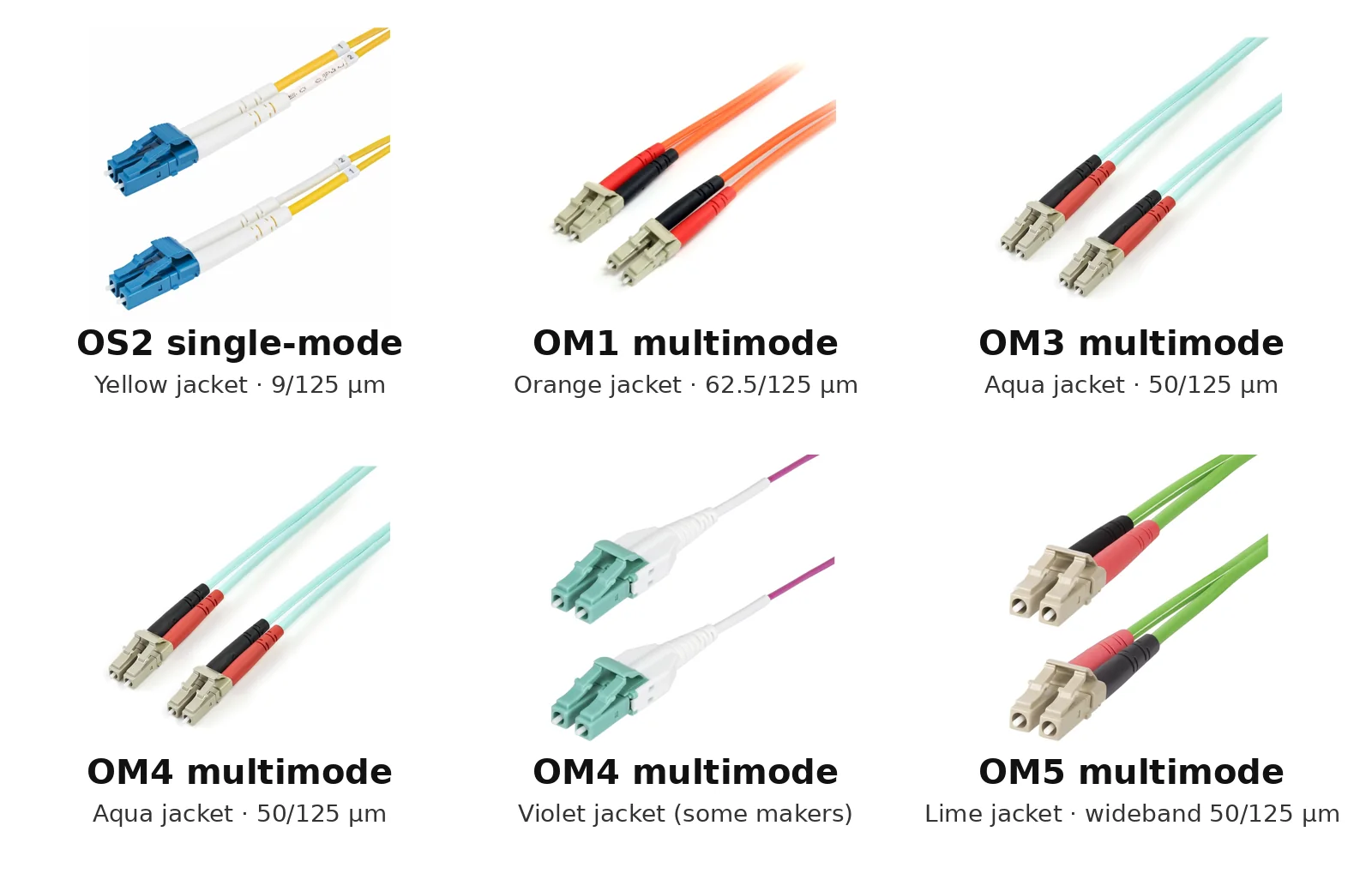
The OS and OM grades are defined in the ISO/IEC 11801 cabling standard (adopted in Australia as AS/NZS ISO/IEC 11801) and in the US TIA-568 standard. The US TIA-598 standard gives each grade a jacket colour that most makers follow, so you can tell leads apart on sight:
| Grade | Core / cladding | Jacket colour | Typical use |
|---|---|---|---|
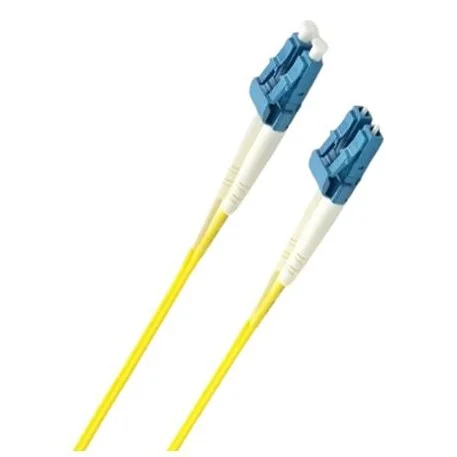
| OS1 / OS2 | 9/125 µm single-mode | Yellow | Long links, building and campus backbones, PON |
| OM1 | 62.5/125 µm multimode | Orange | Legacy LANs in older buildings |
| OM2 | 50/125 µm multimode | Orange | Legacy gigabit LANs |
| OM3 | 50/125 µm laser-optimised | Aqua | 10 Gb/s short reach |
| OM4 | 50/125 µm laser-optimised, higher bandwidth | Aqua (some makers use violet) | 10, 40 and 100 Gb/s short reach |
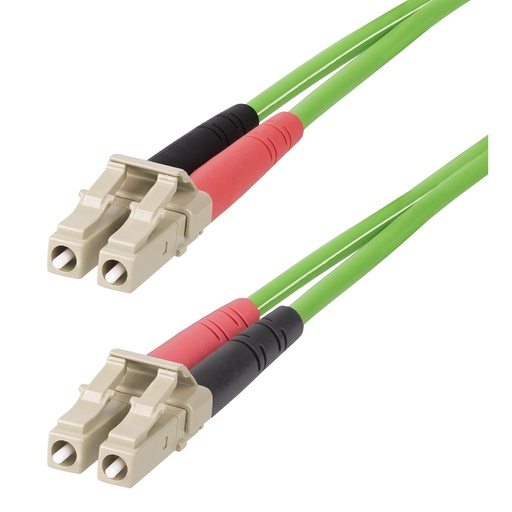
| OM5 | 50/125 µm wideband | Lime | Short-wave WDM (about 850 to 950 nm) |
Source: Fiber Optic Association (FOA) reference guide, TIA-598 colour codes. OS1 (now OS1a) and OS2 differ mainly in maximum cabled attenuation (about 1.0 vs 0.4 dB/km); OS2 is low-water-peak fibre, and most single-mode patch leads are now sold as OS2.
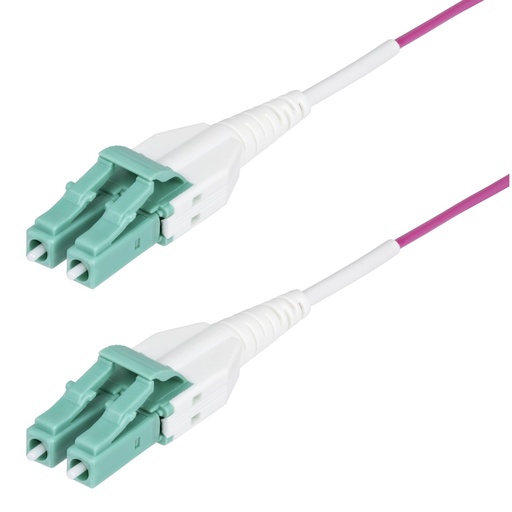
One brand note: under TIA-598, OM3 and OM4 share the aqua jacket. Some makers, such as StarTech.com with its Erika Violet OM4 leads, use violet so OM4 can be told apart from OM3.
How far does each grade go?
The reach depends on the speed and the optic. These are the distances in the IEEE 802.3 Ethernet standard:
| Ethernet application | OM3 | OM4 |
|---|---|---|
| 10GBASE-SR (10 Gb/s) | 300 m | 400 m |
| 40GBASE-SR4 (40 Gb/s, MPO) | 100 m | 150 m |
| 100GBASE-SR4 (100 Gb/s, MPO) | 70 m | 100 m |
Sources: IEEE 802.3, via the Ethernet Alliance (10GBASE-SR 400 m on OM4 in IEEE 802.3-2012; 40GBASE-SR4) and the FOA link-spec table (100GBASE-SR4). The TIA-568 table lists 125 m for 40GBASE-SR4 on OM4; the IEEE 150 m figure assumes a lower connection loss.
On OS2 single-mode, 10GBASE-LR is specified to 10 km, and 10GBASE-ER to 30 km, or 40 km on an engineered link with lower-loss fibre (IEEE 802.3). Cable makers sometimes quote longer reaches: Comsol, for example, rates its OM4 leads for 10 Gb/s up to 550 m. Plan to the IEEE figure unless your optics maker states otherwise, because every patch panel and connector uses part of the loss budget.
Step 2: Let the transceiver decide
The optic in the switch port sets the rules, so read its label or datasheet before you buy the lead:
- SR (short reach) optics work at 850 nm on multimode: choose OM3 or OM4.
- LR (long reach) optics work at 1310 nm on single-mode: choose OS2.
- Single-fibre (BiDi) optics use one fibre instead of two: check the datasheet for simplex fibre and the connector.
Plugging a multimode lead into a single-mode optic, or the reverse, gives high loss or a link that will not come up. For help choosing optics, see our SFP and QSFP optics guide.
Step 3: Choose the connector: LC, SC, ST or MPO
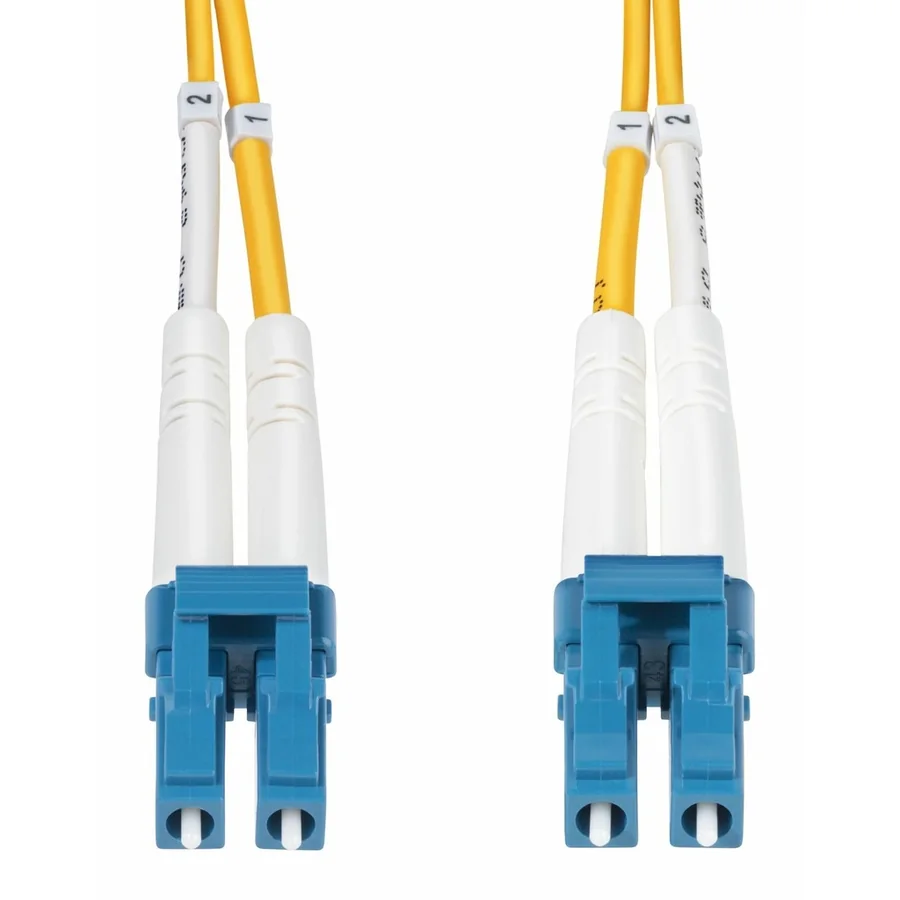
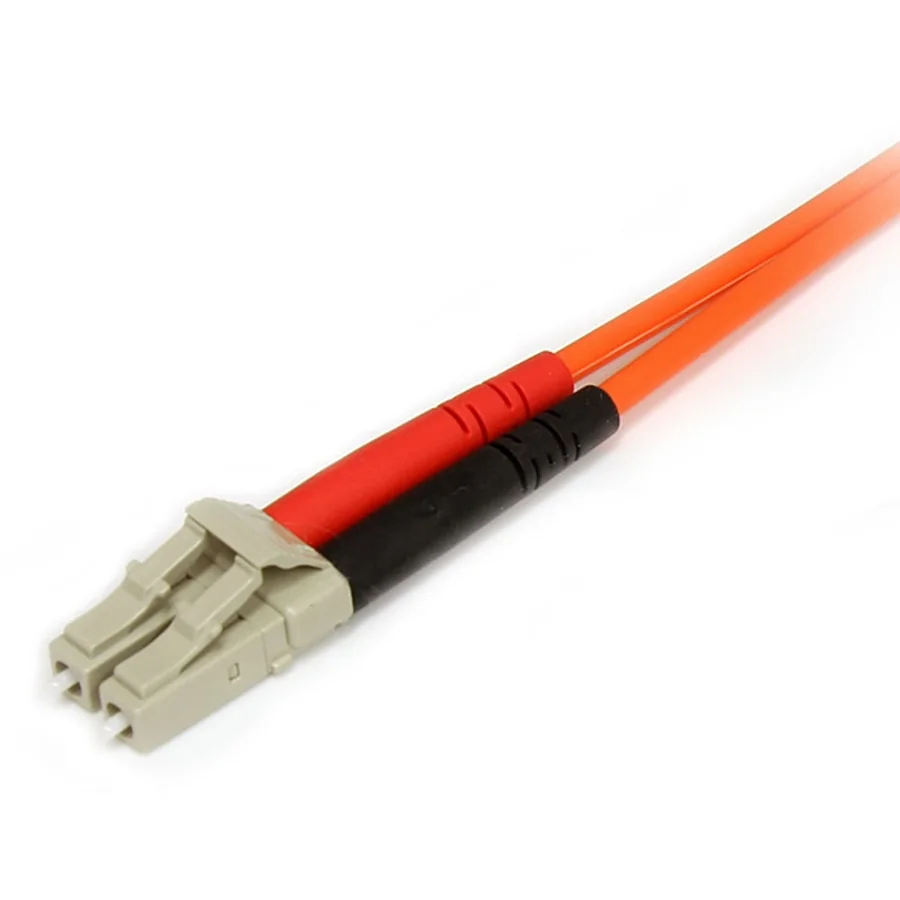
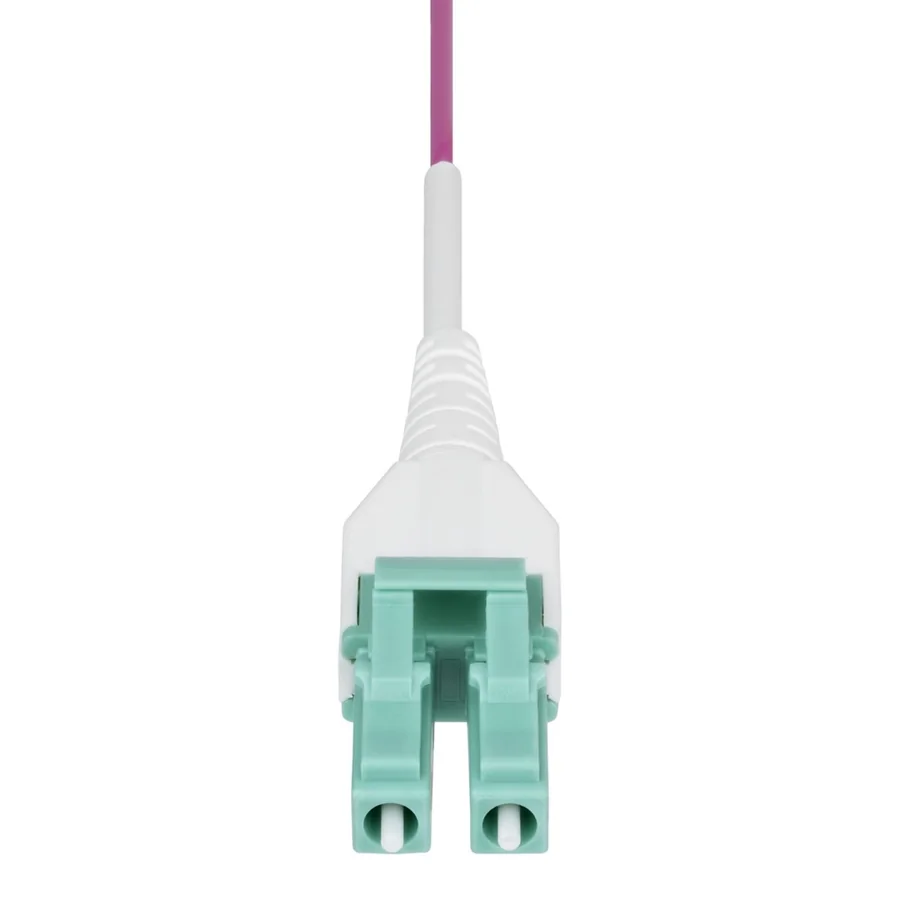
- LC: the small form factor connector with a 1.25 mm ferrule, half the size of SC. Most SFP and SFP+ optics use a duplex LC connector, so most switch-to-switch leads are LC to LC.
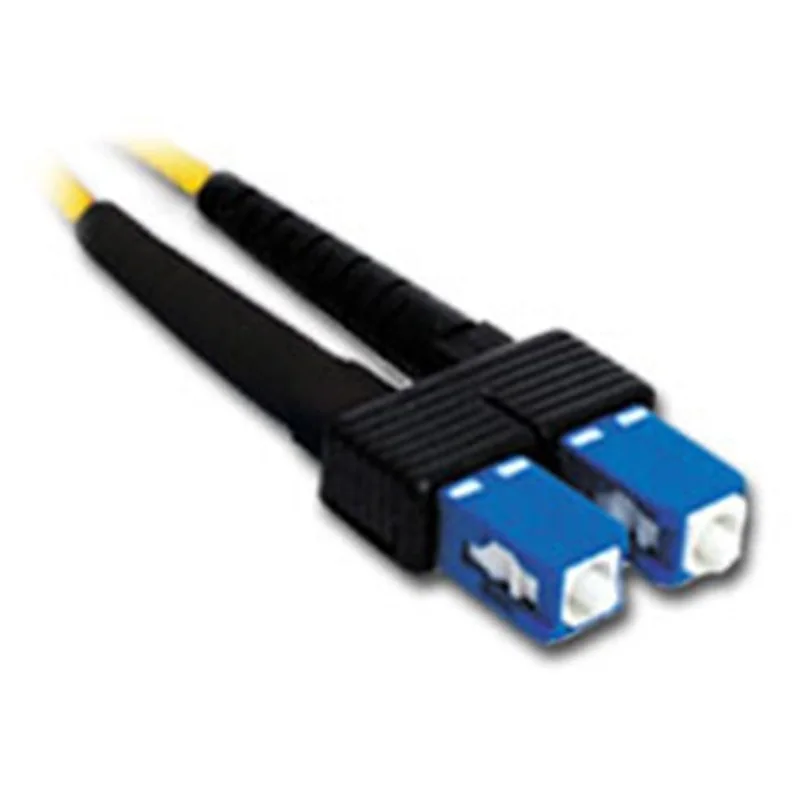
- SC: a 2.5 mm push-pull, snap-in connector, widely used and also made in a duplex version.
- ST: a bayonet-mount connector with a 2.5 mm ferrule, widely used on older multimode networks.
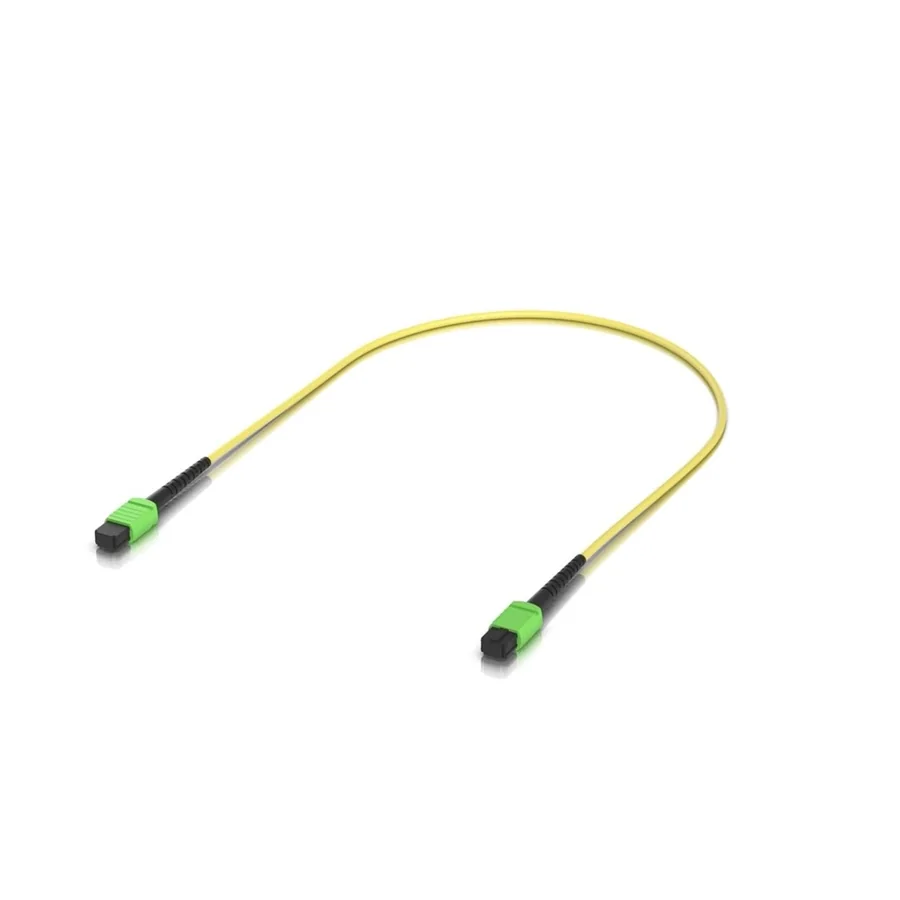
- MPO / MTP: a multi-fibre array connector (commonly 12 or 24 fibres; 40/100 Gb/s SR4 optics use 8 fibres of an MPO-12) used for pre-terminated trunks and parallel optics. MTP is a commercial name for an MPO-type connector.
If the two ends differ, for example LC on the switch and SC on the patch panel, use a hybrid lead such as an LC to SC patch cable rather than adapters.
Step 4: UPC or APC polish?
The end of each connector is polished. UPC connectors have a finely polished, slightly domed end face. APC connectors are polished at an 8-degree angle, which sends reflected light into the cladding instead of back down the fibre, so APC gives much lower back-reflection.
| Polish | Connector colour | Where it is used |
|---|---|---|
| UPC | Blue on single-mode. Multimode is coloured by grade (beige OM1, black OM2, aqua OM3/OM4, lime OM5), though many makers use beige | Ethernet switches, servers and most data centre and enterprise links |
| APC | Green | Passive optical networks (GPON, XGS-PON), RF video over fibre and other reflection-sensitive links |
Sources: FOA connector colour codes (TIA-568); L-p PC vs UPC vs APC connector guide.
Never mate APC with UPC. The angled face does not meet the domed UPC face properly, which causes high insertion loss and poor return loss. If you are building a fibre-to-the-premises network, our guides to passive optical networks and GPON vs XGS-PON explain the rest of the system.
Step 5: Duplex leads and polarity
A duplex lead has two fibres: one to transmit and one to receive. Most SFP and SFP+ links use duplex. A simplex lead has one fibre, for single-fibre optics and PON drops.
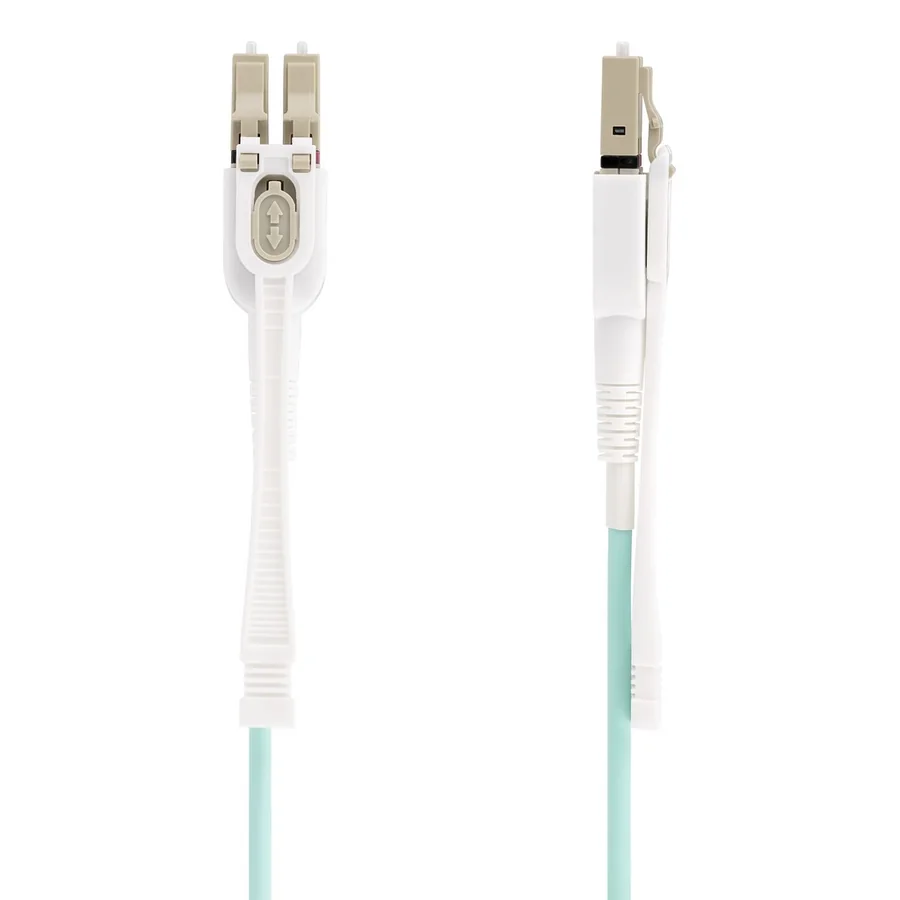
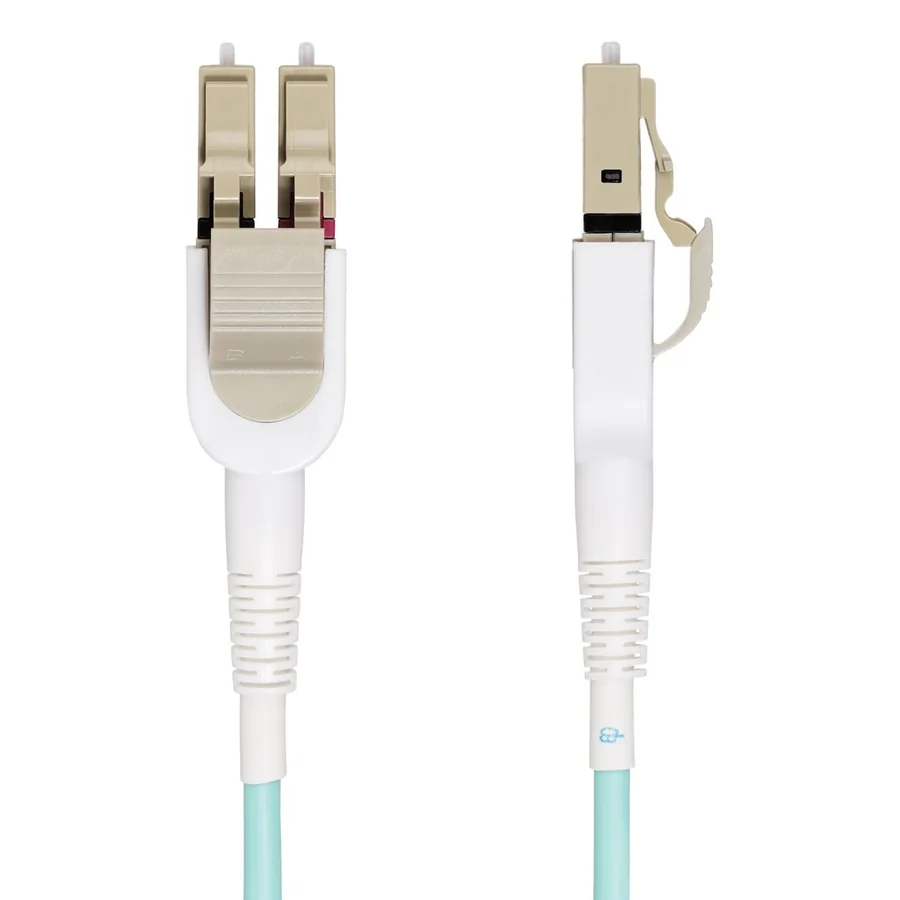
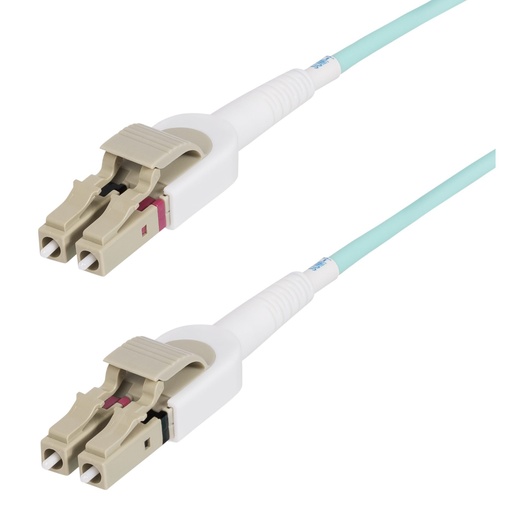
Each end of a duplex link must send on the fibre the other end receives on. If a new link stays dark with the right optics, crossed polarity is a common cause. Some leads let you swap polarity in the field without tools, such as StarTech.com's switchable OM4 LC lead with retractable strain-relief housings.
Step 6: Jacket and build quality
- LSZH (low smoke, zero halogen) jackets keep toxic and corrosive gas to a minimum in a fire, which is why Comsol describes them as suiting data centres and critical areas.
- OFNR riser-rated jackets are designed to limit flame spreading vertically between floors (StarTech.com). OFNR is a US fire rating; most Australian data centre and building specifications call for LSZH, so check the job specification.
- Armoured leads add a protective layer around the fibre for areas where cables get knocked or stepped on, such as the 8ware single-mode leads, listed as armoured.
- Bend-insensitive fibre keeps loss low through tighter bends in crowded racks and patch panels.
- Push-pull tabs let you connect and remove leads easily in dense switches. Uniboot connectors carry both fibres in one slim boot.
Colour-coding helps too: buy the same lead in two or three colours, for example by network or by uplink and downlink, so cables can be traced at a glance.
Step 7: Length and loss
Measure the route along the cable management, not the straight-line gap, and allow a little slack for the bend radius. Avoid large coils of spare fibre in the rack.
Every mated connector pair adds loss. Quality leads publish their figures: StarTech.com lists insertion loss of 0.3 dB for its OS2 leads, 8ware lists 0.3 dB or less, and Comsol quotes typical insertion loss under 0.2 dB, with each of these Comsol leads supplied with its own insertion loss test report. For scale, the FOA link-spec table allows 2.6 dB of channel loss for 10 Gb/s over OM3, so keep the number of patch points low on long multimode runs.
Step 8: Keep the connectors clean
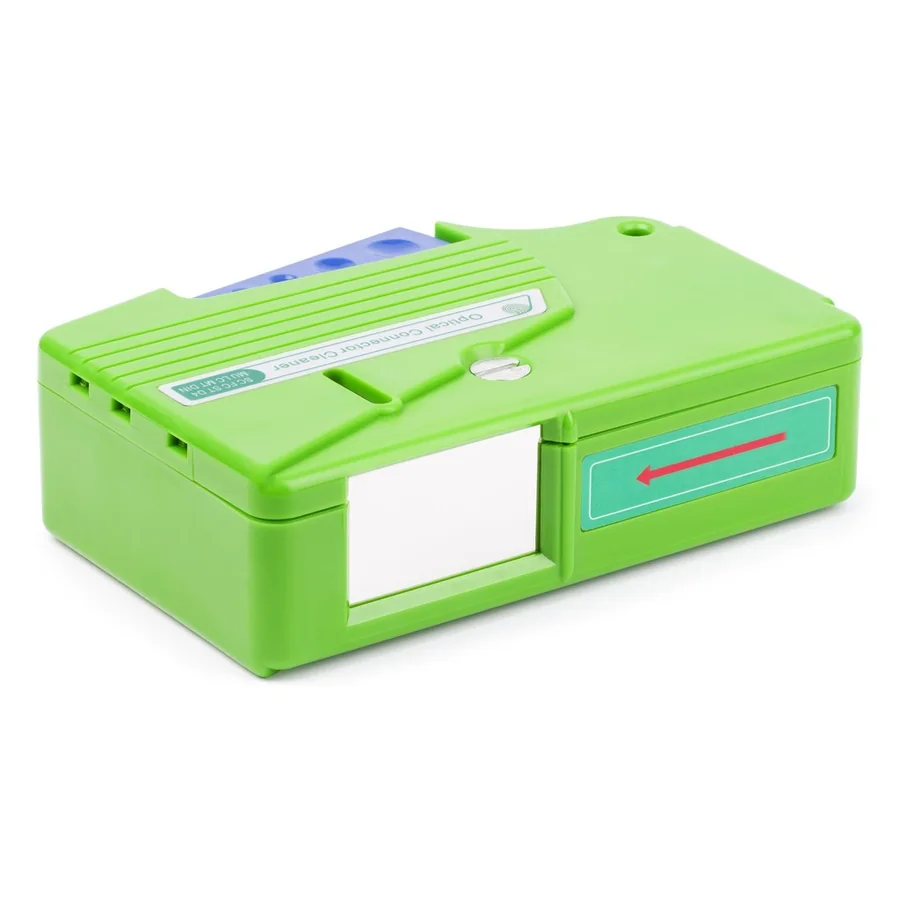
The Fiber Optic Association says the tolerance to dirt on a connector end face is near zero. Airborne dust is about the size of a single-mode core, and silica-based dirt can scratch the polish. Its advice: keep dust caps on leads and ports, and clean connectors every time before you mate them, then inspect.
Do I need a registered cabler in Australia?
Not for patch leads. Under the Telecommunications (Types of Cabling Work) Declaration 2024, connecting compliant pre-terminated patch cords and patch leads (RCM-labelled or exempt), and making cross-connections on a patch panel, is not regulated cabling work, as long as no part of the lead is concealed in a wall, floor or ceiling cavity.
Installing fixed fibre cabling in walls, ceilings and risers or between buildings is different: it is regulated customer cabling work and must be done by a registered cabler with the optical fibre endorsement, or under their direct supervision. Cablers register through ACMA-accredited registrars. For estate, campus and building projects, see building a private fibre network and rack-mount vs wall-mount fibre patch panels.
Which fibre lead for common Australian jobs?
How the steps above play out on typical Australian sites. Always confirm against the optics, the patch panels and any job specification.
Swipe the table sideways to compare all models →
| Australian job | Lead to choose | Watch out for |
|---|---|---|
| Office fit-out: switches in one comms cupboard or rack | OM4 multimode, duplex LC to LC, 1 to 3 m, LSZH | Match SR optics at both ends; buy two or three colours for tidy patching |
| School, hospital or strata building: uplinks between floors | OS2 single-mode, duplex LC (or the panel connector) at each end of the riser | The riser cable itself is fixed cabling for a registered cabler; LSZH where the specification calls for it |
| Data centre or colocation rack | OM4 or OM5 duplex LC, or MPO for 40/100 Gb/s SR4 optics | Use the IEEE reach for each speed; keep patch points low on long multimode runs |
| Farm, mine site or factory: links between sheds and buildings | OS2 single-mode with LR optics (10 km for 10GBASE-LR) | Outdoor and underground runs are fixed cabling; armoured leads where they can be knocked or stepped on |
| Estate, holiday park or village fibre network | OS2 single-mode; APC connectors where the PON equipment uses APC | Never mate APC with UPC: check every port |
| CCTV cameras more than 100 m from the switch | OS2 single-mode to a fibre ONU or media converter near the camera | Twisted-pair Ethernet and PoE stop at 100 m per run (IEEE 802.3 / TIA-568 channel limit) |
More detail: private fibre networks for estates and campuses and CCTV over fibre beyond 100 m.
Fibre patch lead glossary
- OS2: single-mode fibre grade (9/125 µm, yellow jacket) for long links.
- OM3 / OM4: laser-optimised 50/125 µm multimode grades (aqua jacket) for short-reach 10 to 100 Gb/s links.
- OM5: wideband 50/125 µm multimode (lime jacket) for short-wave WDM.
- LC: small form factor connector with a 1.25 mm ferrule, used on most SFP and SFP+ optics.
- SC: 2.5 mm push-pull, snap-in connector.
- UPC: standard polished connector end face (blue on single-mode).
- APC: 8-degree angled polish (green) with low back-reflection, common in PON networks.
- Duplex: a lead with two fibres, one to transmit and one to receive.
- LSZH: low smoke, zero halogen jacket.
- SFP / SFP+: plug-in transceiver modules that turn a switch port into a fibre port.
Fibre patch leads in stock at ARC IP Networks
Live Australian pricing (inc. GST) and stock levels are on each product page.
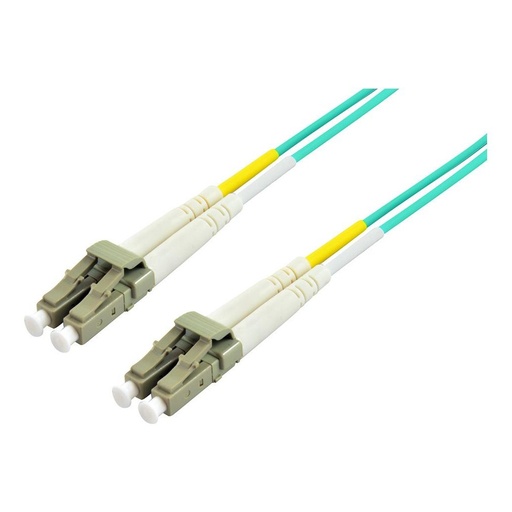
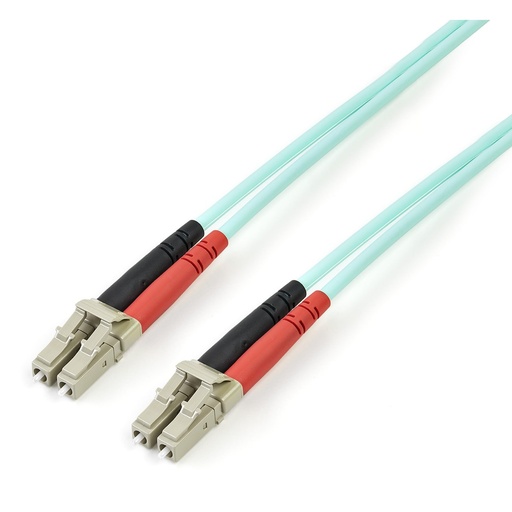
Aqua OM4 50/125, LSZH, individually tested with insertion loss report.
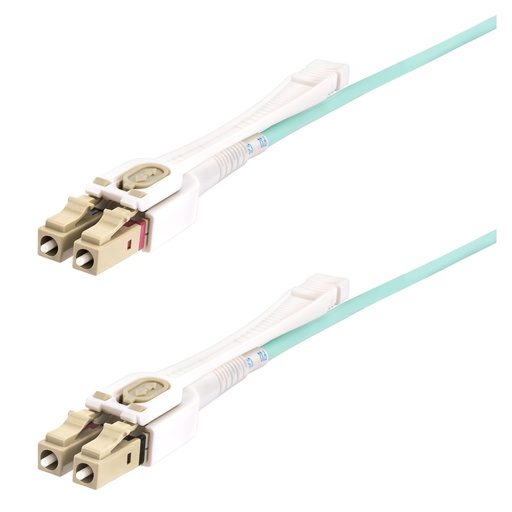
Push-pull tabs for dense switches, bend-insensitive, LSZH.
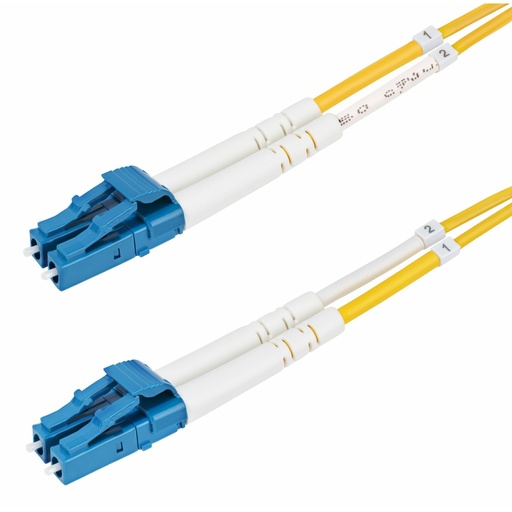
Single-mode 9/125, bend-insensitive, tested, LSZH.
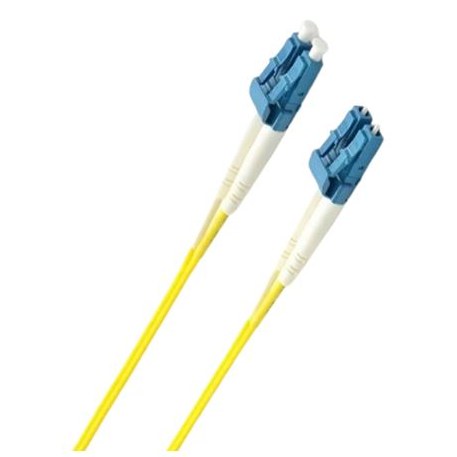
Armoured single-mode UPC, LSZH, in black, white or yellow.
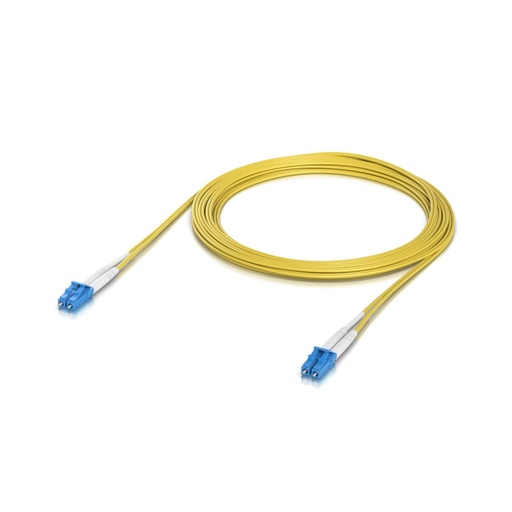
Single-mode duplex LC lead for UniFi fibre links.
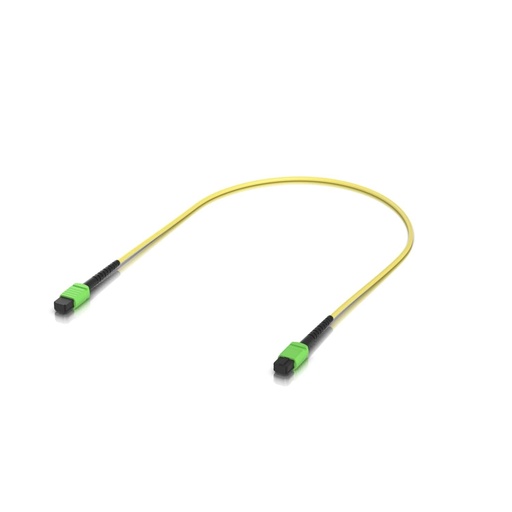
MPO-12 APC single-mode lead for parallel optics.
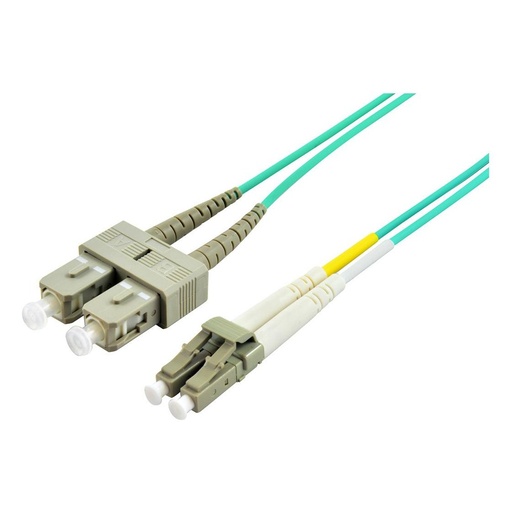
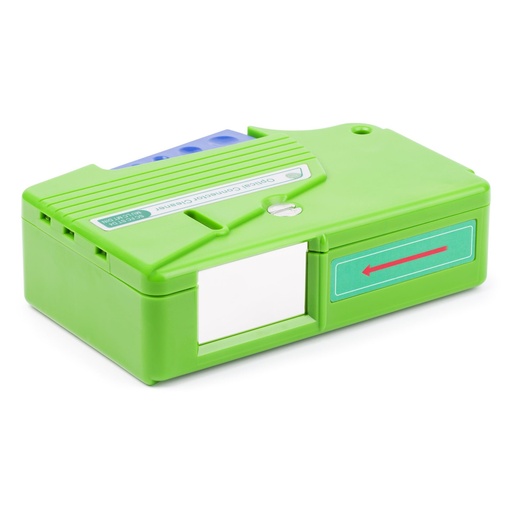
Cassette cleaner for LC, SC, ST and FC, up to 500 uses.
Why buy fibre patch leads from ARC IP Networks
- Authorised reseller of 8ware, Comsol, StarTech.com and Ubiquiti: new, genuine fibre leads only.
- Australian stock with live stock levels on every product page, and Australia-wide delivery.
- Help matching fibre type, connectors and polish to your switches, optics and patch panels.
- Trade and project pricing for installers, ISPs, integrators and IT teams. Browse the 8ware and Comsol ranges or all fibre patch cables.
Common questions
Straight answers from the ARC IP Networks team. Last reviewed November 2026.
Single-mode (OS2) has a core of about 9 µm, a yellow jacket and reaches kilometres with LR optics. Multimode (OM3, OM4, OM5) has a 50 µm core, an aqua or lime jacket and is used for short links, such as up to 400 m at 10 Gb/s on OM4.
Most SFP and SFP+ optics use a duplex LC connector, so the usual switch-to-switch lead is LC to LC duplex. Single-fibre BiDi optics differ: check the module datasheet.
The IEEE 802.3 standard supports 10GBASE-SR to 300 m on OM3 and 400 m on OM4. On OS2 single-mode, 10GBASE-LR is specified to 10 km.
UPC connectors have a slightly domed end face and are blue on single-mode. APC connectors are polished at an 8-degree angle, are green, and have lower back-reflection. They are commonly used in GPON and XGS-PON networks, so match the port. Never connect APC to UPC.
Yes. OM3 and OM4 are both 50/125 µm multimode, and Comsol notes OM4 is backward compatible with OM3 and OM2. Do not mix 50/125 with 62.5/125 OM1 fibre in the same link.
No. Use the same fibre type from end to end. Connecting over the wrong fibre type causes high loss and links that fail or perform badly.
Under TIA-598, OM3 and OM4 both use an aqua jacket. Some makers, such as StarTech.com, sell OM4 in Erika Violet so it can be told apart from OM3.
LSZH stands for low smoke, zero halogen. The jacket keeps toxic and corrosive gas to a minimum in a fire, which suits data centres, comms rooms and other critical areas.
No. Under the Telecommunications (Types of Cabling Work) Declaration 2024, connecting compliant pre-terminated patch leads and patching on a patch panel is not regulated cabling work, as long as no part of the lead is concealed in a wall, floor or ceiling cavity. Fixed fibre cabling must be installed by a registered cabler with the optical fibre endorsement, or under their direct supervision.
ARC IP Networks supplies genuine 8ware, Comsol, StarTech.com and Ubiquiti fibre patch leads from Australian stock, with Australia-wide delivery and trade pricing. Call 1300 100 440 or request a quote.
Need fibre patch leads for a rack, building or project?
Tell us your optics, connector types, lengths and quantities, and we will quote the right single-mode or multimode leads from Australian stock.
Related guides
- What Is an ODF? Rack-Mount vs Wall-Mount Fibre Patch Panels in Australia
- Fibre Splicing in the Field: Splice Closures, Trays and Distribution Terminals
- What Is a Passive Optical Network (PON)?
- GPON vs XGS-PON for Australian Fibre Networks
- MikroTik SFP and QSFP Optics Guide
- CCTV Over Fibre: IP Cameras Beyond 100 m