Short answer: match the recorder to your camera count and your retention target, because the two limits bite at different times. Under about 6 4K cameras a UNVR Instant — or the gateway you already own — is enough. Up to 18 or 24 4K cameras, the UNVR and UNVR Pro add proper drive bays. Above that, the ENVR handles 70 4K cameras across 16 hot-swap bays with dual redundant power supplies, and the ENVR Core reaches 300 4K cameras with expansion to 48 drives. Every one records with no per-camera licence fee.
Full recorder comparison
All figures from Ubiquiti's published specifications.
| Recorder | Cameras (HD / 2K / 4K) | Drive bays | Networking | Power | Form factor |
|---|---|---|---|---|---|
| UNVR Instant | 15 / 8 / 6 | (1) 3.5" | (1) GbE uplink + (6) GbE PoE downlink, HDMI out | Internal, 40 W PoE budget | Compact desktop |
| UNVR | 60 / 30 / 18 | (4) 2.5/3.5" | (1) 10G SFP+ + (1) GbE | Internal + USP-RPS input | Rack |
| UNVR Pro | 70 / 35 / 24 | (7) 2.5/3.5" | (1) 10G SFP+ + (1) GbE | Internal + USP-RPS input | Rack |
| ENVR | 210 / 140 / 70 | (16) 2.5/3.5" | (2) 10G SFP+ + (1) 10 GbE RJ45 | (2) hot-swap 550 W CRPS | 3U rack |
| ENVR Core | 500 / 400 / 300 | (16) 3.5", expandable to 48 | (2) 25G SFP28 + (1) GbE mgmt | (2) hot-swap 550 W CRPS | 3U rack |
Note the UNVR Instant's unusual trick: it includes six PoE ports and an HDMI output, so it powers its own cameras and drives a monitor directly. It is effectively a complete small camera system in one box.
Do you even need a separate NVR?
Often not. Several UniFi gateways record cameras themselves, which for small sites removes a device from the rack and the budget entirely:
- UDM-SE — 8× 4K cameras, one drive bay
- UDM-Pro-Max — 15× 4K cameras, two drive bays
- UCG-Fiber / UCG-Max — 5× 4K cameras on an NVMe SSD
- UDM-Beast — 40× 4K cameras, two drive bays
See the Dream Machine comparison for detail. You want a dedicated recorder when you exceed those camera counts, when you need more drive bays for longer retention, or — importantly — when you want recording separated from routing, so a firewall reboot or gateway fault never interrupts surveillance. On security-critical sites many integrators separate them deliberately.
Camera capacity — and why it is not the only limit
Every recorder publishes three camera figures because resolution drives processing load: HD (1080p), 2K and 4K. A recorder rated for 70 4K cameras handles 210 HD cameras, because each HD stream costs roughly a third as much to process.
Storage sizing: the calculation that decides everything
Use this and you will not be surprised later. As a working guide for continuous recording at UniFi Protect's default settings:
- HD (1080p) camera: roughly 8–15 GB per day
- 2K camera: roughly 15–25 GB per day
- 4K camera: roughly 30–50 GB per day
Multiply by camera count and retention days. Worked examples:
| System | Calculation | Storage needed | Suitable recorder |
|---|---|---|---|
| 6× 4K, 14 days | 6 × 40 GB × 14 | ~3.4 TB | UNVR Instant (1 bay) or a gateway |
| 12× 4K, 30 days | 12 × 40 GB × 30 | ~14.4 TB | UNVR (4 bays) |
| 20× 4K, 30 days | 20 × 40 GB × 30 | ~24 TB | UNVR Pro (7 bays) |
| 40× 4K, 30 days | 40 × 40 GB × 30 | ~48 TB | ENVR (16 bays) |
| 70× 4K, 30 days | 70 × 40 GB × 30 | ~84 TB | ENVR with large drives |
Two ways to reduce these numbers substantially: record on motion or smart detection rather than continuously, and lower the frame rate on low-interest cameras. A car park entry might justify continuous 4K; a storeroom rarely does.
Drive bays, RAID and hot-swap
No UniFi recorder includes hard drives. You fit them, and the choice matters: use surveillance-rated drives designed for continuous write cycles, not desktop drives, which are built for intermittent use and fail early under 24/7 recording.
Bay counts drive both capacity and resilience — more bays means more total storage and more room for redundancy. The ENVR's 16 bays allow genuinely large arrays with RAID protection, and the ENVR Core expands to 48 drives through its SFF-8644 ports.
Power redundancy and uptime
This is where the enterprise recorders separate from the rest. The ENVR and ENVR Core carry two hot-swappable 550 W power supplies — a failed supply is replaced from the front while recording continues, with no outage and no maintenance window. The UNVR and UNVR Pro have an internal supply with a USP-RPS DC input for external backup; the UNVR Instant has neither.
For a site where a gap in footage is a compliance or insurance problem, that difference often decides the purchase on its own. A rack UPS is worth having regardless — it is the only protection against mains failure.
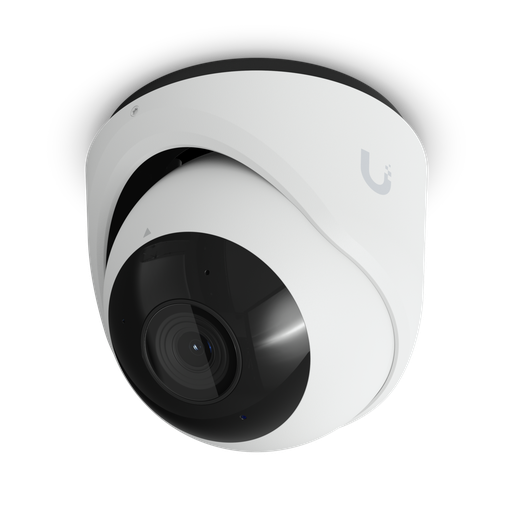
Shopping for UniFi Protect cameras?
Authorised Ubiquiti reseller: genuine Australian stock, full warranty, competitive prices and price match available.
Network connectivity — and why it matters for cameras
Cameras generate a constant inbound stream, and retrieval spikes when someone reviews footage. A gigabit uplink saturates faster than people expect with many 4K cameras.
- UNVR Instant: a GbE uplink plus six PoE downlink ports — it is its own camera switch.
- UNVR / UNVR Pro: a 10G SFP+ port plus GbE.
- ENVR: two 10G SFP+ ports plus a 10 GbE RJ45 — redundant multi-gigabit connectivity.
- ENVR Core: two 25G SFP28 ports plus a dedicated GbE management port.
Note that apart from the UNVR Instant, recorders do not power cameras — you need a PoE switch alongside.
Which recorder for which site
| Site | Recommended | Why |
|---|---|---|
| Home or shop, 4–6 cameras | UNVR Instant | Powers its own cameras over 6 PoE ports and drives a monitor via HDMI |
| Small business, up to 18 4K | UNVR | Four bays and a 10G uplink |
| Medium site, up to 24 4K | UNVR Pro | Seven bays for longer retention |
| School, hotel, warehouse, 25–70 4K | ENVR | 16 bays, dual hot-swap PSUs, dual 10G — no outage on a PSU failure |
| Precinct or multi-building estate | ENVR Core | 300× 4K and expansion to 48 drives |
| Already own a capable gateway | None — record on the gateway | Up to 40× 4K on a UDM-Beast, 15× on a UDM-Pro-Max |
Four sizing mistakes
- Sizing by camera count alone. Storage usually runs out before camera slots do.
- Forgetting drives are not included. Every UniFi recorder ships empty.
- Using desktop drives. They are not built for continuous writing and fail early.
- Putting the recorder in the building most likely to be broken into. Site it in the secure area, on a UPS — otherwise you record your own loss and lose the recording.
Scaling beyond one recorder: multiple NVRs, one interface
A single ENVR tops out at 70 4K cameras. The question large sites ask next is what happens beyond that — and the answer is that you do not manage a second system separately.
In Ubiquiti's own product introduction for the Enterprise NVR, the stated approach is to combine multiple NVRs into a single interface through UniFi Site Manager, regardless of where each recorder is physically installed. That turns several ENVRs across different buildings, campuses or cities into one operational view, and Ubiquiti states that AI vision services scale across those physical locations too — all with no licensing fees, consistent with the rest of the UniFi Protect platform.
Practically, that changes how you plan a large estate:
- Design per building, operate as one. Put a recorder where the cameras are, so camera traffic stays local and a WAN outage never stops recording — then aggregate the view centrally.
- Scale in units you can budget. Adding a wing or a second site is another ENVR, not a forklift upgrade of a central system.
- Keep failure domains small. One recorder failing takes its own cameras offline, not the estate.
Link aggregation and uplink resilience
The ENVR's two 10G SFP+ ports are not only about bandwidth. Ubiquiti's product materials describe multi-chassis link aggregation support across the dual 10G uplinks — meaning the two links can be bonded across two different switches rather than two ports on the same switch.
The practical benefit is that a single switch failure, a firmware upgrade or a cable fault does not interrupt recording: the surviving link carries the load. For a system whose entire purpose is not missing anything, that removes one of the last single points of failure — alongside the dual hot-swappable power supplies and drive redundancy already covered above.
Rack space and the Cloud Key option
Two things worth knowing before you specify a recorder.
Rack height climbs with capacity
| Recorder | Rack height | Depth | Drive bays |
|---|---|---|---|
| UNVR | 1U | 325 mm | 4 |
| UNVR Pro | 2U | 325 mm | 7 |
| ENVR | 3U | 480 mm | 16 |
Note the ENVR is not simply taller — it is also considerably deeper at 480 mm, so it needs a full-depth four-post rack rather than a shallow wall cabinet. Check the cabinet before ordering.
The Cloud Key Plus as a small-site recorder
Often overlooked: a UniFi Cloud Key Plus records 24 HD, 14 2K or 8 4K cameras on a single 2.5-inch drive bay with 1 TB pre-installed. It is a compact desktop console rather than a rack unit, with no viewport and no power redundancy, and it expects you to supply your own switch and gateway.
For a small site that already has a UniFi network and simply needs somewhere to record a handful of cameras, it is a genuinely economical answer — more cameras than a UNVR Instant, though without that unit's built-in PoE ports and HDMI output.
Ready to buy?
Shop genuine Ubiquiti at ARC IP Networks
Authorised Ubiquiti reseller
Ubiquiti at ARC IP Networks
UniFi gateways, switches, Wi-Fi, Protect cameras and Access. Genuine Australian stock with the full manufacturer's warranty, competitive prices and price match available.
Frequently asked questions
Match the recorder to camera count and retention together. Under about six 4K cameras, a UNVR Instant or a capable gateway is enough. Up to 18 or 24 4K cameras, the UNVR (four bays) or UNVR Pro (seven bays). From 25 to 70 4K cameras, the ENVR with 16 bays and dual hot-swappable power supplies. Beyond that, the ENVR Core, which handles 300 4K cameras and expands to 48 drives.
Not always. A UDM-SE records 8 4K cameras, a UDM-Pro-Max 15, a UDM-Beast 40, and the UCG-Fiber or UCG-Max about 5 on an NVMe SSD. You want a dedicated recorder when you exceed those counts, need more drive bays for longer retention, or want recording separated from routing so a gateway fault or reboot never interrupts surveillance.
As a working guide for continuous recording: roughly 8-15 GB per day for an HD camera, 15-25 GB for 2K and 30-50 GB for 4K. So twenty 4K cameras kept for 30 days needs about 24 TB. Recording on motion or smart detection rather than continuously, and lowering frame rate on low-interest cameras, reduces this substantially.
No. Every UniFi recorder ships without drives. Fit surveillance-rated drives designed for continuous write cycles - desktop drives are built for intermittent use and fail early under 24/7 recording. Remember that RAID reduces usable capacity below the raw total, so size for usable space.
The UNVR Pro records up to 70 HD or 24 4K cameras across seven drive bays with an internal power supply and a USP-RPS input. The ENVR records up to 210 HD or 70 4K cameras across sixteen bays, adds a second 10G SFP+ port and a 10 GbE RJ45, and carries two hot-swappable 550 W power supplies so a failed supply can be replaced without interrupting recording.
Only the UNVR Instant, which includes six GbE PoE downlink ports and an HDMI output, making it a complete small system. The UNVR, UNVR Pro, ENVR and ENVR Core do not supply power, so cameras are powered by a separate PoE switch.
The ENVR and ENVR Core each have two hot-swappable 550 W power supplies, allowing a failed unit to be replaced from the front while recording continues. The UNVR and UNVR Pro have an internal supply plus a USP-RPS DC input for external backup. A rack UPS is worth adding regardless, as it is the only protection against mains failure.
No. UniFi Protect records with no per-camera licence or subscription fee on any recorder or gateway. You buy the hardware and the drives, and that is the cost.
Yes. Recording is entirely local to the recorder or gateway, so an internet outage does not interrupt it. Internet is needed only for remote viewing and notifications - a practical advantage over cloud-only systems, particularly in regional Australia.
In the most secure, best-connected part of the site - typically a comms room in the main building, on a UPS. Avoid siting it in the shed or outbuilding most likely to be broken into, or an intruder removes the evidence along with the goods.
ARC IP Networks stocks the UniFi Protect recorder range in Australia as an authorised Ubiquiti reseller, with genuine Australian stock, manufacturer warranty, GST tax invoices and fast Australia-wide shipping. Browse UniFi Protect recorders and cameras or call 1300 100 440.
Yes. Ubiquiti's product introduction for the Enterprise NVR describes combining multiple NVRs into a single interface through UniFi Site Manager, regardless of where each recorder is physically installed, with AI vision services scaling across those locations - and with no licensing fees. In practice this means you site a recorder in each building so camera traffic stays local, then operate the whole estate from one view.
Ubiquiti's materials describe multi-chassis link aggregation support across the ENVR's dual 10G uplinks, which allows the two links to be bonded across two separate switches rather than two ports on one switch. A single switch failure, firmware upgrade or cable fault then does not interrupt recording.
Add another recorder rather than replacing the one you have. Multiple NVRs can be combined into a single interface through UniFi Site Manager, so a large estate is managed as one system while each building keeps its own recorder. Because UniFi Protect carries no per-camera licensing, the cost of expanding is hardware and drives only.
The UNVR is 1U, the UNVR Pro is 2U and the ENVR is 3U. Depth matters too: the UNVR and UNVR Pro are 325 mm deep, while the ENVR is 480 mm and needs a full-depth four-post rack rather than a shallow wall cabinet. The UNVR Instant and Cloud Key Plus are compact desktop units, though a rack kit is available for the Cloud Key.
Yes. A UniFi Cloud Key Plus records 24 HD, 14 2K or 8 4K cameras on a single 2.5-inch drive bay with 1 TB pre-installed. It is a compact desktop console with no viewport and no power redundancy, and it expects you to supply your own switch and gateway - so it suits a small site that already has a UniFi network and needs somewhere to record a handful of cameras.
Yes. Ubiquiti publishes a capacity calculator at calculator.ui.com where you enter camera counts by resolution, the drive size you intend to fit and your target retention, and it tells you how many drives you need. There is also a specification comparison tool at techspecs.ui.com and a published storage compatibility list - worth checking, because some drives are physically incompatible with the caddies.

Related reading
- Best UniFi cameras in Australia (2026), compared and ranked
- What else you need to buy with a UniFi NVR
- Outgrowing a UniFi Cloud Key: when to move to a rack console
- How much storage do you need for security cameras?
- How to set up a UniFi Protect NVR — and migrate cameras from an old one
- Ubiquiti ENVR: the complete Australian guide
- Best UniFi Protect cameras in Australia
- UDM Pro vs UDM SE vs UDM Pro Max — gateways that record cameras
- UniFi switch comparison — PoE switching for cameras
- Browse UniFi Protect cameras and recorders
Who we are
About ARC IP Networks
ARC IP Networks is an Australian supplier of networking, Wi-Fi and gateway equipment, based in Blackburn, Melbourne, Victoria. We work with homeowners, installers, integrators and businesses across Australia, supplying Ubiquiti UniFi, MikroTik, TP-Link, Ruijie, Teltonika and D-Link.
We are an authorised Ubiquiti, MikroTik, TP-Link, Ruijie, Teltonika and D-Link reseller, so you get genuine Australian stock with the full manufacturer's warranty, never grey imports, at competitive prices. Our team can help you choose the right equipment, and trade customers get trade accounts and project pricing on larger jobs.
- Genuine Australian stock with the full manufacturer's warranty
- Competitive prices, price match available
- Trade accounts for installers, integrators and MSPs
- Australia-wide delivery; showroom in Blackburn, Mon–Fri 9–5 (demos by appointment)
Need help choosing?
Tell the ARC IP Networks team what you are trying to achieve and we will recommend the right equipment and quote it as one order.