Edge storage keeps data and processing close to where data is created, such as a branch office, retail store, clinic, factory or remote site, instead of sending everything to a distant cloud data centre. ASUSTOR lists four benefits: lower latency, higher reliability, better data security and lower cost. A NAS at the site caches cloud data, syncs with head office, runs local processing and keeps scheduled backups.
Quick pick: small, quiet all-flash edge node → Flashstor 6 Gen2 (FS6806X) or Flashstor 12 Pro (FS6712X); branch office with large files → Lockerstor 4 Gen2+ (AS6704T v2); heavy local processing and caching → Lockerstor 4 Gen3 (AS6804T). ARC IP Networks is a trusted ASUSTOR supplier in Australia: genuine ASUSTOR NAS and accessories at competitive prices, with the full ASUSTOR manufacturer warranty, Australia-wide delivery and trade pricing.

Edge storage at a glance
| Centralised cloud | Edge storage on a NAS | |
|---|---|---|
| Where data is processed | Remote cloud data centre | At or near the site that creates the data |
| Latency | Depends on the internet link | Local network speed |
| Dependence on the WAN | High: link down means no data | Lower: the site keeps working, then syncs |
| Bandwidth use | Every file crosses the internet | Only changes or scheduled uploads cross the internet |
| Sensitive data | Stored with a third party | Can stay on site |
| Best together | Large-scale compute and archive | Real-time access, caching and local backups |
Summary of ASUSTOR's edge storage explainer. ASUSTOR stresses that cloud and edge storage are complementary, not opposites.
What is edge storage?
ASUSTOR describes edge storage as an IT deployment approach built on distributed computing: data is processed and analysed in real time near its source or end point, which brings applications and data closer to users. Traditionally data is sent to remote cloud data centres for processing. As IoT devices multiply and data volumes grow, that centralised approach runs into transmission latency, limited bandwidth and security concerns.
Moving some or all of the processing to the edge, for example to factories, retail stores or hospitals, gives lower latency, higher reliability, better security and lower cost. ASUSTOR's four headline benefits are:
- Low latency: shorter data paths for near real-time response.
- High reliability: less dependence on remote network connections.
- Data security: sensitive data stays local, reducing the risk of breaches.
- Cost-effectiveness: lower data transfer costs and better use of resources.
Why it matters in Australia
Distance is the Australian edge case. A store in a regional town, a mine site office, a farm or a clinic on a fixed-wireless or satellite NBN service cannot rely on fast, always-on access to a cloud region in Sydney or Melbourne. A NAS on site keeps files, camera footage and app data available at local speed, and syncs to head office or the cloud when the link allows.

Why edge deployments favour solid-state drives
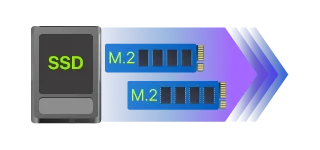
ASUSTOR explains that edge computing values low latency, reliability and real-time response, and that SSDs match those needs for five reasons:
| Reason | What ASUSTOR says |
|---|---|
| 1. Low latency, high bandwidth | No moving parts, much faster reads and writes than hard drives |
| 2. Shock and vibration resistance | Less affected by knocks and vibration, reducing the risk of data loss |
| 3. Energy efficiency | Much lower power draw, important where power is limited |
| 4. Compact size | Small and light, easy to install in many devices |
| 5. Silent operation | No spinning disks, so no drive noise |
That is why the all-flash Flashstor range suits edge sites: ASUSTOR lists the Flashstor chassis at just 48.3 mm tall and the FS6806X at 17.9 W in operation. ASUSTOR's FAQ also advises that when M.2 SSDs are the primary volume, you should use at least two, so a single SSD failure does not stop the NAS booting. See our Flashstor guide for the full range.
How an ASUSTOR NAS works as edge storage
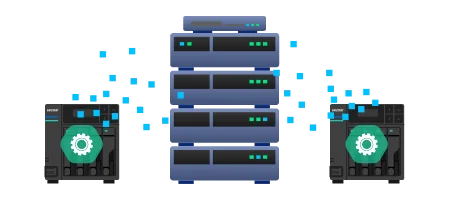
ASUSTOR groups the edge roles of a NAS into four areas.
Collaboration across branches
Deploy a NAS at each branch or remote workplace for centralised file management and sharing, so teams access the latest data wherever they are. Synchronisation keeps data consistent between locations and avoids version conflicts.
IoT data analysis
Place the NAS near IoT devices to handle real-time data processing and analysis on site, which gives faster insight for decisions.
Faster content delivery
Store static content on a NAS close to users to shorten transmission distance and improve load times.
Resilience and continuity
Preload data from public clouds onto the NAS during off-peak hours for fast access at peak times, process locally to reduce reliance on central servers, and run scheduled backups of critical data so operations continue after an unexpected event.

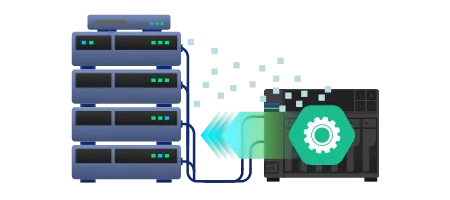



Case study: a NAS as an edge cache for cloud data
ASUSTOR describes how departments of ASUS, its parent group, used ASUSTOR NAS as edge caching devices. Teams frequently pulled large amounts of public cloud data through service-provider APIs for production, sales and inventory work, and hit delays and rate limits when many users made requests at once.
The fix: during off-peak hours, or through scheduled hourly tasks, the NAS downloads the data from the cloud to local storage and becomes a fast cache. At peak times departments read from the NAS instead, which eases pressure on the cloud APIs and speeds up access. The NAS also schedules data transfers to on-premises or remote ERP systems and runs scheduled backups. ASUSTOR reports better productivity and operational resilience as a result.
The Australian takeaway: the same pattern works for a franchise group, a multi-site medical practice or a construction company with site offices. Pull what the site needs overnight, work at LAN speed during the day, and sync results back when the link is quiet.
ASUSTOR models for edge sites
Swipe the table sideways to compare all models →
| Spec | FS6712X | FS6806X | AS5404T | AS6704T v2 | AS6804T |
|---|---|---|---|---|---|
| Storage | 12 x M.2 NVMe | 6 x M.2 NVMe | 4 bays + 4 M.2 | 4 bays + 4 M.2 | 4 bays + 4 M.2 |
| Processor | Celeron N5105 | Ryzen V3C14 | Celeron N5105 | Celeron N5105 | Ryzen V3C14 |
| Memory | 4GB DDR4 | 8GB DDR5 | 4GB DDR4 | 4GB DDR4 | 16GB DDR5 ECC |
| Network | 10GbE | 10GbE | Dual 2.5GbE | Dual 5GbE | Dual 10GbE + Dual 5GbE |
| Power (operation) | 26 W | 17.9 W | 38.3W | 35 W | 34 W |
| Size (H x W x D) | 48.3 x 308.26 x 193 mm | 48.3 x 308.26 x 193 mm | 170 x 174 x 230 mm | 185.5 x 170 x 230 mm | 185.5 x 170 x 230 mm |
| Operating temp. | 0°C to 40°C | 0°C to 40°C | 0°C to 40°C | 0°C to 40°C | 0°C to 40°C |
Source: ASUSTOR specifications. Every model is rated for 0 to 40 °C, so plan ventilation or air-conditioning for hot site sheds and comms cupboards.
Build it with ARC IP Networks
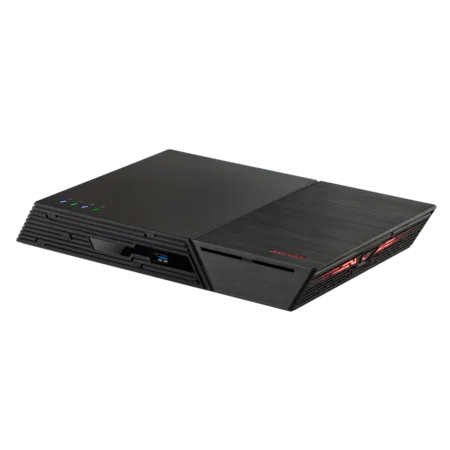
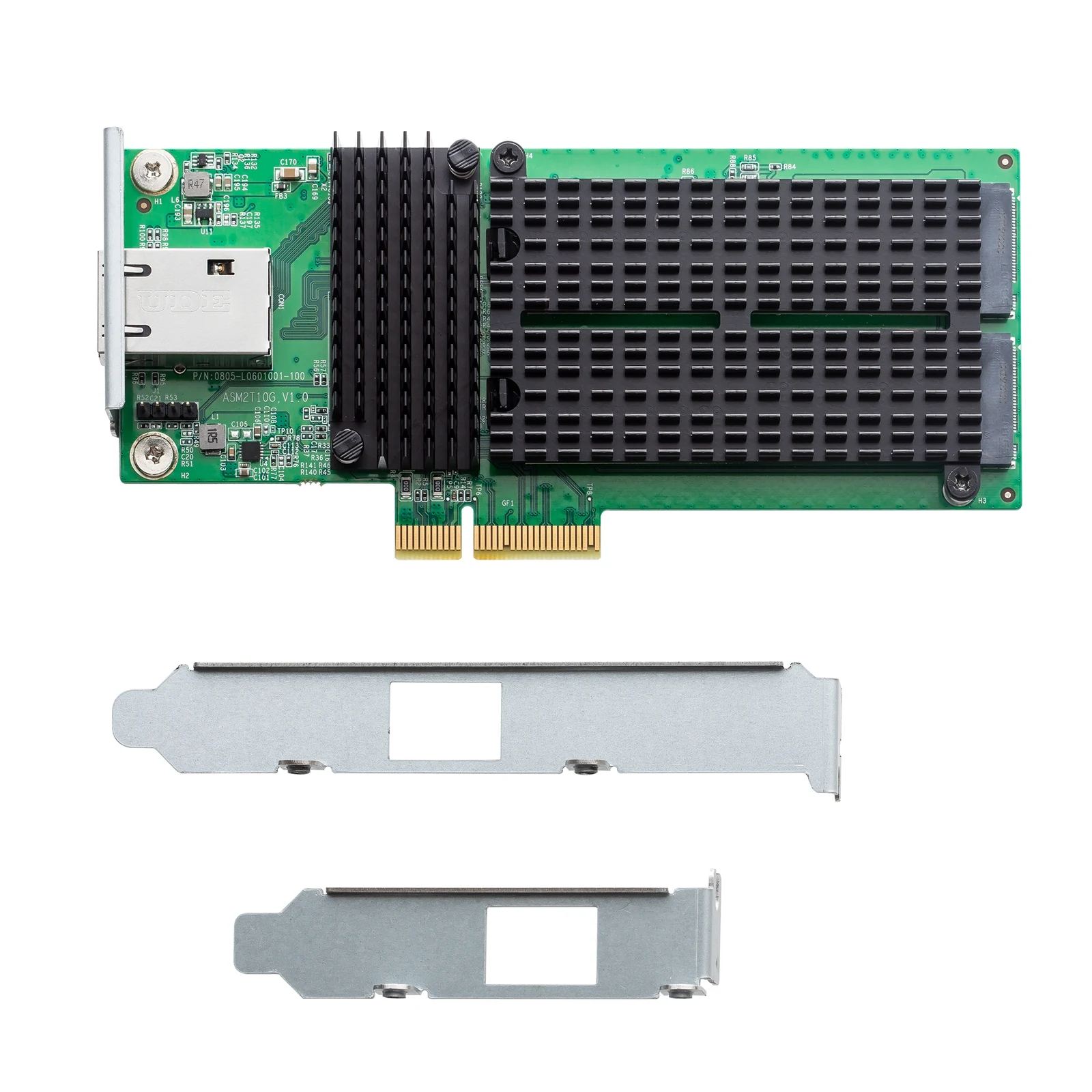
ARC IP Networks is a trusted ASUSTOR supplier in Australia, supplying genuine ASUSTOR NAS, drive bundles, 10GbE cards and UPS units for multi-site rollouts, with trade and project pricing and Australia-wide delivery to every site.
| Edge site | What we suggest | Why |
|---|---|---|
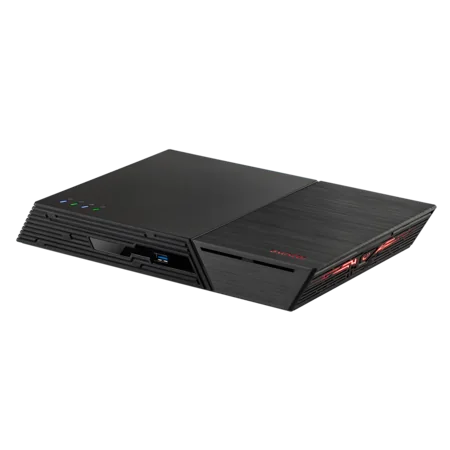
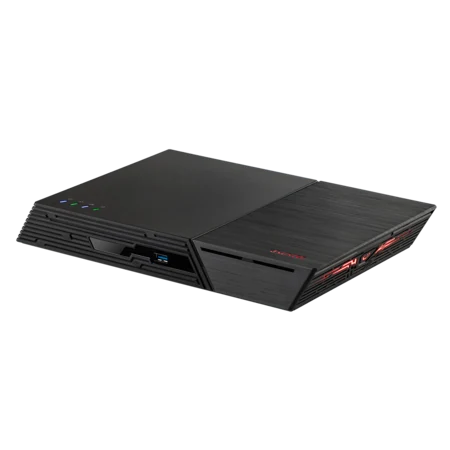
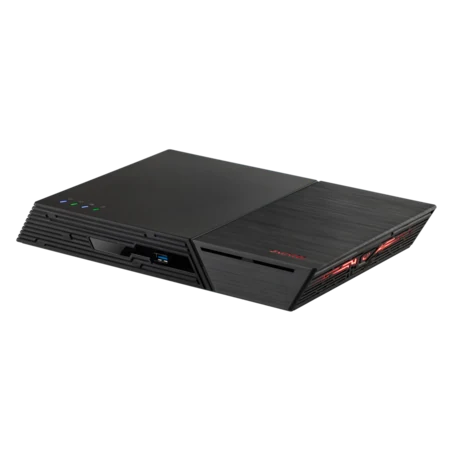
| Retail store or clinic, small footprint | FS6806X | Silent, all-flash, Ryzen, 10GbE |
| Site office with many SSDs | FS6712X | Twelve M.2 slots, 10GbE |
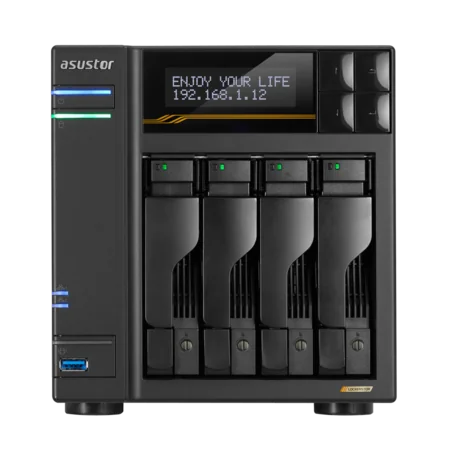
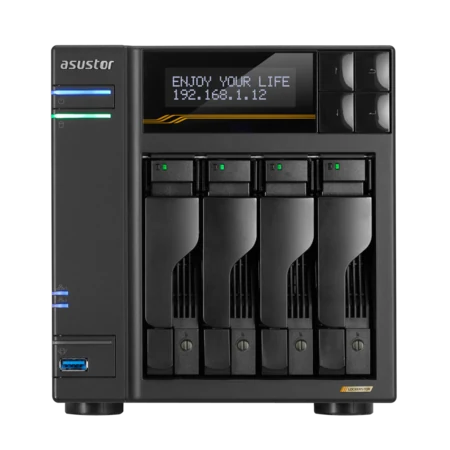
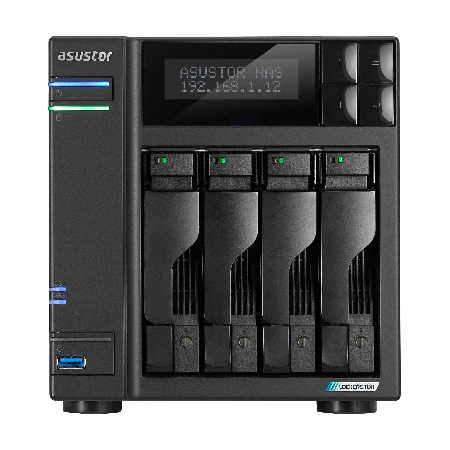
| Branch office with large shared files | AS6704T v2 with 10 TB drives | Hard-drive capacity, dual 5GbE, M.2 for caching |
| Regional hub caching cloud data | AS6804T with 10 TB drives | Dual 10GbE, ECC DDR5, PCIe 4.0 M.2 |
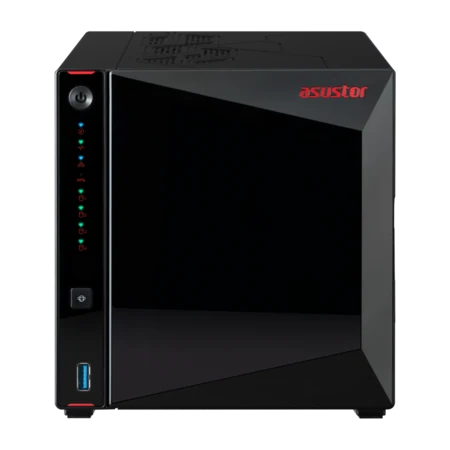
| Small branch on a tight budget | AS5404T | Four bays + four M.2, dual 2.5GbE |
Edge sites often have the least reliable power. Pair every node with a UPS from our PowerShield range; our best UPS for a NAS guide covers sizing. Combine edge nodes with a proper 3-2-1 backup plan. Call 1300 100 440 for a multi-site quote.
Shop genuine ASUSTOR for edge storage
Genuine ASUSTOR with the full 3-year manufacturer warranty. Current Australian pricing (inc. GST) is on each product page.
Common questions
Straight answers from the ARC IP Networks team. Last reviewed October 2026.
Edge storage keeps data and processing close to where data is created, such as a branch, store, clinic or factory, rather than sending everything to a remote cloud data centre. ASUSTOR lists lower latency, higher reliability, better data security and lower cost as the benefits.
No. ASUSTOR describes cloud and edge storage as complementary. The cloud provides large-scale compute and capacity, while edge storage handles real-time access and low latency. Most businesses use both.
ASUSTOR gives five reasons: low latency and high bandwidth, resistance to shock and vibration, lower power use, compact size and silent operation.
Yes. ASUSTOR describes using a NAS to download cloud data during off-peak hours or on hourly schedules, so staff read it from the local NAS at peak times, reducing pressure on cloud APIs.
For small, quiet all-flash nodes, the Flashstor 6 Gen2 FS6806X or Flashstor 12 Pro FS6712X. For larger files on hard drives, the Lockerstor 4 Gen2+ AS6704T v2. For heavy caching and processing, the Lockerstor 4 Gen3 AS6804T with dual 10GbE.
ASUSTOR recommends using at least two M.2 SSDs when SSDs form the primary volume, so the NAS can still boot if one SSD fails.
ASUSTOR rates the models in this guide for 0 to 40 degrees Celsius in operation. Hot sheds, plant rooms and comms cupboards in Australian summers may need ventilation or air-conditioning.
ARC IP Networks is a trusted ASUSTOR supplier in Australia with genuine ASUSTOR NAS, competitive prices, the full manufacturer warranty and Australia-wide delivery. Call 1300 100 440 for trade and project pricing.
Rolling out storage to several sites?
Tell us how many sites you have, what they store and how they connect. ARC IP Networks will spec the ASUSTOR NAS, drives and UPS for each, with project pricing.