Short answer: a line-interactive UPS passes mains through, corrects voltage with AVR and switches to battery in a few milliseconds when power fails. An online (double-conversion) UPS rebuilds clean power continuously, so there is no switch-over at all and the output is isolated from sags, spikes and frequency drift. For PCs, NBN gear and small comms cabinets, line interactive is enough. For servers, generator-backed sites and poor rural supply, choose online.
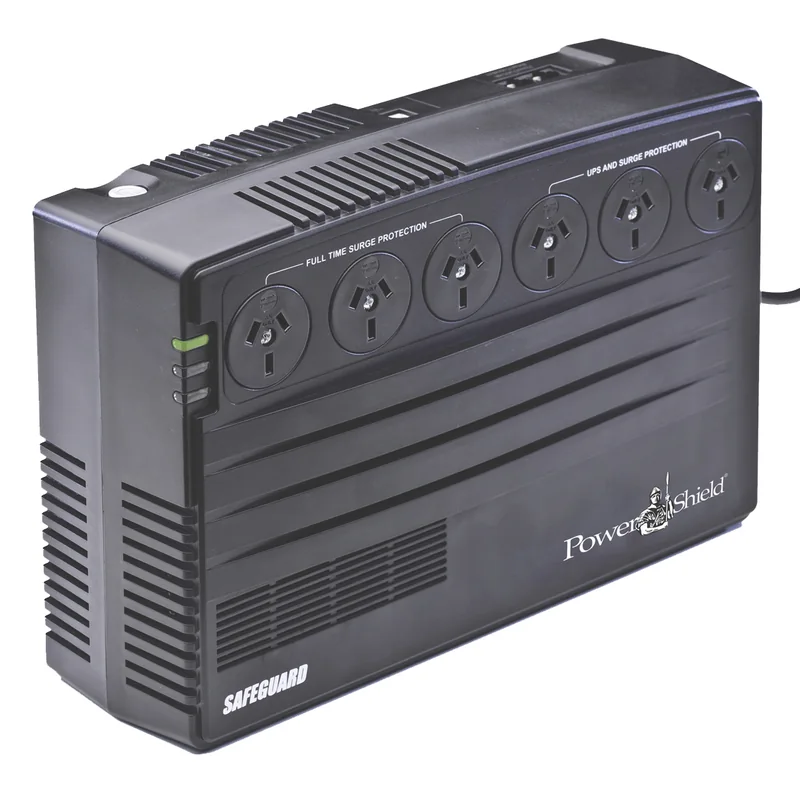
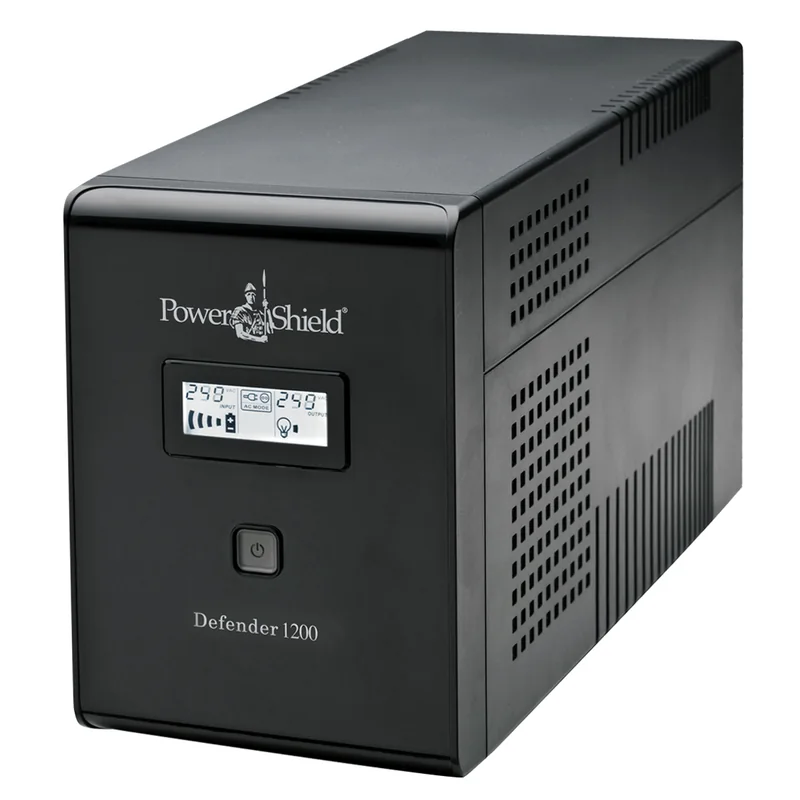
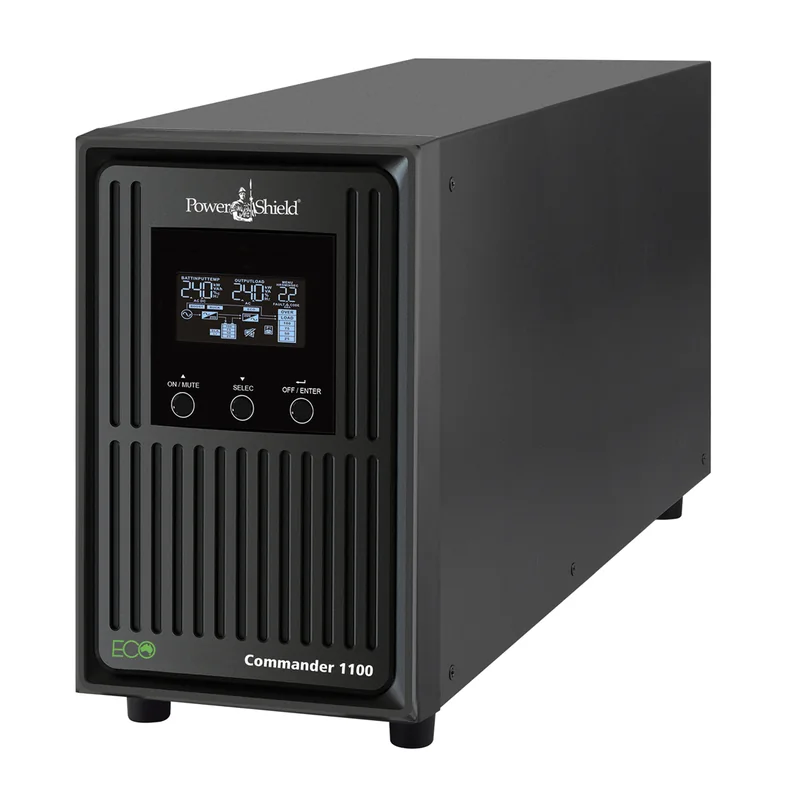
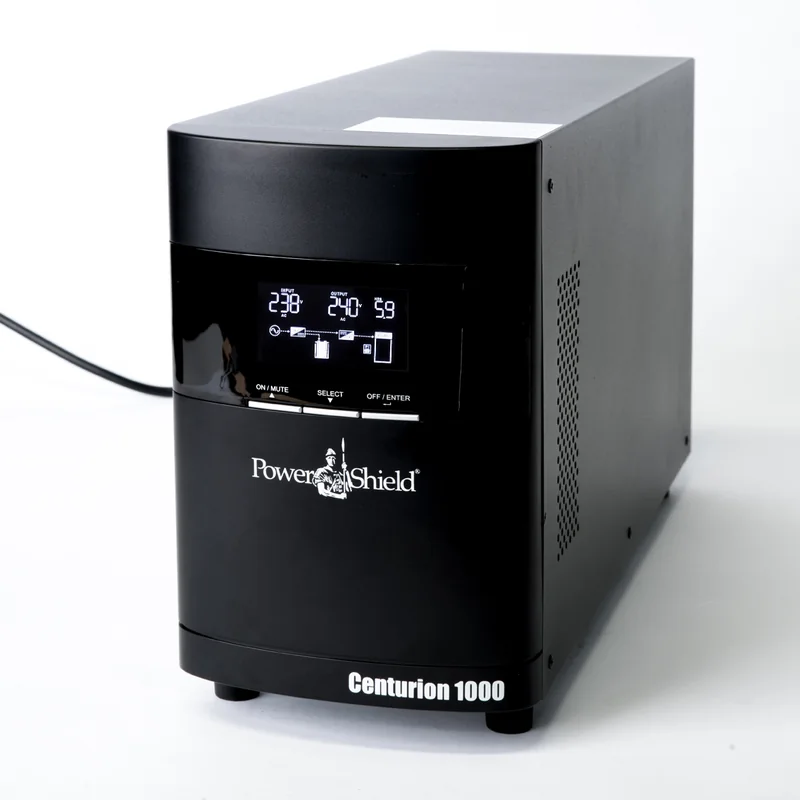
In PowerShield terms: SafeGuard and Defender are line interactive with a simulated sine wave (6 ms typical transfer); Commander is line interactive with a pure sine wave; Centurion is true online double conversion with zero transfer time.
ARC IP Networks is a trusted PowerShield supplier in Australia: genuine stock at competitive prices, with the full PowerShield Australian warranty, Australia-wide delivery and trade pricing.
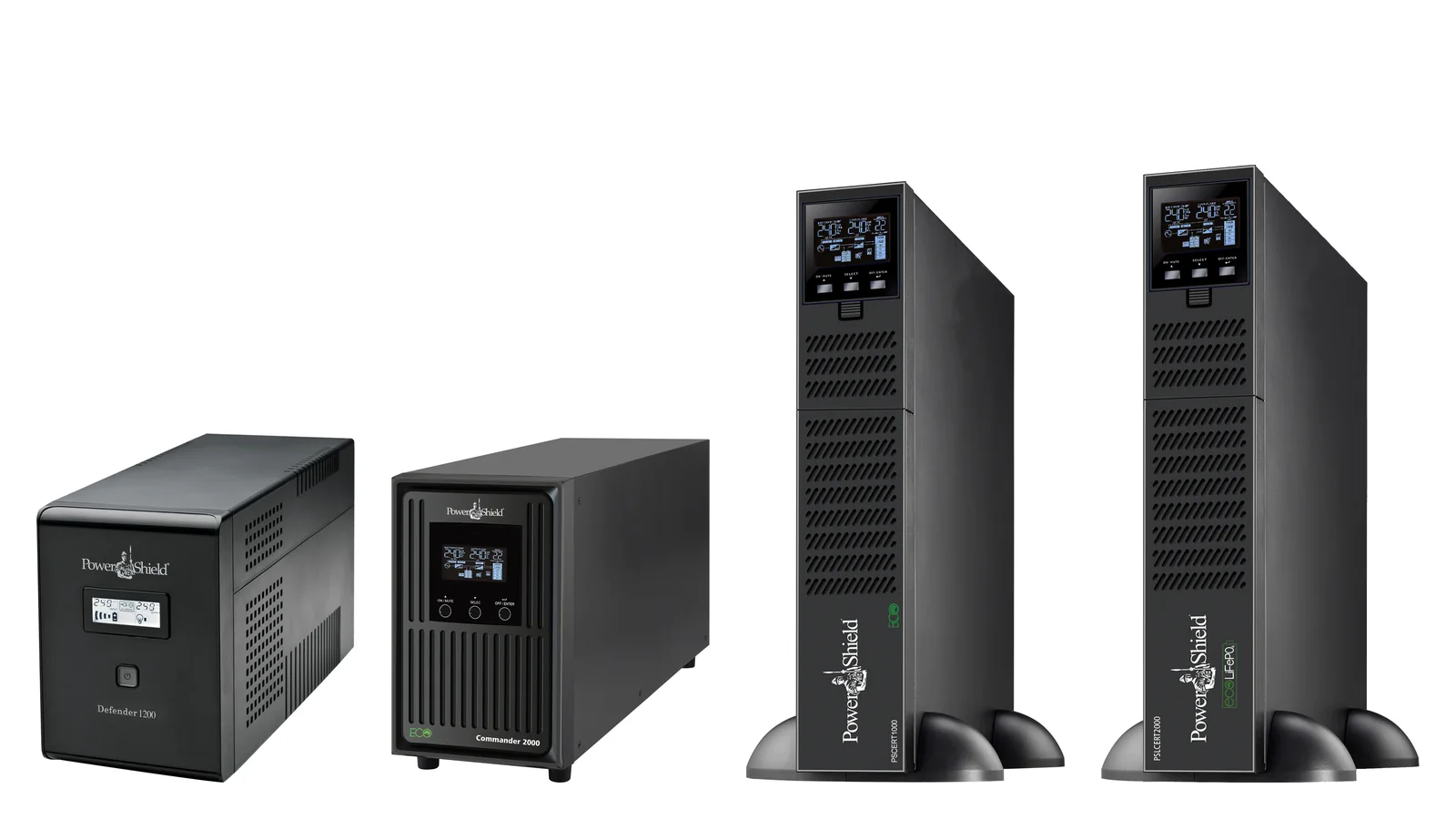
UPS topologies at a glance
Swipe the table sideways to compare all models →
| Topology | How it works | Transfer to battery | Voltage correction | Battery waveform | PowerShield models |
|---|---|---|---|---|---|
| Standby (offline) | Mains straight to the load; inverter starts on failure | Typical 6 ms (Ninja) | No | Simulated sine | Ninja Slimline PSLN600 |
| Line interactive | Mains through an AVR transformer; inverter on standby | 6 ms typical | Yes, buck and boost | Simulated sine | SafeGuard PSG750, Defender PSD1200, Defender Rackmount PSDR800 |
| Line interactive, pure sine | As above, with a sine-wave inverter | 6 ms typical, 10 ms max | Yes, smart AVR | Pure sine | Commander PSCM1100, Commander RT PSCRT2000 |
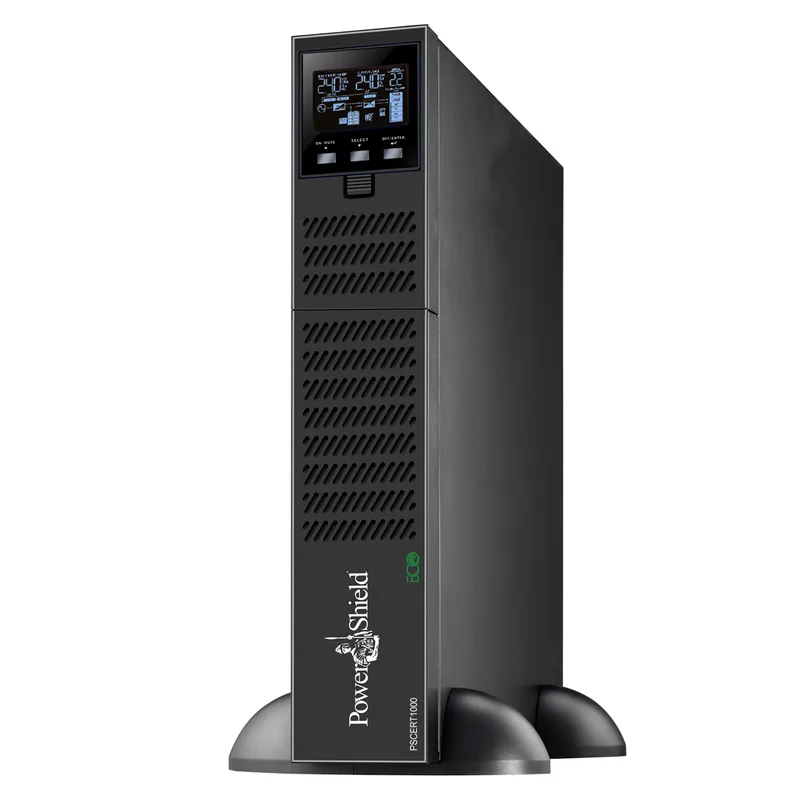
| Online double conversion | AC → DC → AC all the time; battery always on the DC bus | Zero | Not needed: output regulated to ±1% | Pure sine | Centurion RT PSCERT1000, Centurion Tower PSCE1000, LiFePO4 PSLCERT1000 |
Transfer times and waveforms from PowerShield brochures.
How a line-interactive UPS works
In normal operation a line-interactive UPS feeds your equipment from the mains through an automatic voltage regulator. When the voltage sags, the AVR boosts it; when it rises, the AVR bucks it, so the output stays near nominal without touching the battery. PowerShield describes its AVR as bringing fluctuating voltage back within about 10% of nominal. Only when the input moves outside the UPS's range, or fails completely, does the inverter take over from the battery.
- Transfer time: PowerShield lists 6 ms typical for SafeGuard, Defender, Defender Rackmount, Commander and Commander RT (Commander Tower: 10 ms maximum). Typical PC and network power supplies ride through a gap that short.
- Efficiency: high, because the inverter is idle most of the time. Commander's ECO mode is rated at up to 98%.
- Input window: 162–290 VAC for Commander, 177–290 VAC for SafeGuard and Defender Rackmount, before the UPS goes to battery.
- Size and noise: SafeGuard and Defender are compact and fanless (under 40 dB).
The trade-off: the mains frequency and any fast spikes the surge suppression does not catch still reach the load, and every outage, however brief, causes a transfer.
How an online double-conversion UPS works
An online UPS converts incoming AC to DC, keeps the batteries on that DC bus, and runs an inverter full-time to make new AC for the load. When the mains fails nothing switches: the DC bus simply draws from the batteries, so PowerShield lists the AC-to-battery transfer time on Centurion as zero.
- Wide input window: Centurion RT stays on mains down to 160 VAC at full load and 110 VAC at light load, and up to 300 VAC. Centurion Tower accepts 110–300 VAC at 50% load. That means fewer trips to battery on a weak supply.
- Frequency tolerance: 40–70 Hz input on Centurion RT and Centurion Tower 1–3kVA, which is why PowerShield lists the range as generator compatible.
- Regulated output: ±1% voltage regulation on battery and input power factor correction of 0.99.
- ECO mode: when the mains is clean, advanced ECO mode passes it through and keeps the inverter in a passive mode, reaching 96–97% efficiency on Centurion RT (up to 98% quoted for the range). Leave ECO off on poor supply.
- Costs: more heat and a fan (Centurion is rated under 50 dBA at one metre), and a higher purchase price than line interactive.
Pure sine vs simulated sine wave
Waveform only matters while the UPS is on battery, but that is exactly when you need your gear to keep running. A simulated sine wave is a stepped approximation; a pure sine wave matches mains power.
| Load | Simulated sine (SafeGuard, Defender) | Pure sine (Commander, Centurion) |
|---|---|---|
| NBN modem, router, switch, IP phone power | Suitable | Suitable |
| Office PC with a standard power supply | Suitable for short outages and shutdown | Suitable |
| Server, rackmount NAS, workstation with active-PFC supply | Not recommended: some active-PFC supplies shut down or buzz | Recommended |
| Gate motors, pumps, fans and other motors | Not recommended | Recommended (PowerShield lists motors for Commander) |
| Audio-visual and sensitive measurement gear | Not recommended | Recommended |
ARC IP Networks guidance. If a device's manual asks for a sine-wave UPS, follow it.
Commander gives you a pure sine wave without the price of an online unit; PowerShield quotes total harmonic distortion of 2% or less on linear loads for the Commander Tower.
Australian power conditions and what handles them
Most Australian outages are not long blackouts. They are brief interruptions when a storm trips a line or a recloser operates, voltage sags when heavy loads start up, surges and spikes during summer storms, and the low or unstable voltage that is common at the end of long rural feeders. Sites running off a generator add frequency drift.
| Problem | Line interactive (SafeGuard, Defender, Commander) | Online (Centurion) |
|---|---|---|
| Blackout | Switches to battery in about 6 ms | No transfer at all |
| Brownout or sag | AVR boosts voltage without using the battery | Absorbed; Centurion RT stays on mains down to 160 VAC at full load |
| Overvoltage | AVR bucks voltage; above 290 VAC goes to battery | Absorbed up to 300 VAC |
| Surges and spikes | Built-in surge protection (e.g. 936 J on Defender 1200–2000) | Surge protection plus full regeneration of the output |
| Momentary flicker | Each flicker is a transfer | Invisible to the load |
| Generator power | May transfer repeatedly if frequency drifts | Generator compatible, 40–70 Hz input |
If your lights dim when the air conditioner starts, or a UPS beeps several times a day, the supply is moving outside a line-interactive window and an online Centurion will spare both the batteries and the equipment.
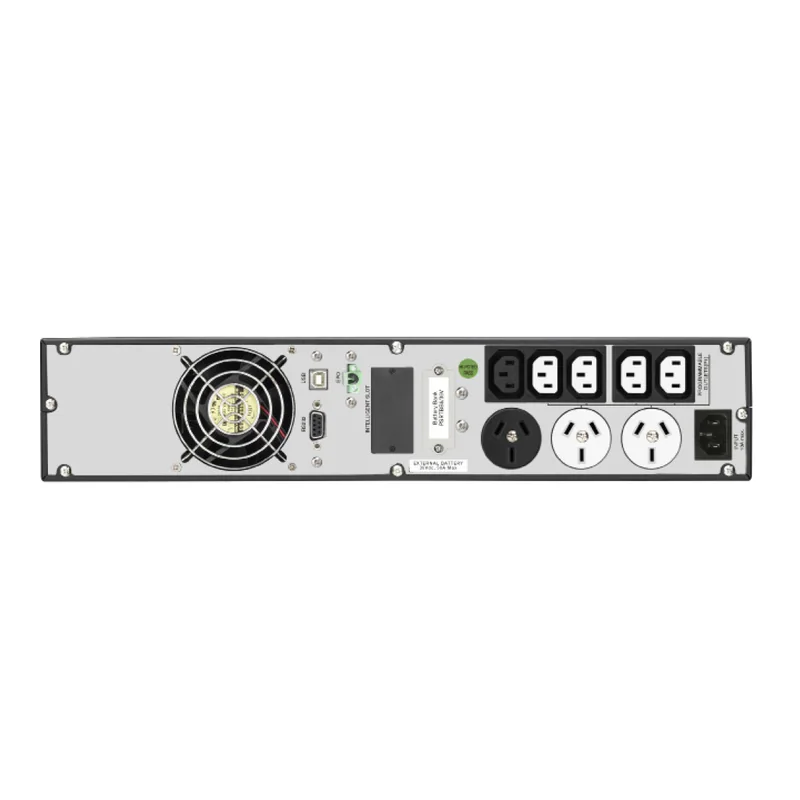
Which do you need? Decision guide
| Your situation | Topology | PowerShield pick |
|---|---|---|
| Home office PC and NBN equipment in a metro area | Line interactive | PSG750 or PSD650 |
| Small office: PCs, phone system, desktop NAS | Line interactive | PSD1200 or PSD1600 |
| Wall-mount network cabinet, switches and NVR | Line interactive | PSDR800 or PSDR1500 |
| Workstation or NAS with an active-PFC power supply | Line interactive, pure sine | PSCM1100 or PSCM2000 |
| Office server rack, VMware or Hyper-V hosts | Online | PSCERT1500 or PSCERT3000 |
| Regional site, farm office or end of a long line | Online | PSCERT2000 or PSCE2000 |
| Generator-backed site | Online | PSCE3000 or PSCERT3000 |
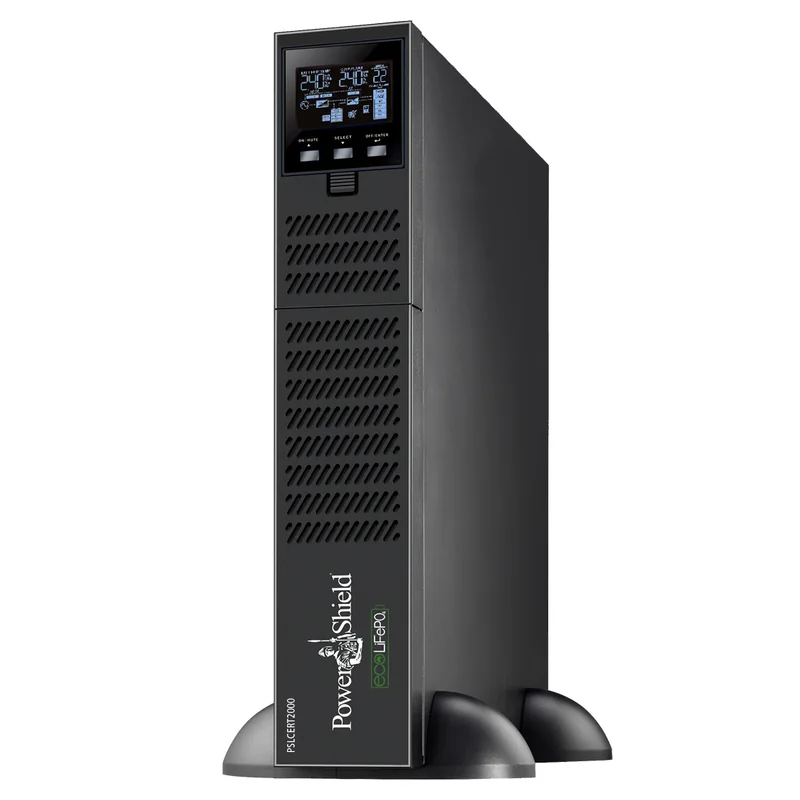
| Hot cabinet, long service life wanted | Online, LiFePO4 | PSLCERT1000 or PSLCERT2000 |
ARC IP Networks suggestions based on PowerShield specifications; size on watts first.
Once the topology is settled, use our UPS sizing guide to choose the VA rating and runtime, and the PowerShield range guide to compare models.
Common mistakes we see
- Buying on VA alone. A 2000VA Defender delivers 1200 W; a 2000VA Commander or Centurion delivers 1800 W.
- Putting a server on a simulated sine UPS. Active-PFC server supplies want pure sine.
- Running ECO mode on a poor supply. ECO passes mains through; turn it off where power is unstable.
- Forgetting the 15 A circuit. The Commander RT 3000 and Centurion RT 3000 need a 15 A wall socket.
- No shutdown link. A UPS without USB or SNMP shutdown configured only delays the crash.
PowerShield models by topology
Live Australian pricing (inc. GST) and availability are on each product page.
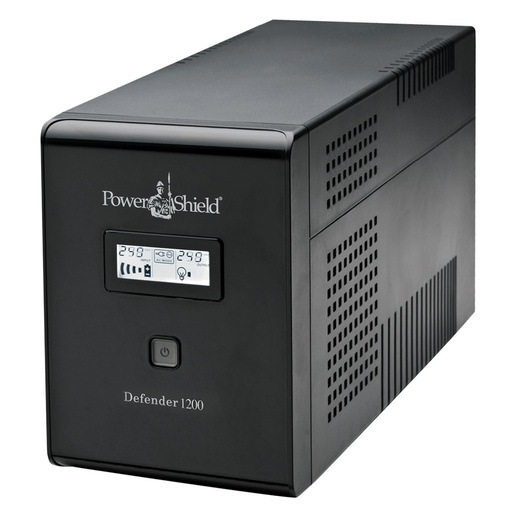
Line interactive with AVR and simulated sine; fanless tower with six outlets.
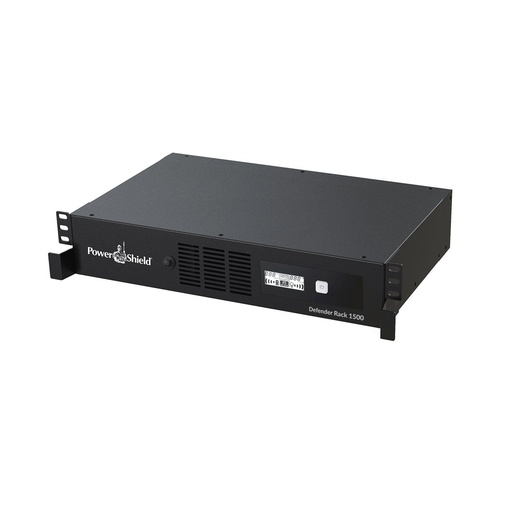
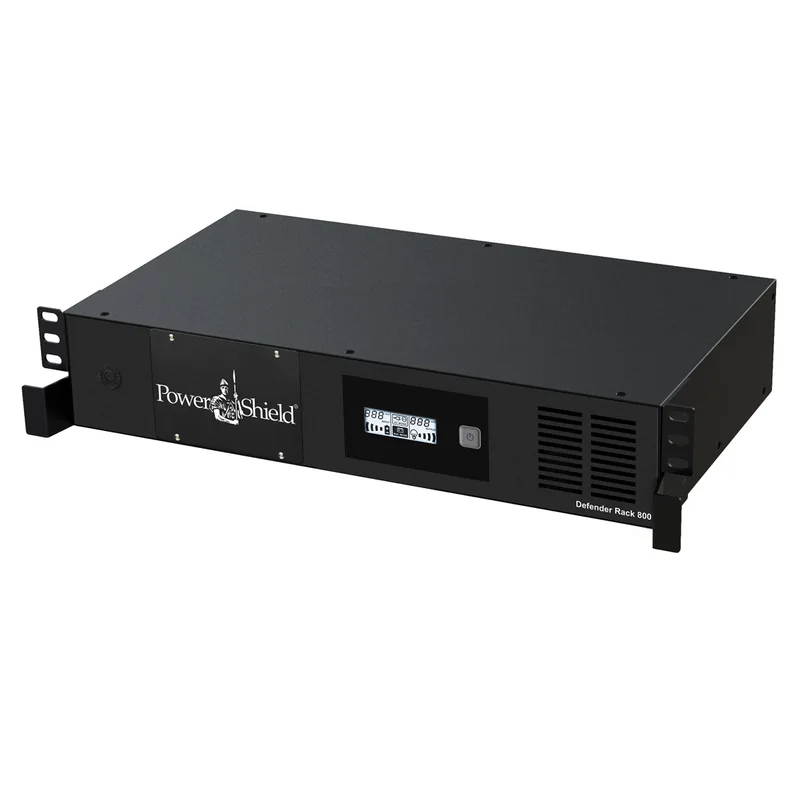
Line-interactive 2RU rack UPS, 300 mm deep, SNMP slot.
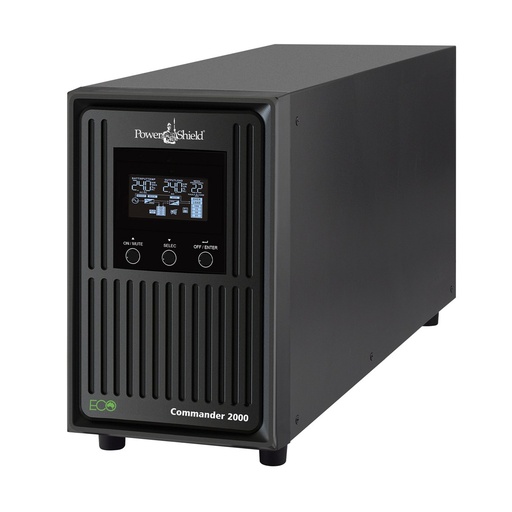
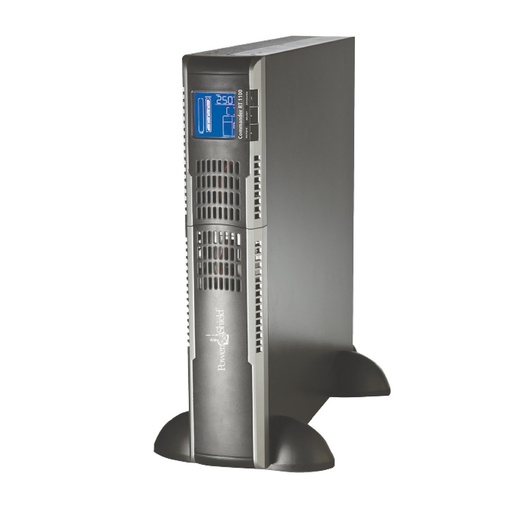
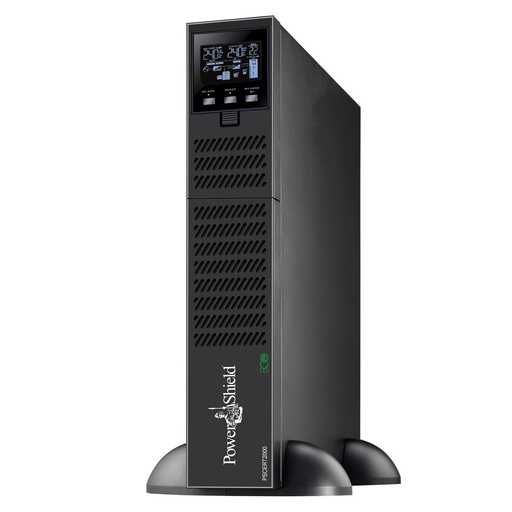
Online double conversion, zero transfer, 1800 W, expandable.
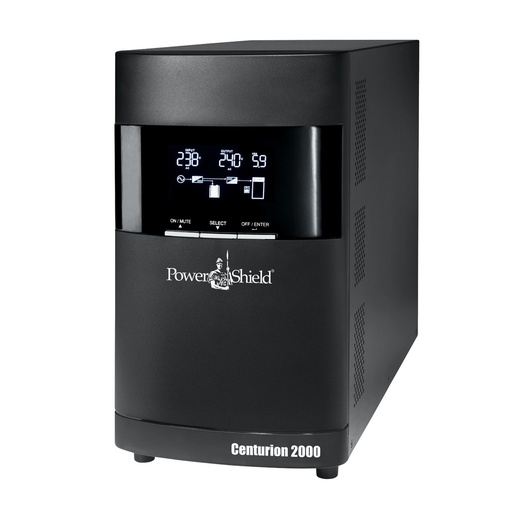
Online tower for regional and generator-backed sites.
Why buy PowerShield from ARC IP Networks
ARC IP Networks is a trusted PowerShield supplier in Australia: genuine stock at competitive prices, with the full PowerShield Australian warranty, Australia-wide delivery and trade pricing.
- Genuine PowerShield stock, covered by the PowerShield Australian warranty: 2 years advance replacement on SafeGuard and Defender; 2 years on single-phase Commander and Centurion, extended to 3 years when you register the UPS with PowerShield; 5 years on Centurion RT LiFePO4 and the Ninja Slimline.
- Help sizing the UPS, battery modules and network cards for your actual load, from a team that also designs networks, comms racks and surveillance systems.
- Australia-wide delivery, trade pricing for installers and IT providers, and quotes for multi-site rollouts.
Browse the full PowerShield range at ARC IP Networks or call 1300 100 440.
Common questions
Straight answers from the ARC IP Networks team. Last reviewed October 2026.
A line-interactive UPS passes mains power through, corrects voltage with AVR and switches to battery when power fails, typically in 6 ms on PowerShield models. An online double-conversion UPS converts all power AC to DC to AC continuously, so there is zero transfer time and the output is isolated from sags, spikes and frequency changes.
For a single small server on good metro power, a pure sine line-interactive UPS such as the PowerShield Commander can be enough. For servers that must not drop, sites with unstable supply or a generator, choose an online UPS such as the PowerShield Centurion RT.
You need pure sine for equipment with active-PFC power supplies, motors, gate controllers and sensitive electronics. Modems, routers, switches and standard PCs run on a simulated sine wave for short outages. PowerShield Commander and Centurion are pure sine; SafeGuard and Defender are simulated sine.
Automatic voltage regulation boosts low voltage and bucks high voltage while the UPS stays on mains, so brownouts and overvoltage are corrected without draining the battery. PowerShield SafeGuard, Defender and Commander all have buck and boost AVR.
PowerShield lists the Centurion range as generator compatible. Centurion RT and Centurion Tower 1–3kVA accept a 40–70 Hz input frequency, so generator frequency drift does not force them onto battery.
Its inverter runs all the time, so it converts power twice and produces more heat. PowerShield Centurion models have an advanced ECO mode that passes clean mains through at 96–97% efficiency on Centurion RT, but ECO should be off where power quality is poor.
PowerShield lists 6 ms typical for SafeGuard, Defender, Defender Rackmount and Commander (Commander Tower 10 ms maximum), and zero AC-to-battery transfer for the online Centurion range.
ARC IP Networks is a trusted PowerShield supplier in Australia: genuine stock at competitive prices, with the full PowerShield Australian warranty, Australia-wide delivery and trade pricing. Order online at arcip.com.au or call 1300 100 440 for help sizing a UPS or for a quote.
Line interactive or online for your site?
Tell us what you are protecting and what the power is like there; we will recommend the right PowerShield topology and size.