There's no single number — a security camera can detect movement hundreds of metres away but only identify a face or number plate from a much shorter distance. Real range depends on resolution, lens focal length and available light. ARC IP Networks, an authorised Hikvision reseller in Australia, helps you match lens to distance.
How far can a security camera see?
The honest answer is: it depends, and the marketing metre figure you see on a box only tells part of the story. A camera can see movement a very long way off — often across a whole car park or paddock — while still being useless for telling who that person is or what that number plate reads. Those are three completely different jobs, and each one has its own useful distance.
What actually sets the distance is a combination of three things: the resolution (how many pixels the camera has to spread across the scene), the lens (its focal length and field of view), and the available light (how far the infrared or white light reaches after dark). Change any one of those and the useful range changes with it. So rather than chase a single “sees X metres” claim, it pays to decide what you need to achieve at a given distance first — then choose the camera and lens to suit.
What decides how far a camera can see?
Four factors do most of the work. Get these right and distance takes care of itself:
- Resolution. More megapixels means more detail to spread across the frame, so subjects stay sharp further away. A 4K (8MP) camera holds usable detail at a greater distance than a 2MP one covering the same scene.
- Lens focal length & field of view. A short focal length (e.g. 2.8 mm) gives a wide field of view for close-up coverage; a longer focal length (e.g. a zoomed varifocal) narrows the view but pushes detail much further down range.
- Light. During the day, distance is limited by resolution and lens. At night it's limited by how far your infrared (IR) or ColorVu white light reaches — beyond that, the subject simply isn't lit.
- Sensor & low-light performance. A larger, more sensitive sensor (Hikvision's DarkFighter tech, for example) keeps images clean in poor light, which preserves usable distance when it matters most.
Detect vs recognise vs identify: the distance that matters
Security professionals don't ask “how far can it see” — they ask “how far can it do the job I need?” The industry framework for this is DORI (Detect, Observe, Recognise, Identify), defined in the international standard EN 62676-4. Each level needs more pixels on the target, so each has a shorter maximum distance from the same camera:
| Purpose | What you can tell | Pixels on target (standard) | Useful distance |
|---|---|---|---|
| Detect | Something is there / motion in a zone | ~25 px per metre | Longest range |
| Observe | Characteristic details, clothing colour | ~63 px per metre | Medium-long |
| Recognise | Whether you know the person | ~125 px per metre | Medium-short |
| Identify | Who it is / read a number plate | ~250 px per metre | Shortest range |
The takeaway: the same camera might detect a person right across a yard yet only identify a face within a fraction of that distance. If your goal is a court-usable face or plate, plan for the short identify distance — not the headline detect distance.
Wide lens vs zoom lens: coverage or distance
You generally choose one or the other, and it's the single biggest decision for range:
- Wide (short focal length, e.g. 2.8 mm). A big, sweeping field of view is ideal for entrances, driveways and general coverage — but because the pixels are spread wide, your usable identify distance is short. Great for “watch this whole area”, not for reading a plate 40 m away.
- Zoom / telephoto (long or varifocal focal length). A varifocal or motorised-zoom lens concentrates the pixels on a narrow view, pushing recognisable detail much further down range. This is what you want for long driveways, perimeters, farm gates and car parks.
A word on “digital zoom”. Digital zoom just crops and enlarges pixels you already captured — it adds no new detail and quickly turns blocky. Optical zoom (a real varifocal or motorised lens) genuinely resolves more detail at distance. When distance matters, buy optical, and lean on higher resolution so any digital crop still holds up. Not sure which form factor suits? Our buyer's guide walks through it.
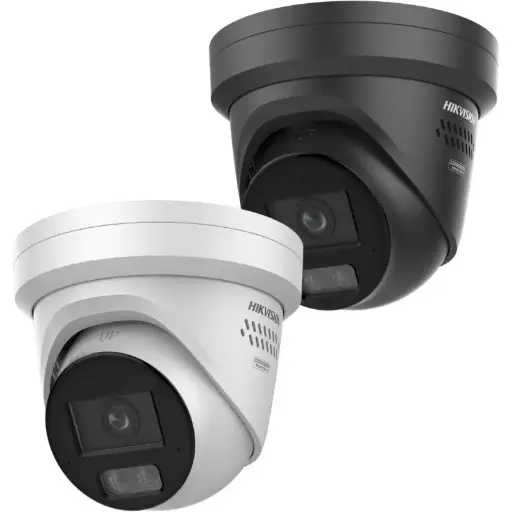
Shopping for Hikvision?
Authorised Hikvision reseller: genuine Australian stock, full warranty, competitive prices and price match available.
How far can a camera see at night?
After dark, distance is capped by your lighting, not your lens. Two approaches dominate on Hikvision cameras:
- Infrared (IR). Invisible IR LEDs light the scene for a clear black-and-white image. The camera's rated IR range is roughly how far it can usefully see at night — and it varies a lot by model. A long-range bullet like the DS-2CD3A46G2T-IZHS is rated with up to 120 m IR, while a compact varifocal such as the DarkFighter 2.0 bullet offers Smart Hybrid Light up to around 60 m.
- ColorVu / white light. Instead of IR, a warm white light and a high-sensitivity lens deliver full-colour footage at night — excellent for closer, well-defined areas where colour of clothing or a vehicle matters.
Whatever the technology, don't expect night range to match daytime range: if a subject sits beyond where the light reaches, the camera can't see it. Match the rated IR/light distance to how far away your target actually is.
How to choose a camera for the distance you need
Work backwards from the job, not the spec sheet:
- Pick the purpose first. Do you need to detect, recognise or identify at that spot? Identify (faces, plates) needs the most pixels and the shortest working distance.
- Measure the distance from where the camera mounts to the point of interest.
- Match the lens. Close/wide area → a wide fixed lens. Distant point → a varifocal or zoom lens you can dial in.
- Add resolution headroom. Higher resolution buys you detail at distance and room to zoom in on playback.
- Check night range. Confirm the IR or ColorVu light actually reaches your target after dark.
Weatherproofing matters outdoors too — see IP & IK ratings explained. For proven home and small-business picks, our best Hikvision cameras guide is a good starting point, or talk to the ARC IP Networks team and we'll spec the right lens for your distance.
Cameras for near, mid and long range
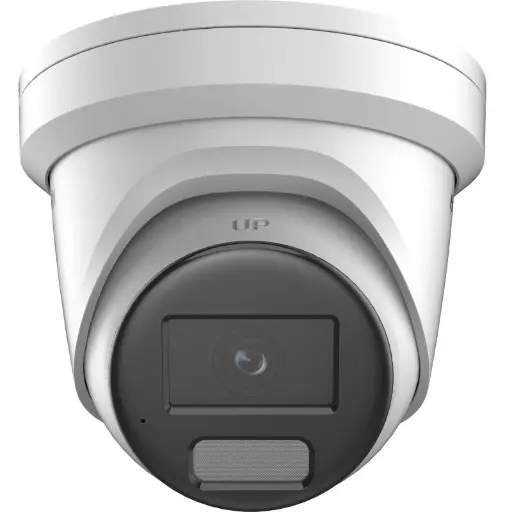
Hikvision DS-2CD2386G2H 8MP 2.8mm Powered by Darkfighter Fixed Turret Network Camera
Wide 2.8mm turret with an 8MP sensor and Powered-by-DarkFighter low-light performance — ideal for close, wide-area coverage of doors, driveways and entrances.
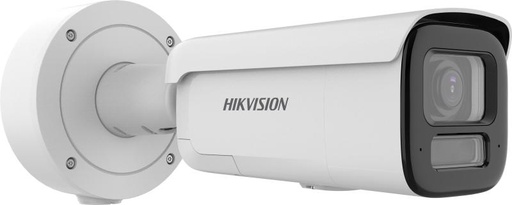
Hikvision DS-2CD3667G3-LIZSUY-SL DarkFighter 2.0 6 MP Bullet Network Camera, 2.7-13.5mm Motorized Varifocal, Smart Hybrid Light & Active Deterrence
DarkFighter 2.0 6MP motorised varifocal bullet (2.7–13.5mm) with Smart Hybrid Light up to ~60m — dial the zoom to suit mid-range driveways, yards and perimeters.
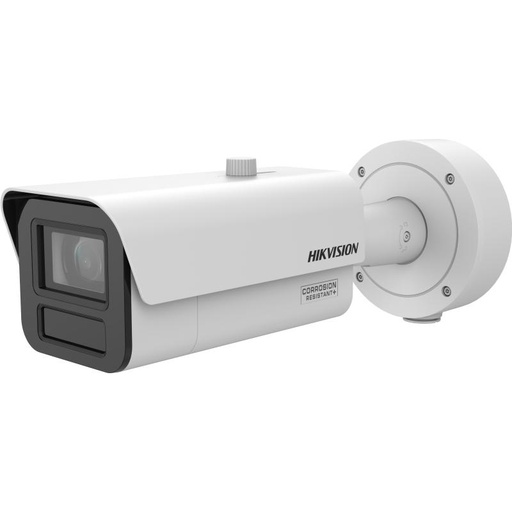
Hikvision DS-2CD3A46G2T-IZHS AcuSense 4 MP Varifocal Bullet Network Camera, 6-60 mm Motorised Lens, 120 m IR
AcuSense 4MP varifocal bullet with a 6–60mm 10x optical-zoom motorised lens and up to 120m IR — built for long driveways, car parks, farm gates and perimeters.
Related Hikvision guides
- Farm security cameras: best picks for rural Australia
- 2MP vs 4MP vs 8MP: What Resolution Do You Need?
- How to Choose a Security Camera: Buyer's Guide
- Best Hikvision Cameras for Home Security (Australia)
- IP & IK Ratings Explained: Weatherproof CCTV
- Can CCTV Cameras Record Audio in Australia?
- How Much Internet Data Does CCTV Use?
Ready to buy?
Shop genuine Hikvision at ARC IP Networks
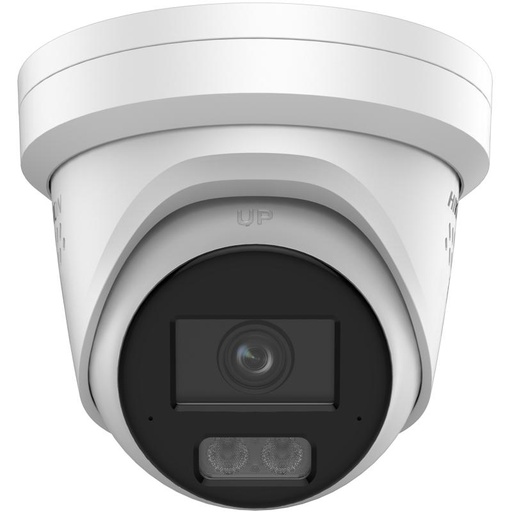
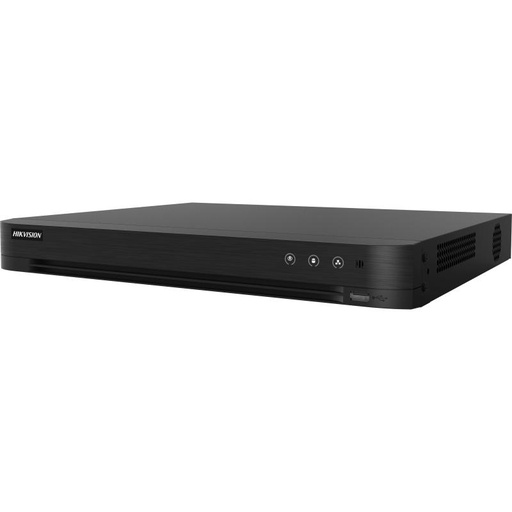
Authorised Hikvision reseller
Hikvision at ARC IP Networks
AcuSense, ColorVu and DeepinView cameras, NVRs and complete systems. Genuine Australian stock with the full manufacturer's warranty, competitive prices and price match available.
Frequently asked questions
Last updated: 2026-07-14 · Written by the ARC IP Networks team, an authorised Hikvision reseller in Australia.
Who we are
About ARC IP Networks
ARC IP Networks is an Australian supplier of security cameras and CCTV systems, based in Blackburn, Melbourne, Victoria. We work with homeowners, installers, integrators and businesses across Australia, supplying Hikvision, Ubiquiti UniFi Protect, Dahua and Jovision CCTV.
We are an authorised reseller for every brand we sell, and the national distributor of Jovision in Australia, so you get genuine Australian stock with the full manufacturer's warranty, never grey imports, at competitive prices. Our team can help you choose the right equipment, and trade customers get trade accounts and project pricing on larger jobs.
- Genuine Australian stock with the full manufacturer's warranty
- Competitive prices, price match available
- Trade accounts for installers, integrators and MSPs
- Australia-wide delivery; showroom in Blackburn, Mon–Fri 9–5 (demos by appointment)
Need help choosing?
Tell the ARC IP Networks team what you are trying to achieve and we will recommend the right equipment and quote it as one order.