Choose a bullet for long-range coverage and a visible deterrent, a dome for discreet, tamper-resistant ceiling mounting, or a turret (eyeball) as the easy-to-aim all-rounder with no IR glare. All three are available from ARC IP Networks, an authorised Hikvision reseller in Australia.
Choosing your cameras? ARC IP Networks supplies genuine Hikvision cameras and NVRs at competitive prices, with the full Australian manufacturer's warranty, Australia-wide delivery and trade pricing.
What are turret, dome and bullet cameras?
Turret, dome and bullet describe the three most common camera form factors — the physical shape and housing, not the image quality. A modern Hikvision camera in any of these shapes can share the same 4K sensor, AcuSense AI and night vision; what changes is how it mounts, how visible it is and how easy it is to aim.
- Bullet — a cylindrical, forward-facing body on an arm bracket. Obvious and directional, so it works as a visible deterrent.
- Dome — the lens sits under a clear dome cover, usually on a ceiling or soffit. Discreet, low-profile and hard to grab or knock out of alignment.
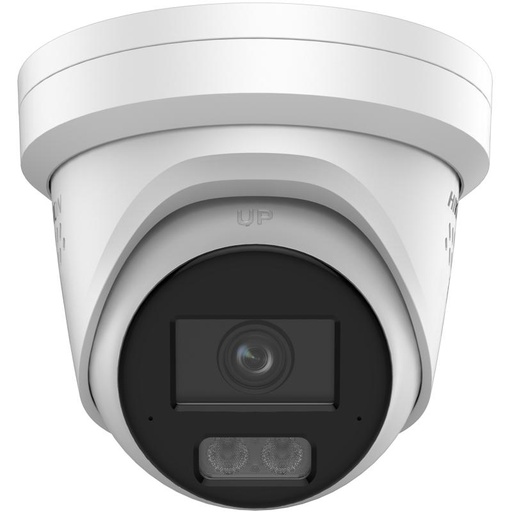
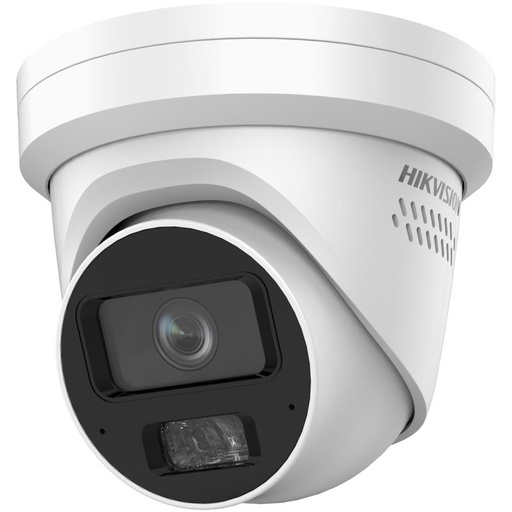
- Turret (also called eyeball) — a ball-and-socket design that combines dome-style compactness with bullet-style easy aiming. The fast-growing all-rounder.
You can mix all three on one system — they all record to the same Hikvision NVR.
Bullet cameras: pros, cons and best mounting
Bullet cameras are the classic “security camera” silhouette. Because they are clearly visible and point in one obvious direction, they double as a deterrent — would-be intruders can see they are being watched. The arm bracket makes them quick to angle for a specific target, and the longer body suits models with bigger lenses for reach down a driveway or along a fence line.
Pros
- Strong visible deterrent — people can tell exactly where it is pointing.
- Easy to aim and re-aim on its bracket.
- Longer housings suit longer-range and varifocal lenses.
- Built-in sun shade helps in harsh sun and rain.
Cons
- Conspicuous — not ideal if you want cameras to blend in.
- The exposed arm is easier to grab or spray than a low dome.
- Can collect spider webs and dust on the shade in some spots.
Best mounting
Eaves, walls, fence lines, carports, driveways and any spot where you want long reach and an obvious presence. Browse the range on our Hikvision bullet cameras hub.
Dome cameras: pros, cons and best mounting
Dome cameras tuck the lens behind a clear cover, giving a tidy, low-profile look that suits ceilings, soffits and public-facing entrances. Because the housing is enclosed and flush, a dome is harder to grab, twist or knock out of alignment — and many domes are offered with a reinforced IK vandal-resistant rating for exposed areas.
Pros
- Discreet and tidy — blends into a ceiling or soffit.
- Tamper-resistant enclosed shape; vandal-rated (IK) options available.
- The cover hides which way the lens is pointing.
- Excellent for indoor and undercover ceiling mounting.
Cons
- The dome cover can catch internal IR reflection at night if it gets dirty or is mounted too close to a wall.
- Slightly fiddlier to aim than a turret or bullet.
- Wall-mounting sometimes needs an extra bracket.
Best mounting
Indoor ceilings, shop and reception areas, undercover entries, car parks and any spot where discretion and tamper resistance matter. See the Hikvision dome cameras hub.
Turret (eyeball) cameras: pros, cons and best mounting
The turret — or eyeball — is the modern all-rounder and, for many homes, the default choice. It uses a ball-and-socket mount, so you loosen a ring, point the “eye” exactly where you want, then lock it off. Crucially, the IR illuminators sit on the same face as the lens with no dome cover between them, so there is no internal IR reflection or glare — a common frustration with dirty domes at night.
Pros
- No dome cover, so no internal IR glare — cleaner night images.
- Very easy to aim with the ball-and-socket joint.
- Compact and less conspicuous than a bullet.
- Fewer ledges to collect webs and dust than a bullet.
Cons
- The exposed lens face is more accessible than a fully enclosed dome.
- Not as long-range as the biggest bullet housings.
Best mounting
Front doors, eaves, patios, back entries and general home coverage — anywhere you want easy aiming and clean night vision. Explore the Hikvision turret cameras hub.
Turret vs dome vs bullet: side-by-side comparison
Here is how the three form factors stack up at a glance. Remember the image quality — resolution, night vision and AcuSense AI — depends on the model you choose, not the shape.
| Feature | Bullet | Dome | Turret (eyeball) |
|---|---|---|---|
| Visibility / deterrent | High — obvious | Low — discreet | Medium |
| Ease of aiming | Easy (bracket) | Fiddlier | Easiest (ball joint) |
| IR glare risk | Low | Possible on cover | None |
| Tamper / vandal resistance | Moderate | Best (IK options) | Moderate |
| Long-range reach | Best | Limited | Good |
| Typical mounting | Wall / eave | Ceiling / soffit | Wall / eave |
| Weatherproof | IP67 | IP67 | IP67 |
All three outdoor Hikvision models here carry an IP67 weatherproof rating, so they handle Australian sun and rain. If tamper resistance is your priority, check the IK rating too.
Which camera for the front door, eaves, ceiling or driveway?
Most homes end up with a mix. Use this quick guide to match the form factor to the spot:
| Location | Best pick | Why |
|---|---|---|
| Front door / entry | Turret | Easy to aim at faces, clean night vision, unobtrusive. |
| Eaves & walls | Turret or bullet | Turret for tidy coverage; bullet if you want an obvious deterrent. |
| Indoor ceiling | Dome | Flush, discreet and tamper-resistant. |
| Driveway / long view | Bullet | Longer housing suits longer-range lenses and reach. |
| Shopfront / reach zone | Dome (IK) | Vandal-resistant and hard to re-aim. |
Not sure how many you need? Our guide on the best Hikvision cameras for home security in Australia walks through a typical layout.
How to choose the right form factor
Work through four quick questions:
- Deterrent or discreet? Want it seen → bullet. Want it to blend in → dome or turret.
- Where is it mounting? Ceiling/soffit → dome. Wall/eave → turret or bullet.
- Night vision fussy? If a dome would sit near a wall or get dirty, a turret avoids IR glare entirely.
- Tamper risk? Reachable or public spots → a vandal-rated (IK) dome.
Then pick the model for its sensor and features — resolution, low-light performance and AcuSense human/vehicle detection — rather than the shape. Every camera on this page is genuine Australian stock backed by Australian warranty from ARC IP Networks, with fast nationwide shipping and expert local advice.
One of each: turret, dome and bullet
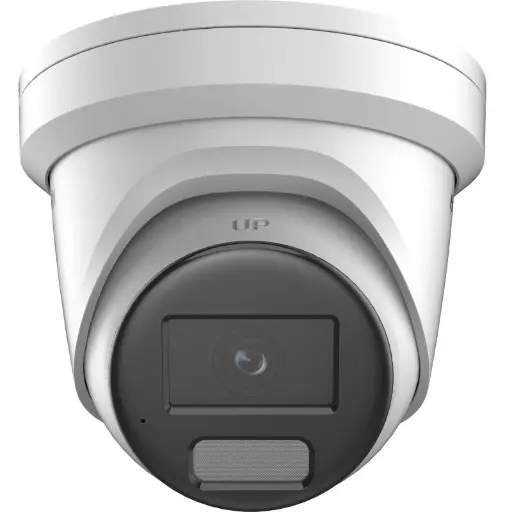
Hikvision DS-2CD2386G2H 8MP 2.8mm Powered by Darkfighter Fixed Turret Network Camera
The all-rounder eyeball: 8MP 4K turret with easy ball-and-socket aiming and no IR glare — ideal for front doors and eaves.
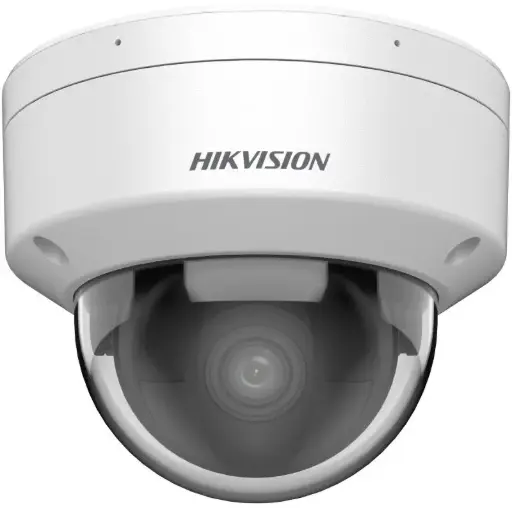
Hikvision DS-2CD2186G2H-ISU(2.8mm)(eF) 8MP 2.8mm Powered by Darkfighter Fixed Dome Network Camera
Discreet 8MP 4K fixed dome for ceilings and soffits — tidy, low-profile and tamper-resistant undercover coverage.
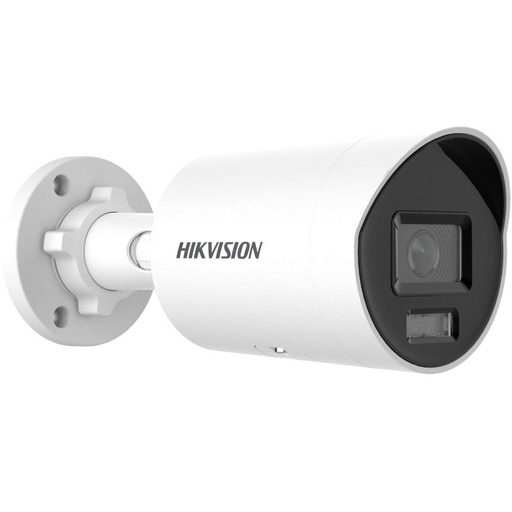
Hikvision DS-2CD2086G2H 8MP 2.8mm Powered by Darkfighter Fixed Mini Bullet Network Camera
8MP 4K mini bullet for a visible deterrent and longer reach along driveways, walls and fence lines.
Ready to buy?
Shop genuine Hikvision at ARC IP Networks
Authorised Hikvision reseller
Hikvision at ARC IP Networks
AcuSense, ColorVu and DeepinView cameras, NVRs and complete systems. Genuine Australian stock with the full manufacturer's warranty, competitive prices and price match available.
Frequently asked questions
Last updated: 2026-07-14 · Written by the ARC IP Networks team, an authorised Hikvision reseller in Australia.
Compare the options
Browse the ranges that go with this guide at ARC IP Networks:
- Security camera systems: complete systems from 2 to 16 cameras with a PoE NVR
- 4K security cameras: 8MP turret, bullet, zoom and PTZ models plus complete 4K systems
- Read next: Home security camera system buying guide: 2, 4, 6 or 8 cameras?
Who we are
About ARC IP Networks
ARC IP Networks is an Australian supplier of security cameras and CCTV systems, based in Blackburn, Melbourne, Victoria. We work with homeowners, installers, integrators and businesses across Australia, supplying Hikvision, Ubiquiti UniFi Protect, Dahua and Jovision CCTV.
We are an authorised reseller for every brand we sell, and the national distributor of Jovision in Australia, so you get genuine Australian stock with the full manufacturer's warranty, never grey imports, at competitive prices. Our team can help you choose the right equipment, and trade customers get trade accounts and project pricing on larger jobs.
- Genuine Australian stock with the full manufacturer's warranty
- Competitive prices, price match available
- Trade accounts for installers, integrators and MSPs
- Australia-wide delivery; showroom in Blackburn, Mon–Fri 9–5 (demos by appointment)
Need help choosing?
Tell the ARC IP Networks team what you are trying to achieve and we will recommend the right equipment and quote it as one order.