Displaying clear CCTV signage is good practice for any Australian property and is often expected of businesses, which may have notice duties under the Privacy Act. A sign typically states that recording is in operation, who runs it, and why. ARC IP Networks, an authorised Hikvision reseller, can help you plan sensible coverage. This is general information, not legal advice.
Do I need a CCTV sign in Australia?
For most Australian homes, a CCTV sign is not strictly mandatory, but it is widely regarded as good practice. It tells visitors, neighbours and passers-by that recording is taking place, which is both courteous and a proven deterrent. For businesses and organisations the picture is different: displaying signage is strongly recommended and can form part of meeting privacy obligations, because you are collecting personal information (images of people) as they enter and move through your premises.
The exact rules depend on who you are (a household versus a business), what you record (vision only, or vision plus audio), and which state or territory you're in. There is no single national "CCTV Act" — instead, several laws can apply at once. Below we cover what a sign should say, where to put it, and how home and business situations differ.
Why display CCTV signage?
Good signage does three helpful things at once:
- It deters. A visible camera paired with a clear sign signals that the property is monitored. If you're weighing up how much difference cameras make, our guide on whether security cameras deter burglars covers what actually works.
- It's transparent. People generally expect to be told when they're being recorded. Signage lets visitors, customers and staff know up front, which builds trust rather than surprise.
- It supports privacy good-practice. For businesses, letting people know their image is being collected — and why — is a core principle of Australian privacy law and a simple way to be a responsible operator.
None of this is about fear. It's about being upfront and helping honest people feel comfortable while giving you the coverage you want.
What should a CCTV sign say?
There's no fixed legal template, but a clear, plain-English sign usually covers four things: that recording is happening, who is doing it, why, and how to get in touch. Keep it simple and readable from a normal distance.
| Include | Example wording |
|---|---|
| Notice that CCTV is operating | "CCTV in operation — this area is under 24-hour recording" |
| Who is recording | Your business or property name (the operator) |
| Why (purpose) | "For the safety and security of people and property" |
| Contact for enquiries | A phone number or email for questions or footage requests |
For a home, a short "Smart CCTV in operation" sign is usually enough. For a business, adding the operator's name, purpose and a contact point is sensible, because customers and staff may want to know who holds the footage and how to ask about it.
Where should you place CCTV signage?
The goal is that people are made aware before they enter a recorded area, not after. Practical placement includes:
- At entry points — front gates, driveways, doors and reception, so people see the notice as they approach.
- At property boundaries — near fences or the kerb line where a camera may capture the footpath edge.
- Inside monitored areas — shop floors, car parks, hallways and loading docks, at eye level and well lit.
Position signs where they're easy to read, keep the wording consistent, and replace any that fade. Aim your cameras at your own property and public approaches, and avoid pointing them into a neighbour's windows or private yard. If you're planning a full layout, see the best Hikvision cameras for home security for camera types and coverage ideas.
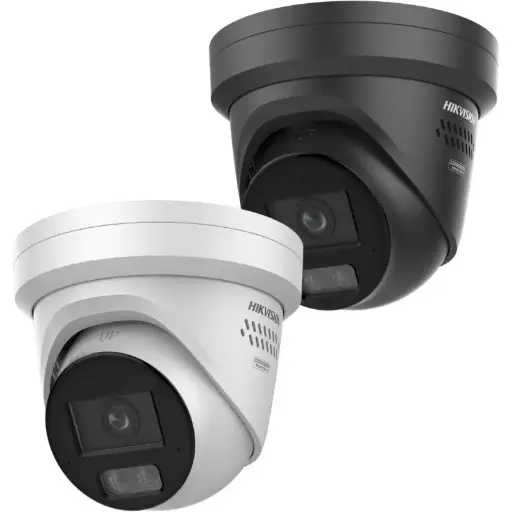
Shopping for Hikvision?
Authorised Hikvision reseller: genuine Australian stock, full warranty, competitive prices and price match available.
Home vs business: how the rules differ
The most important distinction is whether the cameras are for personal, domestic use at a home or run by a business or organisation. The Privacy Act 1988 (Cth) generally does not apply to individuals recording for purely personal or household purposes, but many businesses must follow the Australian Privacy Principles (APPs) — including notifying people that their information is being collected.
| Aspect | Home (personal use) | Business / organisation |
|---|---|---|
| Privacy Act 1988 | Generally doesn't apply to purely domestic use | May apply — follow the Australian Privacy Principles |
| Signage | Recommended as good-neighbour practice | Strongly recommended; part of good notice practice |
| Notifying people | Courtesy; avoid capturing neighbours' private areas | Tell people their image is being collected and why |
| Footage handling | Store securely; share responsibly | Store, use and disclose in line with your privacy duties |
Because a business's exact obligations can depend on its size and activities, check the current OAIC guidance to confirm what applies to you. If you're building out a commercial site, planning coverage early makes signage and access much simpler.
What about audio recording?
Vision and audio are treated differently. Beyond privacy principles, each Australian state and territory has its own surveillance device or listening device laws, and these can place tighter limits on recording private conversations than on recording images alone. In short: capturing video of a public approach is one thing; recording people's conversations can raise separate questions.
Many modern cameras include a microphone and two-way audio. That's a useful feature, but if you enable audio it's worth confirming what your state or territory allows and letting people know via your signage. When in doubt, keep audio off in areas where people would expect a private conversation, and check the current legislation for your location.
A simple, practical checklist
You don't need to be a lawyer to be a considerate, well-signed operator. A sensible approach for most people:
- Put up clear signage at entries and within recorded areas.
- Aim cameras at your own property and public approaches; minimise coverage of neighbours' private spaces.
- Be ready to explain who runs the cameras and why (especially for a business).
- Store footage securely and only keep it as long as you reasonably need it.
- Check the current rules — OAIC for privacy, and your state or territory for surveillance-device law.
Prefer to set it up yourself? Our DIY Hikvision install guide walks through placement and wiring, and you can always ask us where to buy genuine Hikvision in Australia for the right kit.
Genuine Hikvision cameras to build your system around
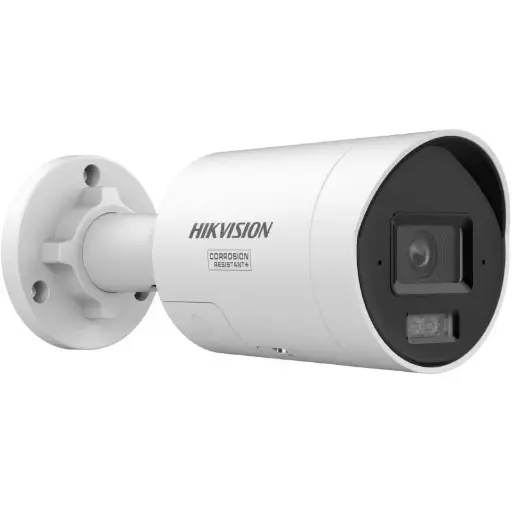
Hikvision DS-2CD2087G3 8MP 2.8mm ColorVu Bullet
A visible, professional bullet camera for entrances and driveways — an obvious presence that pairs perfectly with clear CCTV signage.
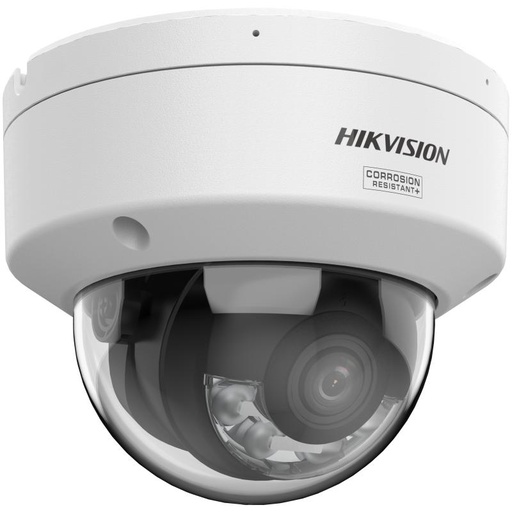
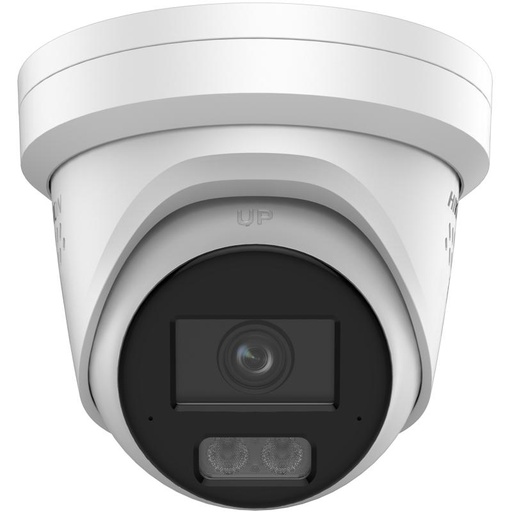
Hikvision DS-2CD2187G3 8MP 2.8mm ColorVu AcuSense Turret
A versatile turret for eaves, walls and car parks with sharp 8MP detail — discreet yet clearly visible where you want people to know they're recorded.
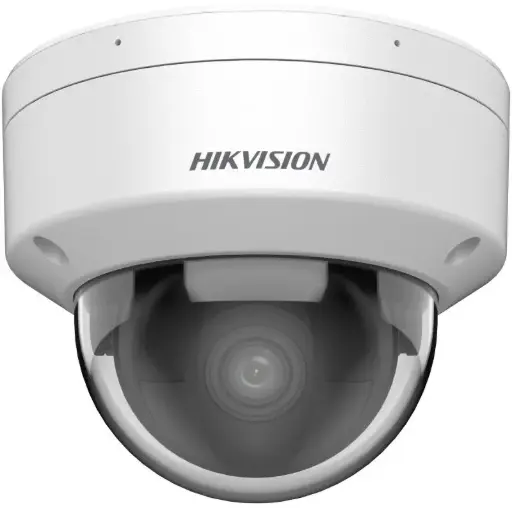
Hikvision DS-2CD2186G2H-ISU(2.8mm)(eF) 8MP 2.8mm Powered by Darkfighter Fixed Dome Network Camera
A tidy dome for ceilings and reception areas — low-profile coverage indoors where a compact, unobtrusive camera suits the space.
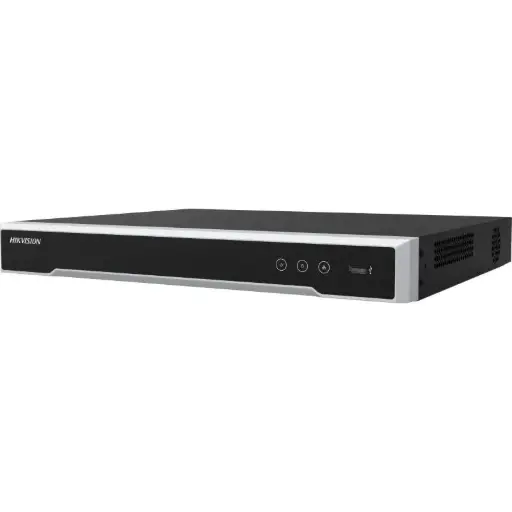
Hikvision DS-7608NI-M2/8P 8-Ch PoE 8K NVR
An 8-channel PoE NVR to record and securely store footage from multiple cameras in one place, so your video is kept safe and easy to review.
Related Hikvision guides
- Do Security Cameras Deter Burglars? What Actually Works
- Best Hikvision Cameras for Home Security in Australia
- How to Install Hikvision CCTV Yourself (DIY Guide)
- Where to Buy Genuine Hikvision in Australia
- Workplace CCTV & Employee Surveillance in Australia: What Businesses Should Know
- CCTV Laws in Australia: What Homeowners Can (and Can't) Do
Ready to buy?
Shop genuine Hikvision at ARC IP Networks
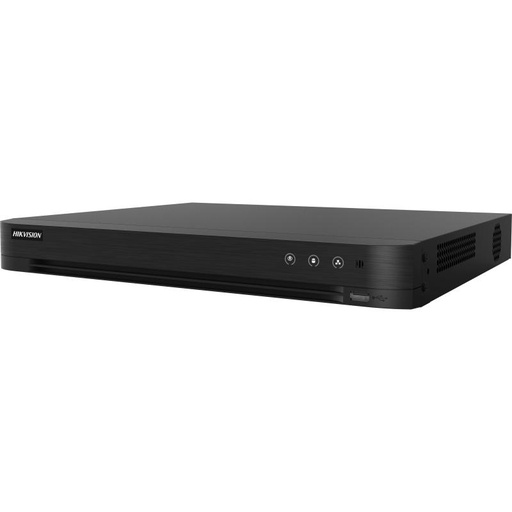
Authorised Hikvision reseller
Hikvision at ARC IP Networks
AcuSense, ColorVu and DeepinView cameras, NVRs and complete systems. Genuine Australian stock with the full manufacturer's warranty, competitive prices and price match available.
Frequently asked questions
Last updated: 2026-07-14 · Written by the ARC IP Networks team, an authorised Hikvision reseller in Australia.
Who we are
About ARC IP Networks
ARC IP Networks is an Australian supplier of security cameras and CCTV systems, based in Blackburn, Melbourne, Victoria. We work with homeowners, installers, integrators and businesses across Australia, supplying Hikvision, Ubiquiti UniFi Protect, Dahua and Jovision CCTV.
We are an authorised reseller for every brand we sell, and the national distributor of Jovision in Australia, so you get genuine Australian stock with the full manufacturer's warranty, never grey imports, at competitive prices. Our team can help you choose the right equipment, and trade customers get trade accounts and project pricing on larger jobs.
- Genuine Australian stock with the full manufacturer's warranty
- Competitive prices, price match available
- Trade accounts for installers, integrators and MSPs
- Australia-wide delivery; showroom in Blackburn, Mon–Fri 9–5 (demos by appointment)
Need help choosing?
Tell the ARC IP Networks team what you are trying to achieve and we will recommend the right equipment and quote it as one order.