dB
Wide Dynamic Range (WDR) is camera technology that balances very bright and very dark areas in the same shot — like a visitor standing in a doorway with bright daylight behind them — so both stay clearly visible. WDR is near-universal on Hikvision IP cameras, commonly rated 120 dB True WDR. ARC IP Networks is an authorised Hikvision reseller in Australia.
What is Wide Dynamic Range (WDR)?
Standard cameras struggle when a single scene contains both very bright and very dark areas. They can only expose for one or the other: point at a bright window and everything indoors falls into shadow; expose for the room and the window blows out to pure white. Either way, you lose the detail that matters.
Wide Dynamic Range (WDR) solves this. It lets a camera capture usable detail across a much wider range of brightness in the same frame, so a face in shadow and a bright doorway behind it can both be seen at once. The “dynamic range” is simply the gap between the darkest and brightest parts of an image a camera can record without losing detail — WDR widens that gap.
On Hikvision cameras WDR is near-universal across the IP range, and many models are rated at 120 dB True WDR — a professional-grade figure well suited to challenging Australian light.
How WDR works
Combining multiple exposures
True WDR works by capturing more than one exposure of the same scene in quick succession — typically one short exposure that stops the bright areas washing out, and one longer exposure that pulls detail out of the shadows. The camera then merges these into a single balanced image where both extremes are visible.
This happens in real time, frame after frame, so the live view and recordings stay smooth. The result is footage where you can read a face against a bright entrance, or make out a number plate on a car emerging from a shaded driveway into sunlight.
True WDR vs Digital WDR
Not all WDR is equal. The term covers two quite different approaches, and it is worth knowing which one a camera uses before you compare models.
| True (Optical) WDR | Digital WDR (DWDR) | |
|---|---|---|
| How it works | Combines multiple real exposures of the scene in hardware | Software adjusts brightness and contrast on a single exposure |
| Rated in dB? | Yes — e.g. 120 dB | Usually not given a dB figure |
| Harsh backlight | Strong — recovers detail in both bright and dark areas | Limited — helps mildly, can add noise |
| Best for | Entrances, garages, windows, sunlit-vs-shaded scenes | Scenes with only mild contrast |
| Typically on | Hikvision AcuSense & ColorVu IP cameras | Entry-level and analogue models |
When a Hikvision datasheet quotes a dB value such as 120 dB, it is describing True (optical) WDR — the stronger of the two. Digital WDR is a useful software enhancement, but it cannot recover detail the sensor never captured.
When you need WDR
WDR earns its keep anywhere a camera faces a mix of bright and dark in the same view. Common Australian examples include:
Entrances & doorways
A camera watching a door sees bright daylight outside and a darker interior at once. WDR keeps the visitor’s face visible instead of a silhouette.
Garages & driveways
Vehicles move from shaded interiors into full sun. WDR helps keep number plates and detail readable through the change in light.
Windows & glass frontage
Shopfronts and reception areas with large windows create heavy backlight. WDR balances the bright glass against the room.
Car parks & loading docks
Mixed shade and sunlight by day, headlights by night. WDR reduces glare and blown-out highlights.
Reception & lobbies
Glass doors and skylights flood interiors with light. WDR preserves faces and detail near the entry.
East/west-facing views
Low morning or afternoon sun straight into the lens. WDR tames the glare so the scene stays usable.
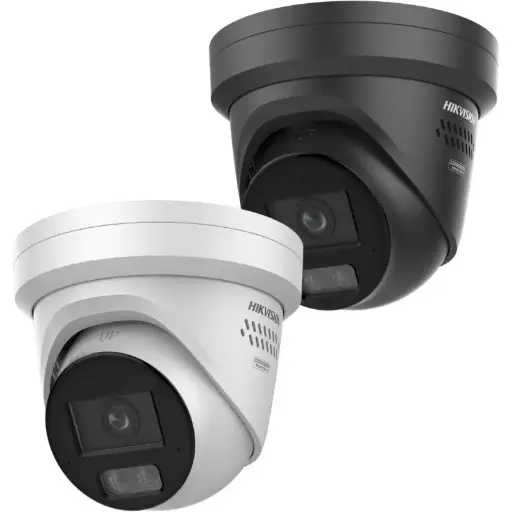
Shopping for Hikvision?
Authorised Hikvision reseller: genuine Australian stock, full warranty, competitive prices and price match available.
What WDR rating to look for (dB explained)
WDR is measured in decibels (dB). The higher the number, the greater the difference in brightness the camera can handle in one frame. As a rough guide:
- Up to ~100 dB — entry-level or Digital WDR; fine for evenly lit scenes.
- 120 dB True WDR — the professional standard on most Hikvision IP cameras; comfortably handles bright entrances, windows and backlit scenes.
- 130 dB and above — found on some newer Hikvision ColorVu models for the most demanding high-contrast locations.
For the vast majority of homes and businesses, 120 dB True WDR — standard across the Hikvision AcuSense and DarkFighter range — is more than enough. Ratings vary between series, so always check the specific model’s datasheet for its exact figure.
How WDR fits with ColorVu, DarkFighter and AcuSense
WDR rarely works alone. On a Hikvision camera it sits alongside other imaging technologies that together decide how good your footage looks around the clock:
- DarkFighter — ultra low-light sensitivity so the camera still sees in near darkness. WDR handles bright-versus-dark within a frame; DarkFighter handles overall darkness.
- ColorVu — full-colour images at night using a highly sensitive sensor and supplementary light, rather than black-and-white infrared.
- AcuSense — on-camera classification of people and vehicles to cut false alarms from wind, rain and animals.
When comparing models, think of WDR as one layer of a complete imaging package. A camera with 120 dB True WDR and strong low-light performance gives you dependable footage in the widest range of conditions. See our guide on ColorVu vs AcuSense to choose the right mix.
Hikvision cameras with 120 dB True WDR
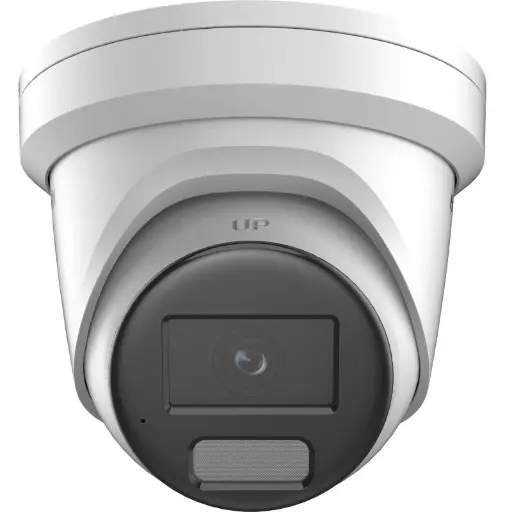
Hikvision DS-2CD2386G2H 8MP 2.8mm Powered by Darkfighter Fixed Turret Network Camera
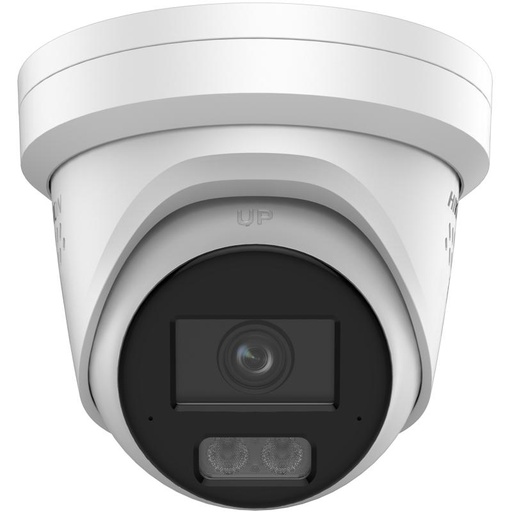
8 MP AcuSense turret with 120 dB True WDR and Powered-by-DarkFighter low-light performance - a strong all-rounder for entrances and driveways.
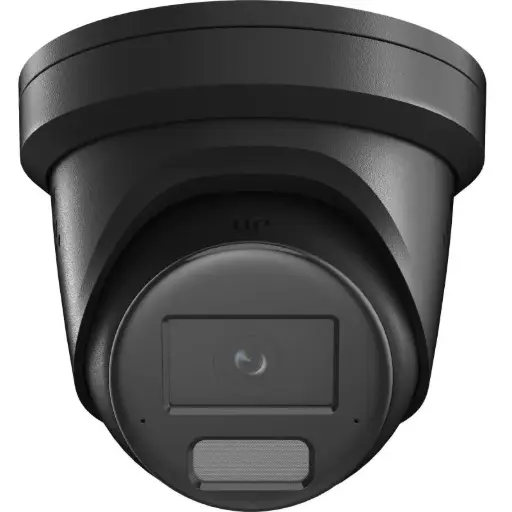
Hikvision DS-2CD2366G2H 6MP 2.8mm Black Turret IP Camera
6 MP DarkFighter turret in a discreet black finish, with 120 dB True WDR and AcuSense human and vehicle detection for backlit doorways.
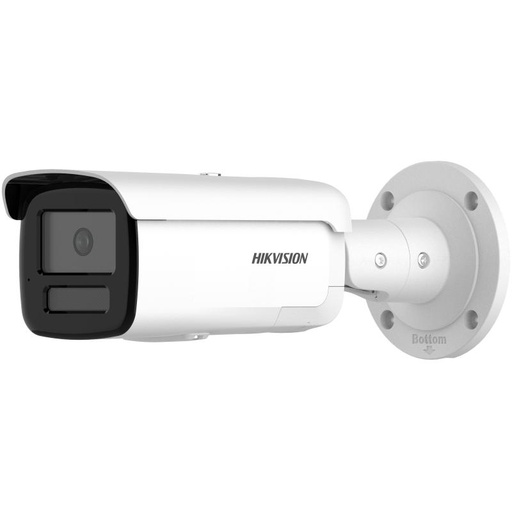
Hikvision DS-2CD2T86G2H-IS2U/SL(2.8mm)(eF) 8MP 2.8mm AcuSense Strobe Light and Audible Warning Fixed Bullet Network Camera
8 MP AcuSense bullet with 120 dB True WDR plus strobe light and audible warning - ideal for high-contrast car parks and perimeters.
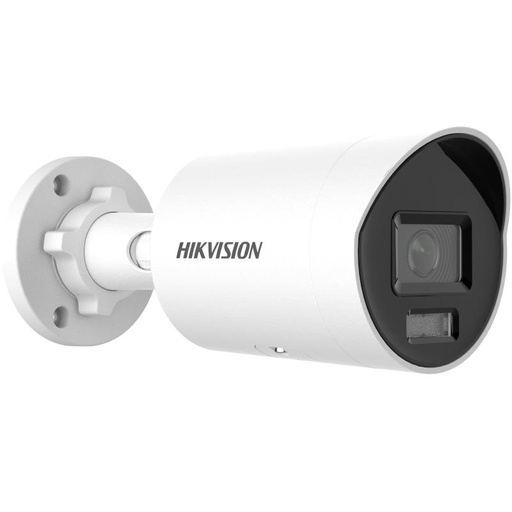
Hikvision DS-2CD2086G2H 8MP 4mm AcuSense Strobe Light and Audible Warning Fixed Bullet Network Camera
8 MP Powered-by-DarkFighter mini bullet with 120 dB True WDR and strobe light - compact cover for bright windows and shopfronts.
Ready to buy?
Shop genuine Hikvision at ARC IP Networks
Authorised Hikvision reseller
Hikvision at ARC IP Networks
AcuSense, ColorVu and DeepinView cameras, NVRs and complete systems. Genuine Australian stock with the full manufacturer's warranty, competitive prices and price match available.
Frequently asked questions
Last updated: 2026-07-14 · Written by the ARC IP Networks team, an authorised Hikvision reseller in Australia.
WDR stands for Wide Dynamic Range. It is technology that lets a camera capture clear detail in both the brightest and darkest parts of the same scene — for example a face in a shaded doorway with bright sunlight behind it — instead of losing one to glare or shadow.
The dB figure describes how large a brightness range the camera can balance in one frame; higher is better. 120 dB is a professional-grade True WDR rating found on most Hikvision IP cameras and is more than enough for typical homes and businesses. Some newer ColorVu models reach 130 dB for the most demanding scenes.
True (optical) WDR combines multiple real exposures in hardware and is quoted in dB, such as 120 dB. Digital WDR (DWDR) uses software to adjust a single exposure and is weaker in harsh backlight. When a Hikvision datasheet lists a dB value, it is referring to True WDR.
If a camera faces a mix of bright and dark — entrances, garages, windows, glass frontage or east/west-facing views — WDR makes a clear difference. For evenly lit indoor rooms it matters less. The good news is that WDR is standard across the Hikvision range, so you rarely have to choose without it.
WDR balances bright against dark within a scene, so it helps most where there is strong contrast at night, such as headlights or a bright doorway. For overall darkness, low-light technologies like DarkFighter and ColorVu do the heavy lifting. Many Hikvision cameras combine WDR with both.
They are closely related. HDR (High Dynamic Range) is the general term used in photography and TV; WDR is the name the security industry uses for the same idea — capturing detail across a wide range of brightness in a single image.
WDR is near-universal across Hikvision’s IP camera range, with most models offering 120 dB True WDR. Entry-level and some analogue models may use Digital WDR instead. Always check the specific model’s datasheet for its exact rating.
No. A higher dB rating simply means the camera can balance a wider brightness range. In evenly lit scenes you may not notice a difference, but in high-contrast conditions a stronger WDR rating preserves detail that a lower one would lose.
Who we are
About ARC IP Networks
ARC IP Networks is an Australian supplier of security cameras and CCTV systems, based in Blackburn, Melbourne, Victoria. We work with homeowners, installers, integrators and businesses across Australia, supplying Hikvision, Ubiquiti UniFi Protect, Dahua and Jovision CCTV.
We are an authorised reseller for every brand we sell, and the national distributor of Jovision in Australia, so you get genuine Australian stock with the full manufacturer's warranty, never grey imports, at competitive prices. Our team can help you choose the right equipment, and trade customers get trade accounts and project pricing on larger jobs.
- Genuine Australian stock with the full manufacturer's warranty
- Competitive prices, price match available
- Trade accounts for installers, integrators and MSPs
- Australia-wide delivery; showroom in Blackburn, Mon–Fri 9–5 (demos by appointment)
Need help choosing?
Tell the ARC IP Networks team what you are trying to achieve and we will recommend the right equipment and quote it as one order.