A Hikvision access control system decides who can open a door, using a controller, credential readers (card, PIN, fingerprint or face) and an electric lock. It scales from one door to a whole site and links to your cameras and NVR. ARC IP Networks, an authorised Hikvision reseller in Australia, can specify and supply it.
What is a Hikvision access control system?
Access control replaces a mechanical key with an electronic credential. Instead of cutting keys and hoping none go missing, you issue each person a card, PIN, fingerprint or face profile, and the system decides in real time whether to release the door. Every entry (and every refused attempt) is logged with a name and a timestamp.
Hikvision builds a full access control range — grouped under its DS-K product line — that spans standalone door terminals, dedicated door controllers, exit buttons and electric locks, plus the software to manage users and read the logs. Because it is the same manufacturer as your Hikvision cameras and NVR, the two systems are designed to work together. As an authorised Hikvision reseller, ARC IP Networks can supply and configure the parts you need.
The main parts, explained
An access control system is a small number of parts working together. Knowing what each does makes it far easier to scope a job or read a quote.
| Part | What it does |
|---|---|
| Controller | The brain. Stores users and permissions and decides whether to unlock. A door controller sits in the comms cabinet; an all-in-one terminal has the controller built in. |
| Reader / terminal | What people present a credential to — card reader, PIN keypad, fingerprint scanner or face terminal. Many Hikvision terminals combine several of these in one unit. |
| Credential | The thing that identifies a person: an RFID card or fob, a PIN, a fingerprint or a face. |
| Electric lock | The hardware that physically holds or releases the door — an electric strike or a magnetic lock (maglock). |
| Exit device | Lets people leave: a request-to-exit button, or a second reader for “in and out” logging. |
| Power & software | A power supply (often with battery backup) and the management software where you add users and view logs. |
How does Hikvision access control work?
The flow is simple. A person presents a credential at the reader. The controller checks it against its user list and the rules for that door and time of day. If the credential is valid and allowed, the controller sends power to release the electric lock; if not, the door stays locked and the attempt is logged.
- Credential read — card tapped, PIN entered, finger scanned or face presented.
- Decision — the controller matches it against stored users and permissions.
- Release — a valid match energises (or de-energises) the lock to open the door.
- Log — who, which door and when are recorded for later review.
Because credentials are managed in software, a lost card or a departing staff member is handled by removing one entry — there is no need to re-key locks.
Single-door vs multi-door systems
The right architecture depends on how many doors you need to control and whether you want them managed as one system.
| Single-door | Multi-door | |
|---|---|---|
| Typical use | One entry — a front door, a store room, a comms room | A whole building or site with several controlled doors |
| Hardware | Often an all-in-one terminal with the controller built in | A central door controller (or several) wired to readers at each door |
| Management | Users set on the unit or via software | All doors, users and permissions managed centrally in software |
| Grows to | Best for one or a few independent doors | Add doors and controllers as the site expands |
If you are unsure which suits your building, talk to our team — we can size it from a simple door count.
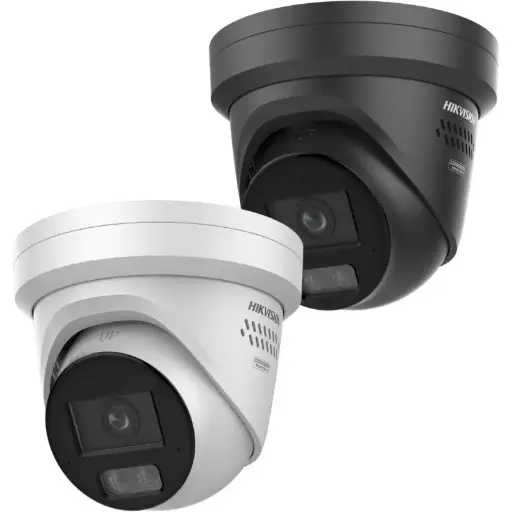
Shopping for Hikvision?
Authorised Hikvision reseller: genuine Australian stock, full warranty, competitive prices and price match available.
Integrating access control with cameras and NVR
The advantage of staying within one brand is that access control and CCTV can share the same platform. Hikvision access events can be tied to your Hikvision cameras and NVR, so an access event and the matching video can be reviewed side by side — for example, seeing exactly who opened a door at a given moment.
Managed together in Hikvision software (and viewable remotely through Hik-Connect where supported), a single system covers doors, cameras and, if fitted, video intercom at the entrance. That means one supplier, one set of software and one point of support — which is where an authorised reseller like ARC IP Networks makes specifying the whole package straightforward.
Best uses: offices, apartments and warehouses
Offices
Cards or PINs for staff, time-based rules for after-hours access, and a clear log of who came and went. Server and comms rooms can be locked down separately.
Apartments & strata
Video intercom at the entrance plus card or fob access for residents to common doors, lifts and car parks — no more re-keying when a resident moves out.
Warehouses
Control staff, contractor and delivery access to loading docks and stores, keep casual visitors out of restricted zones, and pair doors with cameras for a full record.
Whatever the site, the same building blocks apply — only the number of doors and the choice of credential change.
How to choose the right Hikvision access control
Work through a few simple questions and the specification largely writes itself:
- How many doors? One or two independent doors point to all-in-one terminals; several doors managed together point to central controllers.
- Which credential? Cards and fobs are simple and cheap to replace; PINs need no hardware to carry; fingerprint and face suit higher-security or contactless entries.
- Which lock? Electric strikes suit many existing doors; maglocks suit glass and aluminium doors — the door type usually decides this.
- In-and-out logging? Add a reader on the exit side if you need to record who leaves as well as enters.
- Integration? If you already run Hikvision cameras, staying in-brand keeps everything on one platform.
If you would rather not guess, ARC IP Networks can turn a door count into a parts list. We are an authorised Hikvision reseller and can order any part of the access control range into Australia even if it is not shown online — just get in touch.
Ready to buy?
Shop genuine Hikvision at ARC IP Networks
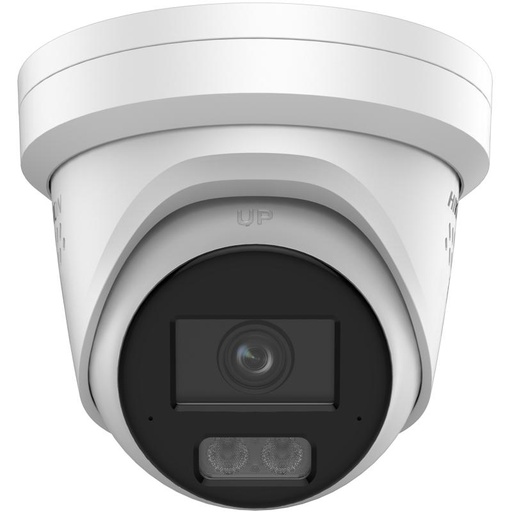
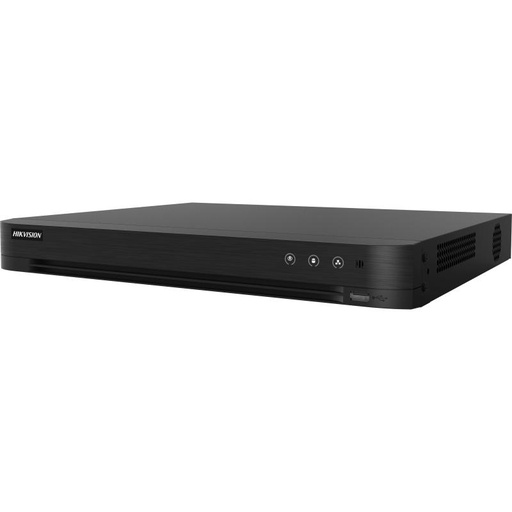
Authorised Hikvision reseller
Hikvision at ARC IP Networks
AcuSense, ColorVu and DeepinView cameras, NVRs and complete systems. Genuine Australian stock with the full manufacturer's warranty, competitive prices and price match available.
Frequently asked questions
Last updated: 2026-07-14 · Written by the ARC IP Networks team, an authorised Hikvision reseller in Australia.
Depending on the terminal, it can read RFID cards and fobs, PIN codes, fingerprints and faces. Many Hikvision terminals combine several of these in one unit so you can mix methods on the same door.
The controller is the brain that stores users and decides whether to unlock; the reader (or terminal) is what a person presents their credential to. An all-in-one terminal has the controller built in, while a dedicated door controller sits in the comms cabinet and drives one or more separate readers.
Both hold a door until the system releases it. Electric strikes suit many existing timber and metal-frame doors, while magnetic locks (maglocks) are common on glass and aluminium doors. The door type usually decides which is appropriate — we can advise on a case-by-case basis.
Yes. Staying within the Hikvision range lets access events and CCTV be managed on the same platform, so you can review a door event alongside the matching camera footage and run everything through one set of software.
A single-door setup controls one entry, often with an all-in-one terminal. A multi-door system uses central controllers to manage several doors, users and permissions together in software — better for a whole building or site.
With the appropriate hardware and Hikvision software, users and permissions are managed centrally, and supported systems can be viewed remotely through Hik-Connect. The exact remote features depend on the models chosen.
Yes. It is widely used for residential and strata entrances, typically pairing video intercom at the door with card or fob access to common areas, lifts and car parks, and removing the need to re-key when residents change.
Yes. ARC IP Networks is an authorised Hikvision reseller in Australia. We can specify, supply and order controllers, terminals, locks and accessories — including items not shown online — with genuine Australian stock and local support. Contact us for a tailored quote.
Who we are
About ARC IP Networks
ARC IP Networks is an Australian supplier of security cameras and CCTV systems, based in Blackburn, Melbourne, Victoria. We work with homeowners, installers, integrators and businesses across Australia, supplying Hikvision, Ubiquiti UniFi Protect, Dahua and Jovision CCTV.
We are an authorised reseller for every brand we sell, and the national distributor of Jovision in Australia, so you get genuine Australian stock with the full manufacturer's warranty, never grey imports, at competitive prices. Our team can help you choose the right equipment, and trade customers get trade accounts and project pricing on larger jobs.
- Genuine Australian stock with the full manufacturer's warranty
- Competitive prices, price match available
- Trade accounts for installers, integrators and MSPs
- Australia-wide delivery; showroom in Blackburn, Mon–Fri 9–5 (demos by appointment)
Need help choosing?
Tell the ARC IP Networks team what you are trying to achieve and we will recommend the right equipment and quote it as one order.